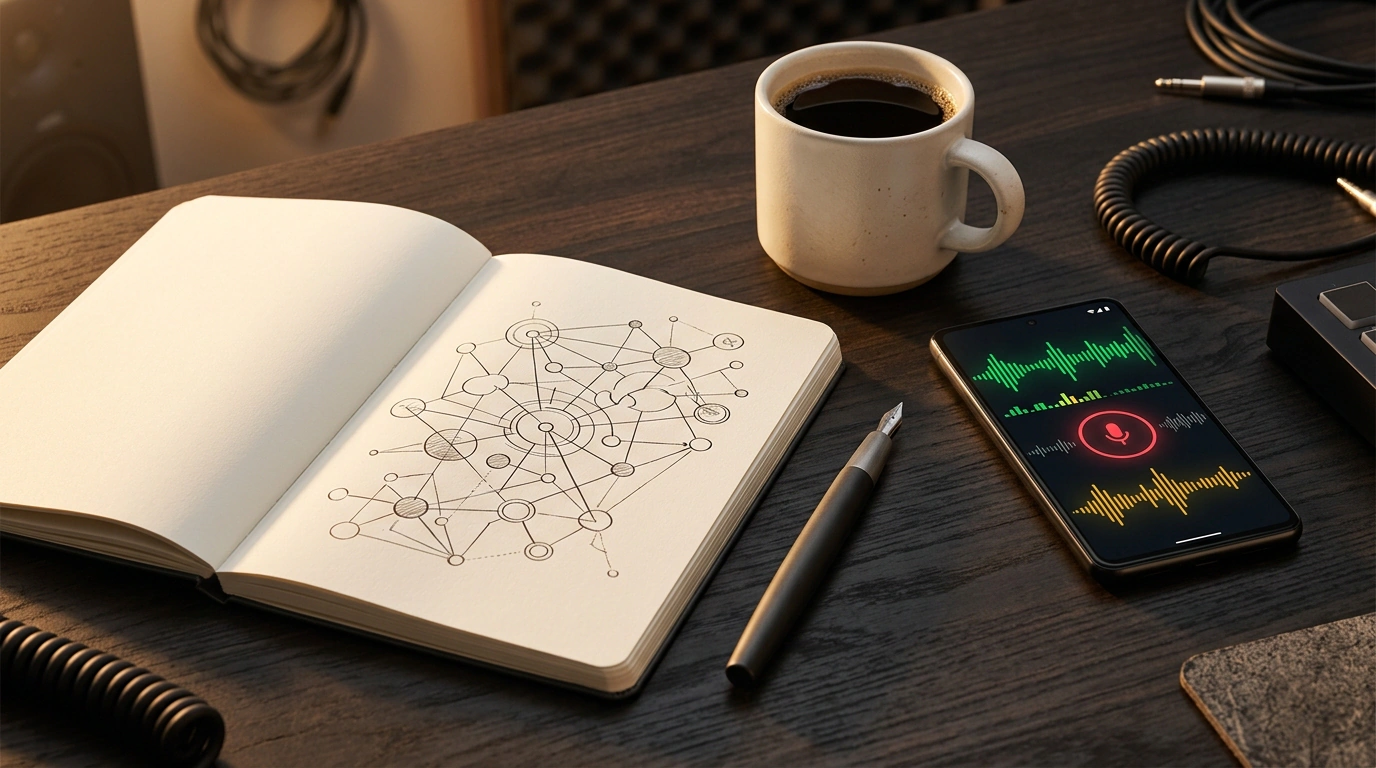
Everyone has a personal 'note graveyard': hundreds of saved articles, browser bookmarks, lecture notes, and rough drafts we carefully collected over the years, promising ourselves we'd 'definitely reread them this weekend.' Weekend after weekend passes, the folder grows, and finding one specific idea inside gigabytes of text turns into a chore. In 2026, weaving language models into daily workspace tools finally solved this problem. Knowledge stopped sitting as dead weight and became a responsive thinking partner. We previously explored how folders of Markdown files become an organization's contextual brain, and today we'll look at three fresh workflows bringing personal and team archives to life.
Claude and Obsidian
The first shift happens in personal local vaults. Obsidian has long had a loyal following among researchers, engineers, and writers for one simple reason: your files live locally in plain Markdown with zero lock-in to closed clouds.
Now, plugins with direct Claude API integration—such as Smart Connections and BMO Chatbot—have turned static note graphs into interactive thinking labs:
- Smart linking: the model scans new notes, spots subtle connections to articles you wrote two years ago, and suggests two-way backlinks automatically.
- Local RAG with no leaks: you ask a question in the sidebar ('What arguments against microservices did I pull from that architecture book?'), and Claude answers strictly from your own files, citing exact quotes and local links.
- Your notes never leave your computer to train public models, keeping personal thoughts completely private.
ChatGPT Space
The second workflow targets team development's biggest headache: documentation that's always out of date. You know the drill. The team debates architecture in Slack for a month and ships new features, while Notion or Confluence still holds a six-month-old spec everyone forgot about.
ChatGPT Space tackles this gap with self-updating project spaces:
- A workspace ties together team chats, spec files, and the task tracker.
- The model watches discussions continuously. If engineers agree in chat to change a database schema or move a sprint deadline, ChatGPT Space updates the matching section of the project doc and highlights the change for the team lead.
- Documentation shifts from a forgotten static file into a live snapshot of what's actually happening.
NotebookLM
The most striking human touch, though, came from Google NotebookLM. Its popular Audio Overviews feature—where two virtual AI hosts discuss your uploaded documents—now includes an interactive 'Join' button.
Previously, it was one-way radio: you just listened to a generated dialogue. Now, learning feels truly interactive:
- You're listening to a breakdown of an 80-page research report or financial audit while jogging or driving.
- The hosts mention a profitability chart, so you tap the mic and interrupt by voice: 'Hold on, why did margins drop 12% in Q2? Explain that in plain English.'
- The virtual hosts pause immediately, check your uploaded source, answer kindly and thoroughly with a reference to the exact page, and smoothly pick the podcast back up.
This voice dialogue works across dozens of languages, turning dense textbooks into lively conversations with personal tutors.
The tool shines at connecting ideas across formats. Drop a PDF policy, a meeting audio recording, and a spreadsheet of numbers into one notebook. The model ties scattered facts together and helps you spot hidden contradictions.
If your personal vault grows past 10,000 notes, basic plugins may slow down during indexing. At that scale, switch to tools backed by local vector databases like SQLite VSS or Chroma for fast semantic search.
We've reached a point where the value of information isn't measured by how many gigabytes sit on your hard drive, but by how fast you can put them to work.
Pairing local Obsidian with Claude gives you a personal research assistant, ChatGPT Space keeps team projects aligned, and NotebookLM's interactive voice makes tough topics fun to explore. Your notes have finally woken up—it's time to start a real conversation with them.