Trying to reach the widest possible audience, many companies make a classic mistake: they run social media by copy-pasting. A marketer writes one generic post, attaches a photo, and pushes it simultaneously to VK, Telegram, Pinterest, and the company blog.
This strategy always ends the same way: messy analytics, wasted effort, and disappointment in content marketing. Different platforms attract people in completely different moods. Trying to sell a complex service with a short image caption on a visual feed works no better than dropping dry technical blueprints into a messenger chat without context.
Ecosystem Role Model: From Inspiration to Closed Deal
To turn a content funnel into a smooth machine, every channel needs a strict, well-defined role in the buyer's journey:
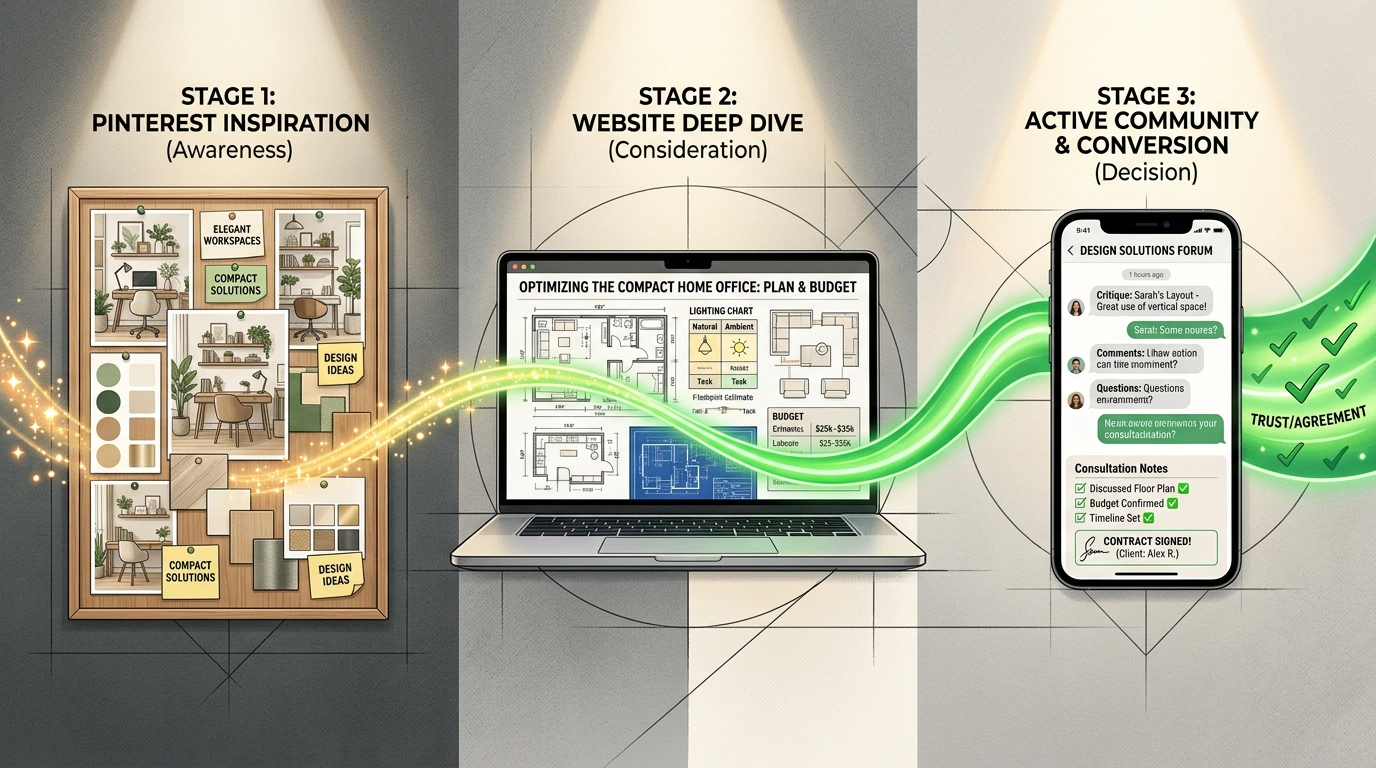
- Pinterest: first entry and attention capture. Pinterest is not a chat-based social network; it is a powerful visual search engine. Users come here looking for ideas and practical solutions, like organizing a balcony, designing a walk-in closet, or planning lighting. They are at the early stage of forming a need.
- Company website: proof and trust building. This is where visitors find a thorough, expert answer to their question. You publish deep guides with real cost estimates, floor plans, technical constraints, and a clear commercial offer.
- Telegram: retention and long-term nurturing. This channel serves people who are not ready to buy today. In niches with long sales cycles—from home renovation to legal services—clients may take months to decide. Regular case breakdowns, Q&As, and behind-the-scenes updates turn a cold reader into a loyal buyer.
Syncing One Topic: An Interior Design Studio Example
Instead of scattering random posts, an effective funnel aligns one specific problem across all three levels. Take a design studio promoting the topic 'A compact workspace in a one-bedroom apartment':
- Step 1. A batch of Pinterest pins.
The team designs 5 to 7 vertical pins in the ideal 2:3 ratio (1000x1500 pixels, the official platform standard to avoid cropping in the mobile Smart Feed). The images show real solutions: a desk by the windowsill, a fold-out table in a niche, or zoning with slatted dividers. Each pin carries a clear text overlay and links directly to the matching blog article, not the studio's homepage. - Step 2. An in-depth website guide.
Clicking through, the user lands on a detailed guide covering lighting standards, outlet placement diagrams, a real budget breakdown, and project photos. At the end of the article, the reader can download an ergonomics checklist or join the Telegram channel where an architect reviews subscriber floor plans for free every Friday. - Step 3. Live nurturing in Telegram.
Once subscribed, potential clients regularly see the team's real expertise: site walkthrough videos, breakdowns of common contractor mistakes, and live answers. When they are finally ready to order an interior design project, there is zero doubt about whom to hire.
Tracking Metrics Across Every Stage
You can measure this omnichannel funnel clearly at three checkpoints:
- Pinterest Analytics: track Saves—the platform's top algorithm signal that drives long-term organic reach—and Outbound Clicks.
- Website analytics: track visits using custom UTM tags (
utm_source=pinterest). Watch reading depth (70%+ scroll), time on page, and clicks on the Telegram invite link. - CRM and messenger analytics: count joins via unique invite links and track how many subscribers start a direct chat with a manager.
Model estimates show strong efficiency for this setup: for every 10,000 impressions of a pin series on Pinterest, a business gets around 200 targeted site visits (a 2% CTR). Of those, 150 users read the article carefully, and 6 to 8 either submit a direct inquiry or join the channel ready to buy.
Giving each platform a distinct role stops marketer burnout and creates a steady flow of informed clients without constantly inflating your ad spend.