Every online store owner feels the same squeeze right now: buying new traffic has become painfully expensive. Search bids are climbing, marketplace fees eat into margins, and a customer's first order increasingly breaks even or ends in a tiny loss. If you rely only on that first checkout, your business slides toward a cash gap. We covered this in detail in our look at the e-commerce retention crisis, where blanket discounts stopped working.
Real profit in e-commerce lives in repeat purchases and growing customer lifetime value (LTV). The main tool for this isn't aggressive discount spam—it's targeted trigger campaigns. When set up properly, direct marketing ROI can reach 36:1. In our analysis of behavioral triggers in email campaigns, we noted the shift from manual blasts to automated flows.
Based on real case studies from RetailCRM and Mindbox, I put together seven proven mechanics that guide buyers across the entire customer journey.
Stage 1. The Path to the First Purchase
While a shopper is still sizing up your store, don't bury them in a 50-page general catalog. Match their specific interest right away:
- Onboarding segmentation. Ask about their interests right at signup or first opt-in. For example, a beauty salon equipment supplier asks for the buyer's specialty in the form: hairdressing, massage, or nail care. The welcome series is tailored to that exact niche. As a result, first-order conversion jumped to 15%. If an email goes unopened for 24 hours, a cascade flow gently follows up in a messenger.
- Targeted browse-abandonment picks. Did a visitor browse leather belts or travel bags? A couple of hours later, send a curated selection of those exact models with matching accessories. The brand Gourji doubled its email traffic using this kind of relevance.
- Interactive quizzes and finders. Perfume brand Pure Sense added an online scent-matching quiz and sent the personalized result with a promo code by email. The numbers: 62.5% open rate, 18% CTR, and 6% conversion into actual orders.
Stage 2. Support After the First Order
Right after a customer pays and receives their package, their emotional openness is at its peak.
- Two-step reviews and NPS collection. One or two days after delivery, send a quick service check: did everything arrive intact? A week later, send a detailed survey to everyone who replied positively, offering a nice bonus on their next order. Designer calendar brand Yearee used this two-step flow to boost repeat sales by 35% while keeping satisfaction at 9.4 out of 10.
- Brand stories with zero sales pressure. Share behind-the-scenes production, quality checks, or a charity project your store supports. This builds a human bond with your brand without pushy "buy now" messaging.
Stage 3. Systematic Repeat Sales
Here, marketing shifts to buying cycles and habits:
- Personal promo codes based on purchase history. Don't hand out discounts to your entire list. Pull a segment of customers who bought coffee machines, and a month later send them a promo code for whole-bean coffee and cleaning supplies with a five-day timer. Repeat order conversion hits up to 10%.
- Personal date and replenishment triggers. Flower service Lacy Bird sends a reminder three days before the anniversary of last year's bouquet—driving repeat conversion up to a record 40%. Kids' retailer Gulliver congratulates parents on their children's birthdays, bringing 55% of them back for gifts. For pet food, cosmetics, or vitamins, calculating when a package runs out and sending a "Looks like it's time to restock" email works wonders.
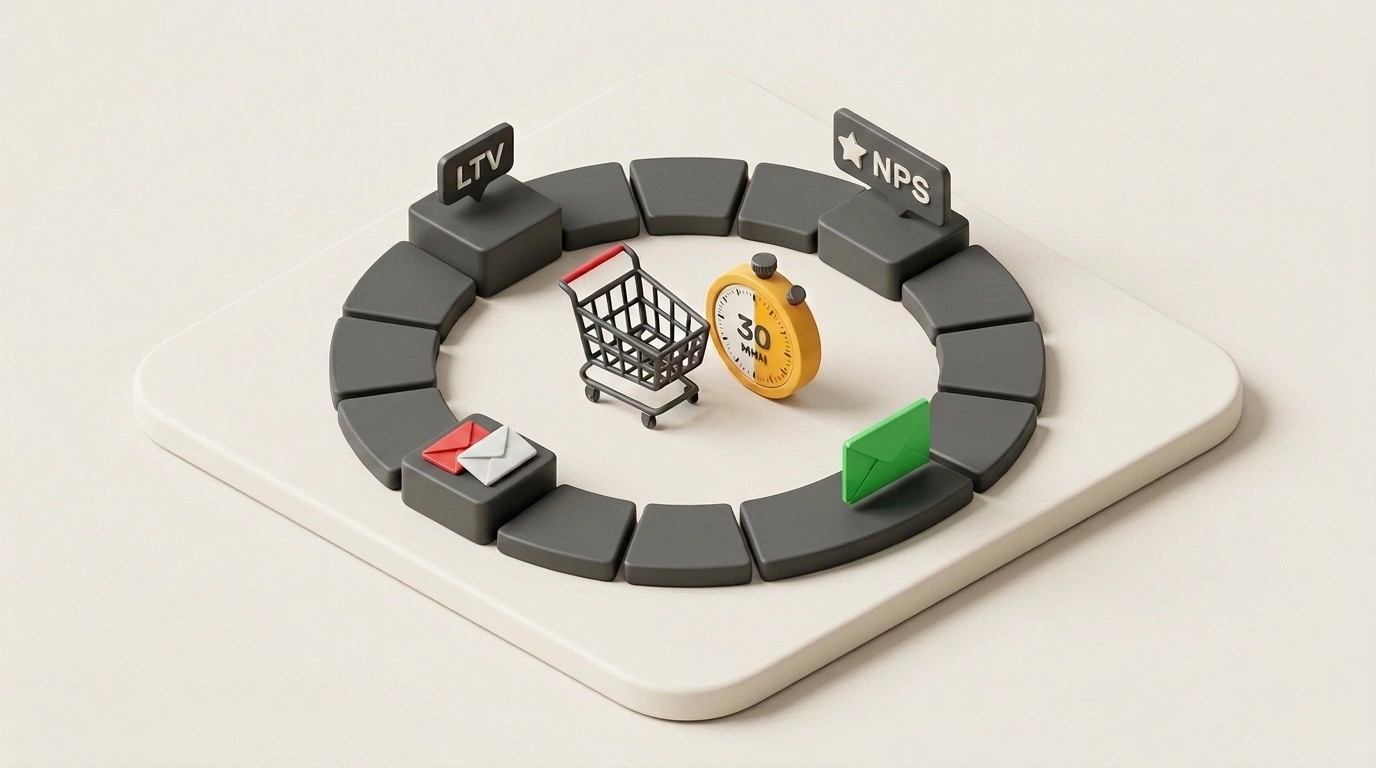
Abandoned cart reminders are the hottest trigger in e-commerce, with 40–45% open rates (compared to 9–15% for mass blasts). Speed is everything: the first message must go out 30–60 minutes after the visitor leaves your site. Wait 24 hours, and recovery drops by more than half. A two- or three-step cascade (email $\rightarrow$ messenger $\rightarrow$ personal bonus after 48 hours) recovers 10% to 14% of stalled orders.
Stop burning budget on an endless hunt for new buyers while your back door is wide open. Set up automated triggers around real customer needs, and your database will start generating steady profit on autopilot.