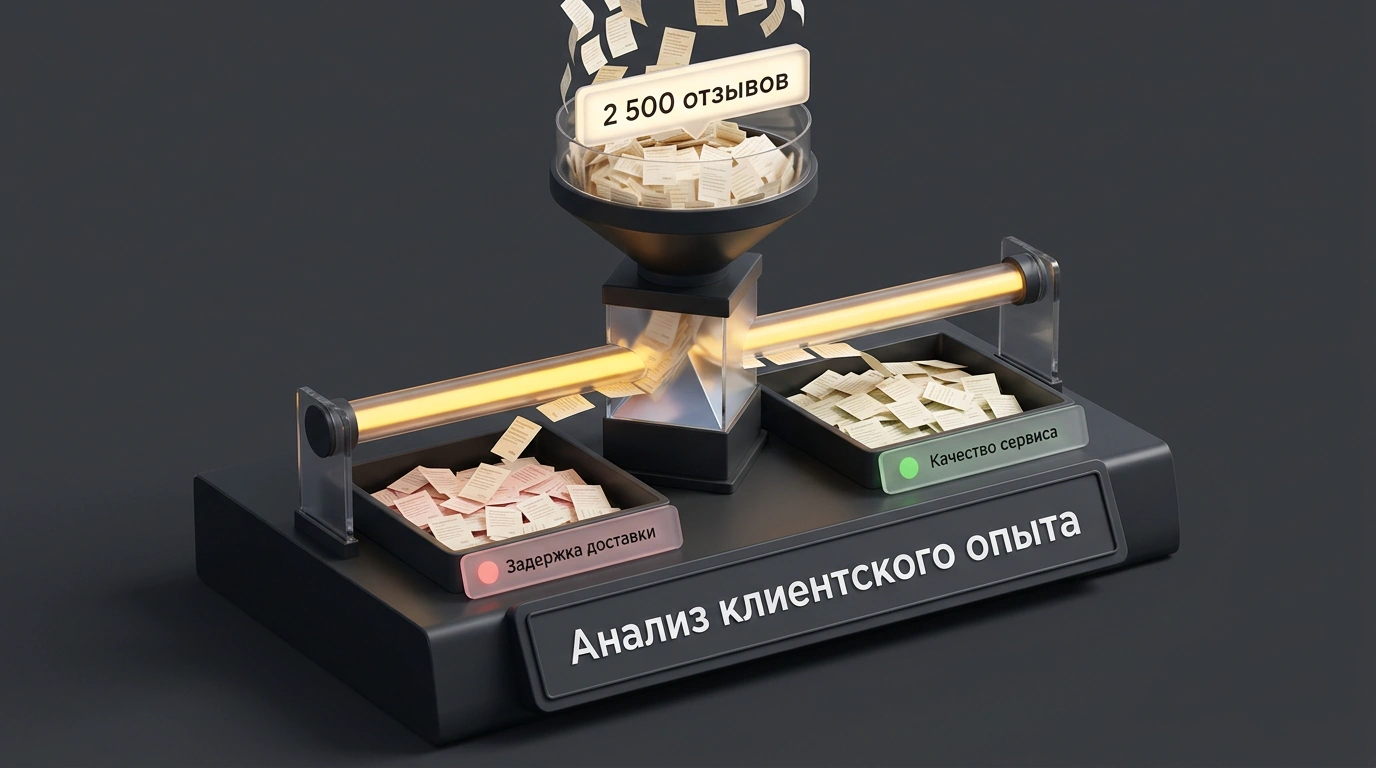
When revenue dips, small and mid-sized businesses almost always reach for two familiar explanations. First, prices got too high and customers left for cheaper rivals. Second, they need to pour money into ads right away to fill the funnel with new leads. Real data breaks that narrative. Price complaints in reviews usually earn a calm three or three-plus stars, while operational breakdowns during a shift drive regular customers away. Worse, businesses eagerly thank people for five-star reviews and ignore the one-star ratings on map listings.
The research team at VICTORY Research (the analytics division of Russian reputation agency VICTORY group) analyzed 1,452,501 reviews from 2GIS and Yandex Maps from January 1, 2025 through September 30, 2026. Five industries made the cut: food service (548,220 reviews), retail (266,505), private healthcare (249,298), beauty (194,931), and automotive services (193,547). The numbers show one clear truth: broken service cuts repeat sales far harder than price tags.
What Actually Tanks Ratings Across Five Industries
Filter down to 1–2 star reviews, and one common irritant runs through all five markets: waiting. A customer books a time slot, arrives on time, and ends up sitting in a hallway, waiting for a server, or staring at a closed service bay while the previous job runs late.
Share of Waiting Complaints Among 1–2 Star Reviews
Delays hit healthcare and food service hardest. Even inside private healthcare, there is a clear split: medical centers and clinics see delays in roughly 23% of negative reviews, compared to about 16% in dental clinics. People pay for private care specifically to walk in on schedule, so twenty extra minutes outside the door strikes at the core promise. Cafes face the same math: a hungry guest at an empty table counts every minute twice.
On top of waiting, each niche has its own top pain point. In beauty, it's treatment outcome (17.2% of low ratings). In retail, rudeness and staff attitude hurt most (13.8%), while in automotive services, dishonesty and upselling unwanted extras lead (10.5%).
Now compare average star ratings when a buyer dislikes the price versus when service breaks down.
| Industry | Price complaint | Service failure complaint |
|---|---|---|
| Automotive | 2.85 (expensive) | 1.18 (upselling and dishonesty) |
| Retail | 3.32 (high prices) | 1.14 (refusal to resolve issue) |
The gap is striking. Over high prices, customers grumble yet leave three or three-plus stars — quality met expectations, so they may come back. Hidden fees at an auto shop or a store refusing to fix an issue crash the rating near one star. You lose that customer for good and leave a public warning on your listing for everyone else.
Where Service Breaks and Why More Ads Can Wreck a Shift
Reading reviews from top to bottom just to gauge the mood wastes time. It's far more useful to map recurring complaints onto specific steps of the customer journey (CJM, the chain of touchpoints from the first phone call to paying the bill). That instantly reveals which link broke.
Take two one-star examples from the automotive report. In the first, a customer agreed on one price by phone, arrived, and the price jumped. In the second, a tire shop handed over a higher bill than expected, leaving the driver baffled about what they paid extra for. From the outside, both look like "price" complaints, yet they require different fixes. The first failed during the pre-visit call; the second failed at checkout when the mechanic handed over the receipt without explanation.
Run the same check on dropped inquiries before booking. If callers hear an estimate and hang up, listen to how staff explain what's included and when the final quote is set. Often people are scared off by the fear of a surprise bill — the price itself isn't the issue.
Pouring fresh ad traffic onto a sales dip before knowing who stopped buying is even riskier. Picture an illustrative beauty studio scenario: new-client flow holds steady, while regulars visit less often, especially in the evening. The cause sits in the schedule: the studio cut daytime shifts, appointments packed tightly into evening blocks, and stylists work with zero buffer. One appointment runs long, the schedule collapses, and the next guests wait and get rushed service.
If the owner dumps more money into ads at that moment, new bookings slam into the same overloaded evening. Wait times grow, rushing worsens, and loyal clients leave for good. It's smarter to do direct math: compare the cost of restoring a daytime shift against the revenue lost from missed repeat visits.
The Reply Paradox: Why Teams Thank Five-Star Reviews and Ignore One-Star Ones
Even after you fix a broken process, a lost customer doesn't know it. Their one-star review stays on the map, scaring away fresh traffic.
VICTORY Research found the same imbalance across all five industries: businesses reply to 1–2 star reviews less often than to 4–5 star ones. The widest gap is in automotive services — 47% replies to negative reviews versus 68% to positive ones (a 21-percentage-point gap). Private healthcare sits at 65% versus 79%.
Typing "Thank you, see you again!" is quick and pleasant, whereas unpacking a complaint feels awkward. Yet dozens of future buyers read your reply under that one-star rating while comparing your listing to the shop next door. Canned lines like "we will speak with our staff" only irritate readers. If you actually changed a rule, state it plainly — for an auto shop, a direct line works well: "Now, whenever diagnostics reveal extra work, we inform you of the cost first and proceed only with your approval." Put that same sentence on your preliminary estimate form so new clients see the policy upfront.
How to Verify Whether Fixing Service Paid Off
The biggest mistake after making changes is judging by gut feeling or daily averages. If morning delays disappear, your overall average looks better on paper while evening peak-hour guests still sit waiting.
Your second check is repeat-visit rate (retention, the share of customers returning for a second purchase within the same window after their first visit). Reviews show this link works differently across markets. In beauty, reviews mentioning a repeat visit carried 1–2 stars just 2.6% of the time versus 5.4% in other text reviews: regular salon clients show more loyalty to their stylist. In food service, low ratings matched at 13.5% in both groups. Regular restaurant guests punish service failures just as harshly as first-timers.
How to verify whether your fix worked
- Compare the share of delayed visits at similar capacity, and always check peak hours separately.
- Measure repeat purchases over an equal window after the first visit. If delays dropped yet retention didn't budge, look for a second cause of churn.
- Check the finances: keep the fix when delays fall and savings from fewer cancellations and comps cover the cost; invest more if delays still cut visits and expected gains justify the spend.
The study's numbers have clear boundaries. VICTORY Research sampled competitors around the agency's clients while excluding the clients themselves. Topics were tagged using keyword dictionaries — automated matching that can miss sarcasm or unusual phrasing. The beauty studio example is an illustration, and the reports themselves didn't directly measure how fixes affected sales or retention: each business has to check its own cash register and CRM to see how much cancellations, refunds, and empty chairs cost.