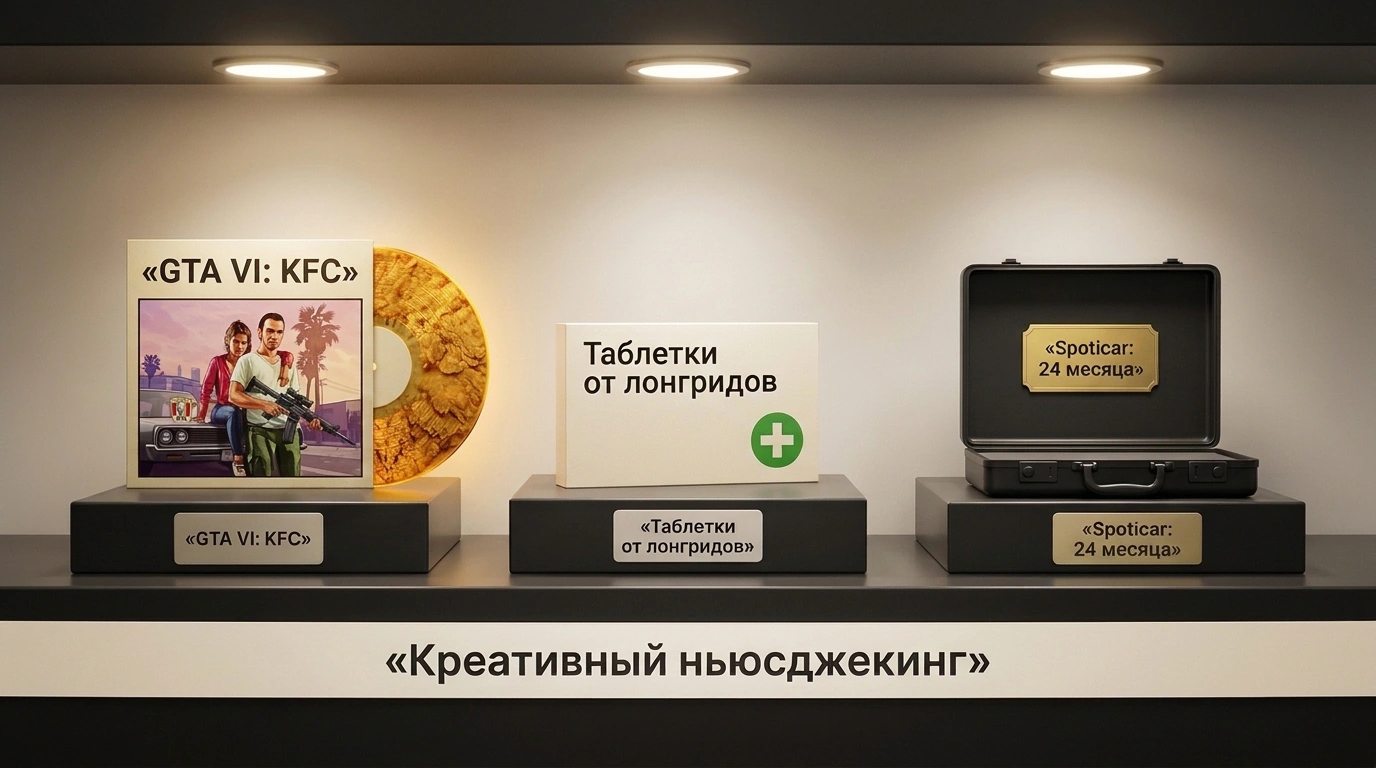
November 2026 brought several ad campaigns that broke through banner blindness without reciting a boring feature list. Two techniques drive them: newsjacking (jumping quickly onto a huge news event) and genre mimicry, wrapping a product in the visual codes of an unrelated industry. Looking at fast food, a browser feature, and a used-car network shows how humor drives business.
Newsjacking the GTA VI Launch: How KFC, Specsavers, and Five Other Brands Joined the Biggest Event
After thirteen years of waiting, the GTA VI release became the fall's biggest cultural moment: 32.5 million pre-orders and $3.79 billion in its first 24 hours. Dozens of brands jumped onto the hype, yet only the ideas tapping a real player habit or annoyance went viral.
KFC stood out brightest with three local stunts across different countries. In Spain, it ran "The Replacement Disc." Gamers were annoyed that physical GTA VI boxes held only a digital code with no disc, so restaurants in Madrid, Barcelona, and Valencia handed out a free piece of fried chicken shaped like a disc to anyone showing an empty game case. Simple, bold, and dead-on. In Australia, KFC staged tongue-in-cheek "fake funerals" so fans could take the day off work. And in the UK, orders arrived in a pink Cadillac styled after Cluckin' Bell, the fictional fast-food chain inside GTA.
British optical chain Specsavers pulled an even slicker move. The brand has long built ads on its Should've gone to Specsavers slogan, poking fun at people who mix up obvious things. Ahead of launch, the company teased its "biggest GTA collaboration yet," then announced a sponsorship of British haulage firm GTA Transport Ltd., complete with free eye tests for its drivers.
Zero cents spent on a Rockstar Games license. One hundred percent alignment with its own tagline.
Other brands tapped everyday fan habits too. Xbox teamed up with DJ Khaled on a site generating "doctor's notes" diagnosing "Vitamin G deficiency" and prescribing a day off. WhatsApp briefly renamed its X account to WhatUp, matching the parody messenger inside the game. Agency Cheil built an anti-meeting tool for people gaming during work calls: it listens to the call, warns you when colleagues say your name, and suggests a reply. Meanwhile, Dutch police filmed GTA-style recruitment clips with real officers.
You don't need KFC's budget to copy this playbook — just look at Specsavers and WhatsApp. Neither licensing nor heavy production is required: spot one detail in a trending story that naturally fits your niche, and move while the topic is hot.
'Longread Remedy': How Yandex Browser Packaged an AI Feature Like Pharmacy Pills
Advertising a new browser button directly sounds like another dry software update everyone scrolls past. The feature was Split View in Yandex Browser, triggered by the "Ask Alice AI" button in the top-right corner. The screen splits in two: an article, PDF, or video sits on the left (even working with scans and copy-protected text), while an AI chat opens on the right. You can immediately ask for a summary, pull a specific fact, or break down a dense section in plain language without switching tabs.
Instead of a dry UI demo, the team switched genres and turned text fatigue into a mock medical condition. Split View was presented with the deadpan seriousness of a pharmacy commercial: a classic pill box, "indications for use" and "dosage" sections, and a strict disclaimer at the bottom reading "not a medicinal product."
The campaign launched across browser channels with social videos and a landing page styled like a detailed medical leaflet. Then the aesthetic hit the streets: Moscow got outdoor billboards, and real cardboard "pill boxes" were handed out in coffee shops and libraries. Inside, instead of pills, sat instructions for installing the browser and turning on Split View. Creators — including medical bloggers — joined in, playing off their familiar medication-review format.
The magic of that physical prop is obvious. A cardboard box lands in your hands right as you're staring at a long report on a laptop, begging to be snapped and shared in the team chat.
A Spitz Instead of James Bond: How Spoticar Tackled Used-Car Anxiety Through Spy Parody
Buying a used car often brings quiet dread: what if a hidden defect pops up next week? When dealers reassure buyers bluntly with lines like "inspected vehicles," the words blur into background noise. Global certified used-car network Spoticar (owned by Stellantis) and independent French agency 777 Paris took a side door with their "Cute Little Dog" campaign.
Their timing hit the mark: online buzz was swirling around Robert Pattinson as the next James Bond. The spot parodies a dramatic spy thriller complete with tense radio chatter ("Agent, report position... He's moving... Agent 10, do you copy?"). Action-movie tropes crank up the suspense until a fluffy spitz trots into frame instead of a secret agent.
At peak absurdity, the ad snaps straight to a rational offer: "Not every risk is worth taking, especially when buying a used car. Choose a vehicle with up to a 24-month warranty."
Humor acts as a lockpick against skepticism. Viewers laugh at the parody and absorb the concrete proof — up to 24 months of warranty from Stellantis — with zero resistance. When a purchase naturally stresses customers out, genre parody carries a strong number past the wall that direct promises can't breach.