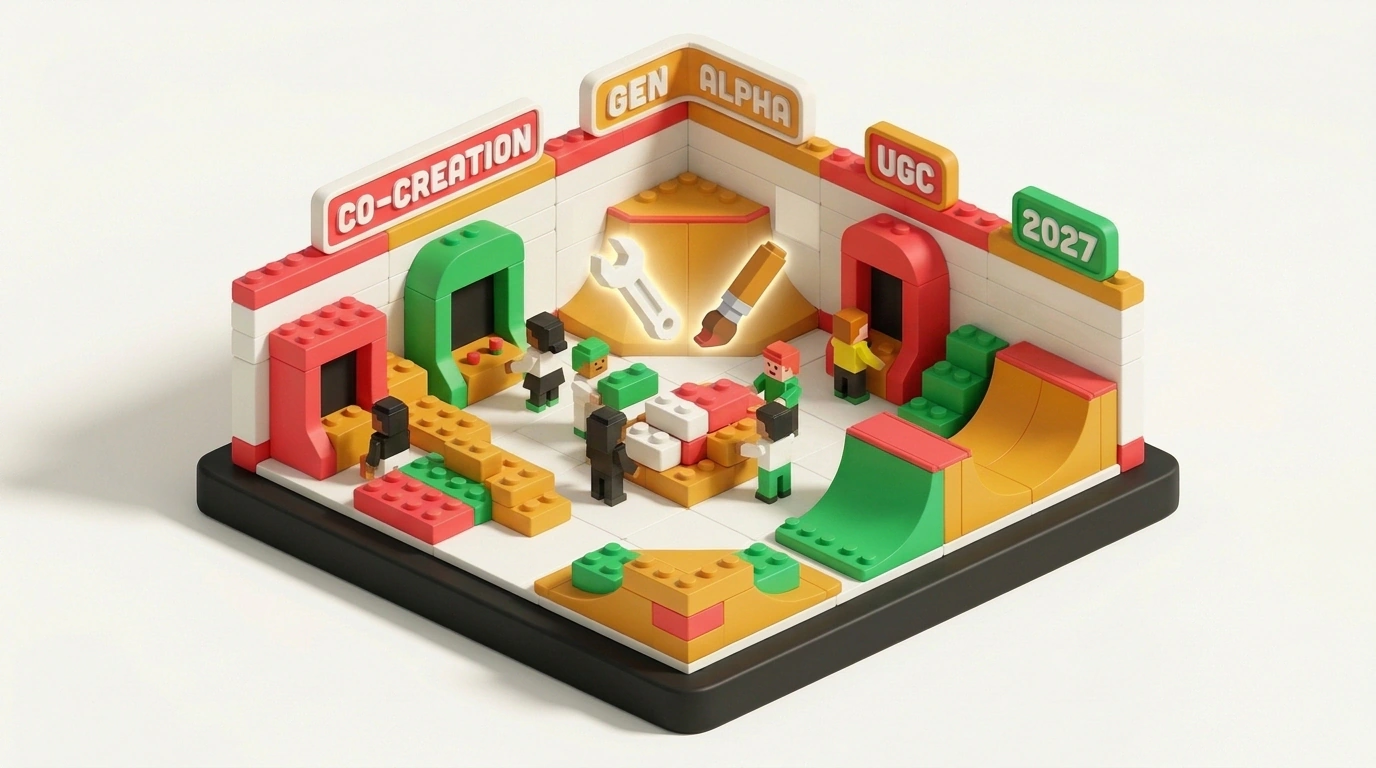
Global estimates from DKC and PwC show kids and teens born after 2010 already influence roughly 42% of all family spending. Meet Gen Alpha—kids raised with smartphones in hand who learned early to shoot, edit, and choose for themselves.
Walk into a supermarket Saturday morning and watch a family cart. A five-year-old confidently grabs a specific yogurt seen in a creator's video, and mom calmly scans it at checkout. Adults pay, yet kids have been building the shopping list for years. By 2027, that dynamic rewrites kids and family marketing: blunt banners and direct ad reads get swiped away in one second.
Why Your Brand Always Talks to Two People at Once
For decades, kids' ad budgets ran in a straight line: convince mom, and kids wear or eat whatever gets bought. That old model is broken. Family categories now run on a dual audience—every touchpoint must solve two jobs simultaneously. Kids spark desire and initiate the buy, while parents act as the financial filter checking brand safety and trust.
Russian data shows how heavily kids shape household purchases.
How Gen Alpha Influences Family Purchases and Brand Choice
It starts in the candy aisle at age three when a toddler points at familiar packaging. By nine, they vote on weekend cafes and family trips. By their teens, they carry their own bank cards and place online orders solo. That creates a powerful long-term payoff for brands: products kids bring home win over parents too. Skip early awareness, and you'll overpay later in crowded auctions for those same buyers.
The First Creator Generation: Five Mechanics Instead of Banners
For earlier generations, the web worked like on-demand TV: open, watch, close. Gen Alpha is different. VK data shows nearly half of kids this age regularly make digital content themselves—filming clips, making memes, editing, and running feeds. Their #1 purchase trigger reflects that: 61% of Alpha say buying desire starts on social media, ahead of peer tips (56%) and TV ads (48%).
Buying one pricey post from a million-follower star saying 'look how cool this is' will disappoint you. A full 76% of parents say topic and usefulness matter far more to kids than celebrity names. And 70% of Alpha aren't loyal to specific stars—they open feeds around hobbies like sneaker customization, PC builds, or beating game levels.
Direct broadcasts are giving way to co-creation, where brands hand audiences a reason and tool to make their own video or game moment. Three mechanics already work reliably in Russia.
First: micro-influencer assembly lines instead of one-off celebrity bets. Beauty brand VOIS built an internal content engine from micro-creator pools and in-house makers. They ship hundreds of simple, repeatable videos nonstop until the product feels native in feeds. Dependence on celebrity names vanishes, cost per view drops, and marketing runs like a machine.
Second: camera-ready packaging. Products get designed for smartphone lenses from day one—bold colors, weird textures, box Easter eggs, QR masks. Delivery app Samokat backed an Asian line launch with limited blind boxes containing secret toys in the Labubu trend. Surprise drove instant unboxing videos, turning grocery delivery into a family game.
Third: branded effects and UGC video kits. Brands supply a catchy track, AR filter, dance, or challenge prompt, and viewers spread it through feeds. Actimuno's Likee campaign brought packaging mascots to life in a game challenge where kids picked a hero and 'fought off viruses' on camera to an upbeat jingle—drawing 86,000 participants and over 78 million views.
Platform Map: Where to Reach the Dual Audience in Russia
TikTok limits and YouTube's disabled monetization in Russia broke the habit of dumping budgets into one app. A resilient media mix spans three distinct zones.
| Consumption Zone | Platforms | Key Numbers | Working Formats |
|---|---|---|---|
| Family screen | VK Video, Rutube, YouTube | 94% reach among kids & teens | Family creator integrations, long reviews, VK Clips & Rutube Shorts |
| UGC & interactive | Likee | ~15M MAU in Russia, ~40% aged 13–17 | Hashtag challenges, AR masks, branded dances, game landing pages |
| Metaverses (creation gaming) | Minecraft, Roblox | Minecraft 58%, Roblox 43%; +71% weekend activity | Branded worlds, quests, digital skins & virtual merch |
Video platforms stay the top spot for shared family viewing. Parents feel safe there—familiar interfaces, easy oversight, and long reviews pair naturally with short vertical cuts. For active making and challenges, kids jump to UGC apps. Likee remains active in Russia's legal framework, hosting campaigns from X5, Magnit, Kari, Soyuzmultfilm, LOL Surprise, and Actimuno. Keep one market caveat in mind: Likee is promoted heavily in Russia by its official reseller agency Fistashki, so relying on a single social app stays risky.
Special projects and interactive mechanics for Gen Alpha on Likee (Source: fistashki.org)
Zone three is sandbox games—creation gaming. Nearly half of surveyed Alpha pick world-building games, with weekend social play spiking sharply. To kids, it's the digital version of hanging out in the courtyard after school. Brands enter via quests and digital items carrying friend-group status. Retail chain Dixy ran a space event in Minecraft where kids solved tasks inside an interactive world, earned virtual rewards, and picked up eco-friendly shopping habits along the way.
The Parent Filter, Edutainment, and Where It Doesn't Fit
Fears of total screen bans don't hold up in data. Millennial parents grew up online too, and 71% believe screen time helps prepare kids for the modern world. Still, trust isn't blind: 65% actively moderate kids' feeds, co-watch videos, or log into kids' accounts for safety.
Shady mechanics or pushy 'beg mom to buy this' hooks hit a parental brick wall fast. Edutainment—mixing play with real value—clears that filter best, especially since ~59% of Alpha want to make the world better.
The Bank of Russia and Fistashki's 'Financial Culture' project nailed dual targeting. For kids on Likee, they launched the #yanepovedus ('I won't fall for it') dance challenge baking anti-scam rules straight into song lyrics—hitting 60 million views and 54,000 user videos. Simultaneously, expert posts on Telegram gave parents a clear, calm way to talk online safety with their kids.
Co-creation and metaverses don't fit every business. They shine in mass retail, food, drinks, apparel, toys, edtech, and family fintech—categories with visual appeal and moderation resources. If you sell complex adult services, narrow B2B gear, or lack bandwidth for regular video, chasing Alpha with a 'trendy challenge' will burn cash fast: teens spot fake brands and forced slang in one second.
Pre-Launch Check for Dual-Audience Campaigns
- Mechanics make total sense to an adult in five seconds and raise zero red flags in a parent review.
- Ads avoid hidden pressure and behavioral tracking of kids—targeting relies on context.
- Kids get an active role in the story: AR mask, dance, unboxing, build, or game quest.
- Media mix covers at least two zones (such as family video plus UGC or in-game integration).
- Your product or packaging naturally invites filming so user videos feel organic.
If you can't check the last two boxes yet, hold off on pricey game worlds and challenges—fix product appeal and parent value first, or your budget burns on round one.