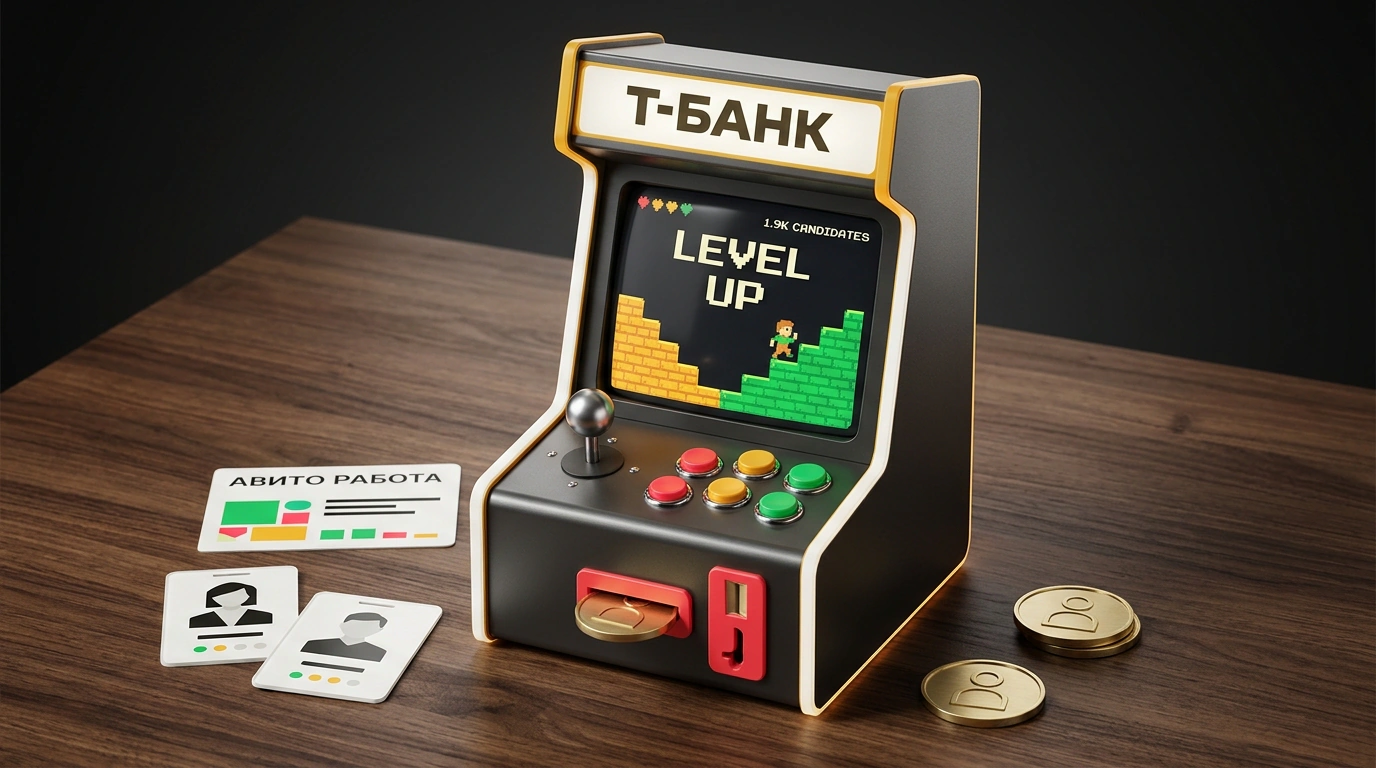
How many 'Join our friendly team!' banners or tenth-in-a-row 'unique advantages' landing pages does someone need to see before finally clicking? On cold audiences, blunt ads work like an office fan: humming constantly while the brain tunes them out completely.
Why Passive Audiences Skip Banners—Yet Get Hooked on Play
Hiring makes this painfully clear. Joint research by Avito Work and Avito Ads shows only 15% of people are actively job hunting. Another 28% are passive candidates: not rushing to quit today, yet casually checking openings to stay aware of the market.
B2B buyers behave the exact same way. Nobody drops their phone number on screen one until they see how your product actually differs from five rivals with identical websites.
Standard banners feel like flyers outside a subway exit: someone shoves a list of perks in your hand and it hits the trash three seconds later. Mini-games work like a test drive or free sample. Instead of reading a boring checklist, users steer the wheel or test the product themselves. Nobody demands a signature up front, resistance drops, and attention holds for minutes.
Gamification (applying game mechanics like levels, goals, and rewards to business tasks) outgrew teenagers long ago. Research by RVI and NAFI shows 75% of Russians aged 14+ play video games at least occasionally, 34% of adult gamers play daily, and 62–74% play on phones and tablets. Humans turn every new medium into play fast: back in 1844, operators were already playing chess over the brand-new Washington–Baltimore telegraph line.
Retro arcade zone with 1990s cabinets and consoles (Source: Wikimedia Commons, CC BY-SA 4.0)
T-Bank & Avito Ads Case: 2D Platformer, Resume Prompt, and Hiring Funnel
From March 17 to April 17, 2026, T-Bank and Avito Ads ran a custom branded campaign to hire bank representatives across Moscow and Moscow Region. They set three targets: lift employer brand awareness by 3 percentage points, hold players inside the game past three minutes, and send over half of finishers to the careers site.
Inside Avito, they built a 1990s-style pixel 2D platformer. A bank-rep character walks to a client, dodges obstacles, grabs items, and unlocks job perks along the route—weaving the job description straight into gameplay.
The clever twist waited at the finish line. Instead of a fake digital trophy, finishers unlocked a resume guide plus an AI prompt strictly constrained to use only real facts about the candidate. Inside the guide sat two links to T-Bank's representative role so players could put their fresh resume to work immediately.
Traffic came from Avito's homepage banner, native/display slots, and push notifications straight into the game. Ads used the same pixel hero and city visuals so clicks landed seamlessly. Audiences were split into segments (students, young pros, support staff, admin staff, office-job seekers), later narrowing around 'university' and 'car rental' interests.
In creative testing, they pitted a direct job pitch against playing for the AI resume prompt. The practical tool won the lowest cost per Quality Visit.
One-Month Funnel for the T-Bank & Avito Ads Game Campaign
Out of everyone who started, 63.9% finished, averaging 3 minutes and 24 seconds in-game. A full 69% of finishers clicked through to job listings—beating the 50% target—with some players tapping job links directly without even grabbing the guide.
A Brand Lift Study comparing exposed users against a control group showed brand awareness up 3.6 percentage points (vs. a 3-point goal) and ad recall up 2.3 points. Per Veronika Markina, Head of Media Buying & Special Projects at T-Bank, several players have already been hired.
Small-Business Mini-Game Renaissance: Water-Treatment Sim in 5 Hours & 11 Iterations
It's easy to dismiss a major bank's case: corporations have budgets for production and media buying. That excuse held weight once—until AI tools dropped the entry bar from months of dev work to a single workday.
Look at Osmos Guru Game, a browser sim about running a water-treatment business. Built from scratch with AI in 5 hours and 11 iterations—lunch breaks and testing included—it packs five levels, six mini-games, and real unit economics: take leads, order water tests, size equipment, negotiate prices, buy parts, and dispatch installers. Along the way, delivery vans break down, clients complain, and tax inspectors call. Your goal: close 12 sales, finish 9 installs, and collect 500,000 in-game rubles without going broke.
Under the hood sits plain HTML, CSS, JavaScript, an equipment catalog, and Yandex Metrica. Logic runs on a simple state machine tracking each lead from water test to quote, sale, warehouse, install, and review. Players make choices while scripts compute consequences.
Here is the biggest economic edge: AI speeds up coding and scripting up front, yet once live, the game runs on normal browser rules. You pay zero AI token fees per player click.
Outside HR, this format fits four clear spots. On complex B2B websites, a simulator replaces your tenth landing page by letting buyers test sizing themselves. In corporate LMS portals, games replace slide cramming—give reps ten tough clients or installers a broken unit. In loyalty programs, useful scenario rewards beat 3%-off spin wheels. On blogs, niche inside jokes drive deeper engagement than share-to-win contests.
Cost vs. Benefit: When Mini-Games Pay Off vs. Become Digital Clutter
Weighing costs honestly leaves open questions in both cases. T-Bank and Avito Ads didn't disclose total spend, CPC, or exact hire count, so true cost-per-hire can't be calculated. Osmos Guru Game's creator also admits there's no hard sales-impact data yet.
A 2013 meta-analysis by Wouters and colleagues covering 77 studies and 5,547 participants offers a helpful reality check. Educational games beat traditional formats on learning gains (d = 0.29) and even more on long-term knowledge retention (d = 0.36). However, researchers found no automatic boost in motivation (d = 0.26, statistically insignificant). A game alone won't force anyone to learn or buy—peak impact comes when paired with other tools, multiple sessions, and team debriefs.
Building a game in five hours and building a useful tool are two different things. AI builds working trainers and disposable clutter at the exact same speed.
When a Mini-Game Makes Business Sense
- Your audience is cold or passive, and your product or role needs hands-on demonstration.
- The scenario reflects real experience—product sizing, buyer objections, or a real workday.
- Finishers get a clear funnel bridge and practical value (guide, calculation, prompt, relevant perk), not an empty 'You Win!' screen.
- Tracking runs all the way to site visits or leads via Yandex Metrica or end-to-end tags.
If you just need to sell a simple product with hot search demand, standard search ads and a clear offer cost less. Mini-games pay off when you need to pierce banner blindness, let buyers test a complex service without a sales call, or walk new hires through real mistakes before they hit a live job site.