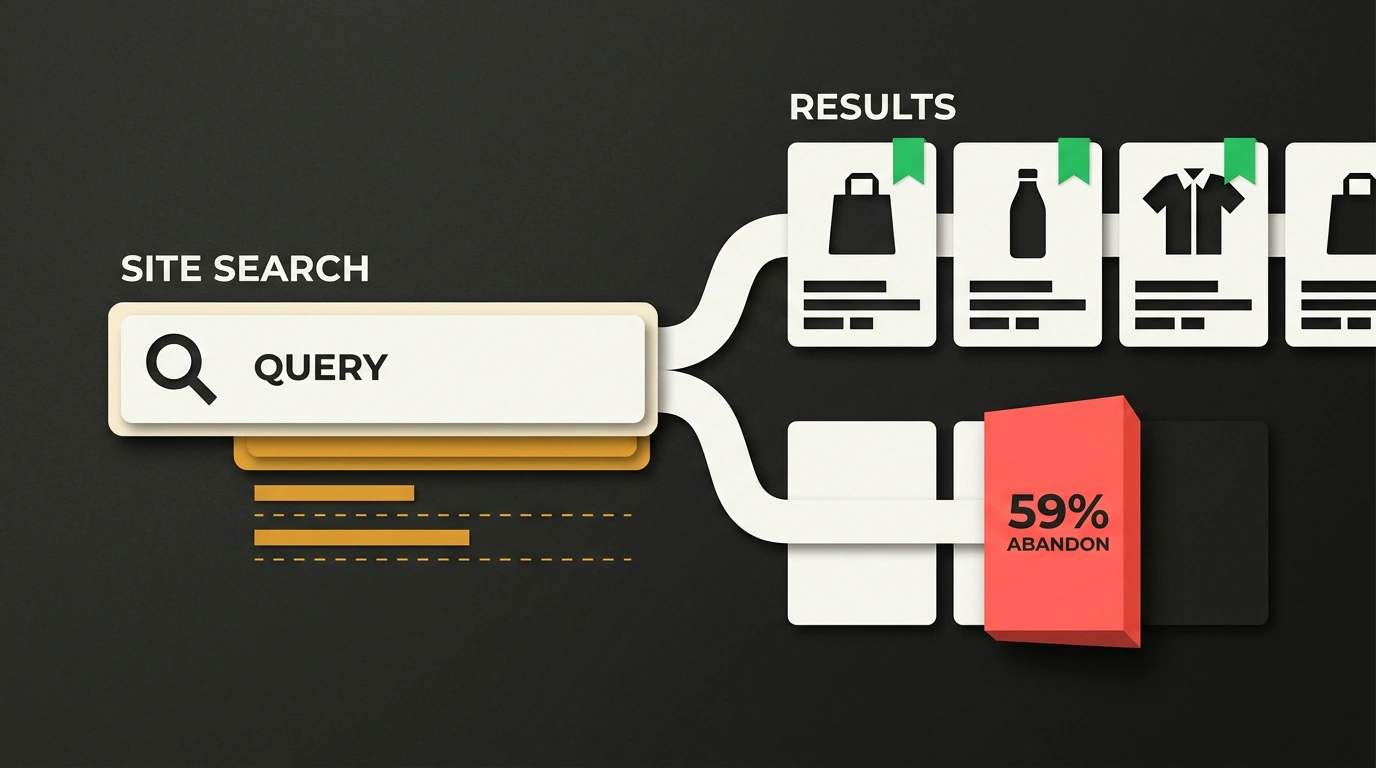
Here's a simple paradox. Online stores spent three years upgrading catalog search and cut bounce rates from 80% down to 59%. Sounds like a win—except nearly six in ten visitors still close the tab over bad search results, rising to 73% among shoppers aged 18–34 (versus 47% for 55+).
Those numbers come from Nosto's fresh survey of 2,000 US and UK shoppers compared against 2023. Site search is that header bar used by visitors with wallets practically out. Yet your hottest traffic leaks worst right there: half of respondents (50%) abandoned a purchase purely over poor search results, even when they arrived ready to buy.
Repeat business suffers next. After bad search, 52% of shoppers return less often; after fast, accurate search, 63% come back more willingly. When search fails, buyers flee to Google (62%), competitors (53%), or quit shopping altogether (42%). A new interceptor has arrived too: 40% now ask ChatGPT or Claude after failed site search—rising to 50% under age 45—and 40% say AI agents outperform many store search bars.
Why Search Bars Frustrate Buyers—and Where the AI Trap Sits
Shoppers are used to typing natural phrases into AI like 'road running shoes for wide feet'. Then they open a store and play 'guess our warehouse SKU name'. Instead of semantic search that grasps everyday language, storefronts still run rigid keyword-matching engines.
What Frustrates Shoppers Most in On-Site Store Search
The biggest revenue killer sits at the bottom: zero-results pages or junk results while stock sits in your warehouse. Shoppers later browse categories manually and realize your own site hid the item.
Appetite for smarter search is huge: 72% of shoppers have tried or want AI store search (~80% under 45). Another 63% like when a search bar asks quick clarifying questions like 'road or trail?' or 'day or night cream?' Buyers want practical speed: find items faster (34%), narrow options (30%), handle messy queries (27%), show fewer but better hits (26%), or spark ideas when unsure (24%). Crucially, 48% want that help inside the search bar itself, not in a floating chat popup.
The cost of getting it wrong is steep. A full 73% worry about personal data training AI, 71% suspect algorithms push high-margin items, and 69% refuse to lose a toggle back to classic search. Worse, 69% of early adopters quit an AI helper right after irrelevant suggestions. Slapping AI onto a messy catalog with blank specs only makes shoppers leave faster.
Three Quick Search Audits for Your Site
Nosto recommends a three-layer setup: understand queries first, show clear help inside the bar second, and offer guided chat only when asked. Follow that same order for a 30-minute audit.
Export your top monthly zero-result queries and test them yourself. If stock exists while search returns nothing, blame missing synonyms, typo tolerance, and stiff internal product titles. Add everyday slang mappings and test four-word queries like 'gift for husband under 5000'.
Next, run mobile search with tired-buyer eyes. If a normal query dumps a hundred look-alike SKUs with no quick filter chips right under the bar, nobody scrolls to page five. Surface quick filters for size, use case, or price beside the bar instead of a popping chatbot.
Finally, check twenty top-selling product cards: are season, material, use case, and compatibility fields filled cleanly? Without clean attributes, no algorithm can narrow results. And if you're testing AI prompts, keep a classic-search toggle visible and explain clearly how query data is used.