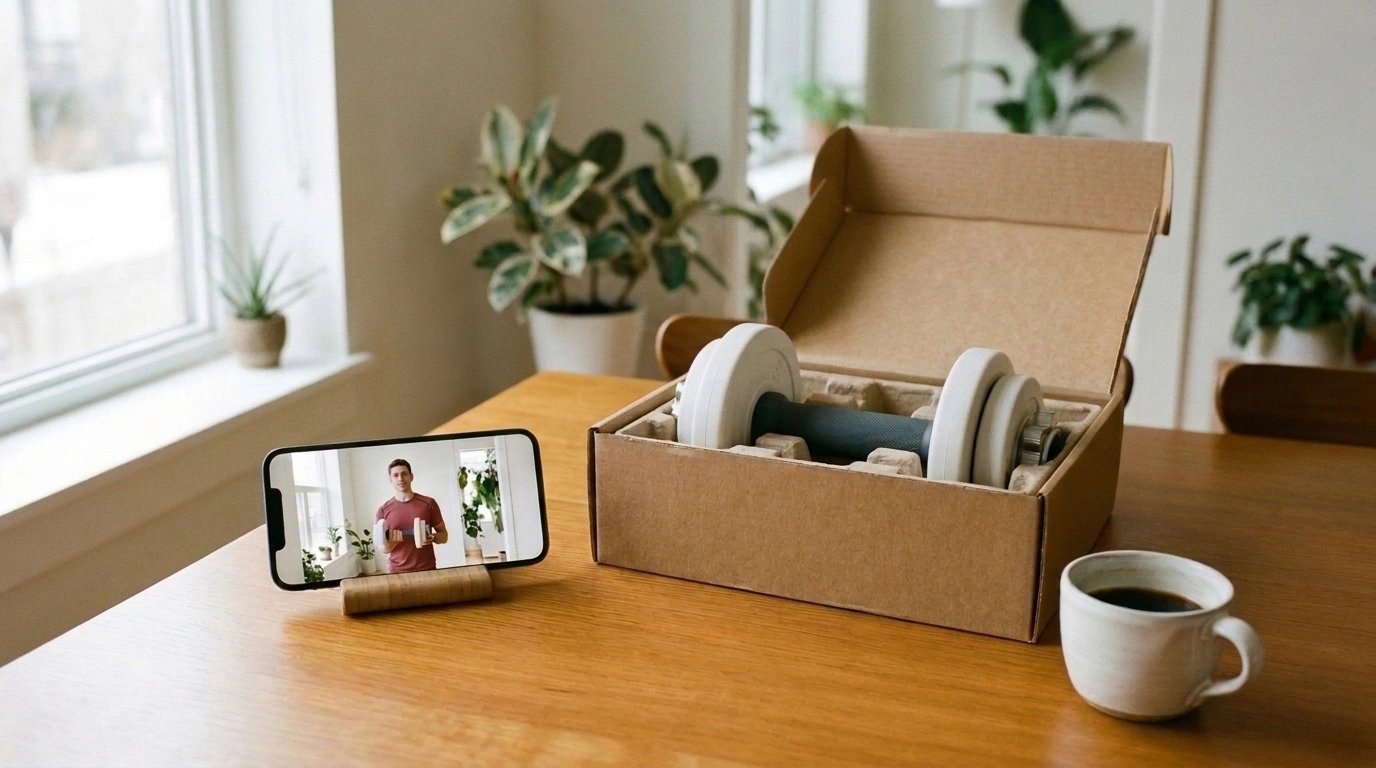
Picture a typical online fitness purchase. Someone scrolls their feed, sees a familiar trainer demonstrating adjustable dumbbells, grabs their promo code, and checks out. Three days later, a courier drops off a heavy box. At nine out of ten stores, silence follows—or at best, a bland receipt asking to rate delivery.
One fitness brand working with Canadian agency JIBE Commerce did it differently. On delivery day, the buyer received an email with a ten-minute setup and first-workout video hosted by the exact trainer whose promo code they used at checkout. No generic studio actor: a familiar face walked the beginner through their very first set.
Why Influencer Campaigns Break at the Most Expensive Moment
Most influencer marketing still runs on a short loop: find a creator, approve a social post, count week-one clicks, and close the project. Work stops the exact moment a shopper gets interested and clicks onto your website—where they still have to pull out a credit card and figure out the product at home.
Stopping there leaks money in two places: on the product detail page (PDP) where buyers hesitate before paying, and in the first days after delivery when returns and repeat orders are decided. A study of a Chinese cosmetics brand illustrated the retention gap clearly. Comparing 8,800 buyers from influencer livestreams against 3,075 regular online buyers, livestreams excelled at bringing first-time shoppers—yet those buyers came back far less often during a major 2020 summer sale.
Livestream vs. Regular Online Buyers: New Share and Repeat Orders
The pattern is clear. Livestreams bring a wave of brand-new shoppers, but without smart post-purchase follow-up, they cool off and leave. Judging creators solely on first-order revenue is a costly habit. Judge them on retention-adjusted ROI—how many buyers come back for order two.
A second problem makes strong creator partners look unprofitable on paper. A shopper watches the trainer's video, gets excited, doesn't click the bio link, and searches your store name plus "promo code" on a laptop that evening. They click the top paid search ad and buy. At month-end, paid search claims credit while the creator report shows zero.
The famous eBay field experiment by Tom Blake, Chris Nosko, and Steven Tadelis proved how heavily paid search steals credit. Turning off eBay's branded search ads on MSN and Yahoo (keeping Google as control) showed 99.5% of clicks simply shifted one line down to free organic results. Similarly, 15 US Facebook Ads field experiments found that even sophisticated behavioral attribution models often diverged sharply from randomized test results.
Basic tracking bugs add noise too. A misfiring script can double-count a single order unnoticed until budgets get cut. Before dropping a creator over "weak numbers," pull one actual order in CRM and trace it with analysts.
Marketplaces create another blind spot. Someone discovers the dumbbells on social media, then buys them on Amazon, Ozon, or Wildberries for next-day shipping. Your direct site sales dip even though the creator drove real demand—and worse, you lose the buyer's email and promo-code link, making post-delivery tutorials impossible. Always combine site and marketplace stats before grading partners.
Cold Shoppers at the Buy Button: When a Creator's Face Helps vs. Hurts
Suppose a store puts a creator's video directly on the PDP alongside photos, price, and the Buy button. On paper it sounds unbeatable, yet two very different audiences land on that page.
Group one is the creator's own followers clicking their link. Seeing a familiar face on your site instantly removes anxiety: "Yes, I'm in the right place, this is the exact item." The handoff feels seamless and bounce rates drop.
Split comparison of two product page layouts: a clean page without video versus a page featuring an expert creator video
Group two is cold shoppers from search, category browsing, or regular ads. They have never heard of this person. Here the trust dynamic flips: your store is vouching for a stranger on screen. Ask yourself bluntly: why should a cold buyer trust this person?
A Tilburg University experiment with 432 Dutch Instagram users explains this well. Participants viewed posts from fitness creators with varying follower counts promoting either a protein shake or ice cream. Larger follower counts boosted purchase intent only for the protein shake, where viewers saw genuine expertise and shared identity. The moment the same fitness star held ice cream, their big-audience advantage vanished.
That yields a strict rule for PDPs: never put a creator next to the Buy button just because they have big reach or your team likes them. Vet candidates by reading the comments under their posts. Sales metrics show who grabs attention; comment threads where viewers ask how to adjust dumbbell weights between sets show where audiences actually trust their expertise.
JIBE Commerce founder Steve Kruger separates two roles: the creator who pulls shoppers from social feeds isn't always the one you put beside the Buy button or in post-delivery onboarding. Test candidates by watching how they handle real viewer mistakes. If someone's pizza sticks to the peel, a strong host calmly walks through the fix step by step instead of flashing a canned smile.
One more shift makes PDP honesty vital: AI shopping agents. Soon, AI assistants will compare products on buyers' behalf—and they won't fall for creator charisma. An agent checks video claims directly against verified reviews and return reasons. If an ad video promises perfection while reviews complain about broken parts, the gap gets exposed instantly.
What Product-Page Content Actually Removes Doubt
For on-site video, you don't even need a million-follower celebrity. If you already drive traffic via search, SEO, or paid ads, hire a UGC creator (a specialist who films authentic reviews and demos for brands) strictly for the PDP. The video never needs to go on their personal feed—spell that out in the contract so you don't pay for reach you don't need.
Shopify Collabs platform for managing creator partnerships and tracking store sales (Source: shopify.com)
Where do you get topics that lift conversion? Pull them straight from support tickets, product reviews, and creator comment sections. Pick the most frequent pain point and keep customers' exact wording. Instead of a vague brief to "show assembly," ask for "why the latch doesn't snap shut and how to turn it until it clicks."
Sometimes you don't even need a new shoot. Watch an existing creator review as if the box just arrived on your kitchen table. If every step is visible, a tight re-edit works (provided rights allow it). If there is a slick jump-cut between loose parts and a finished product, reshoot the assembly.
Next comes technical hygiene that teams routinely skip. Test every demo or setup video two ways: muted on a phone screen and audio-only without looking. Shoppers browse PDPs silently on the subway, then assemble gear at home with a wrench in both hands listening on speakerphone. "Click here" fails—hosts must name the exact button and location. Put critical audio cues like a locking click into captions, and add a short text checklist below the video. Bake all of this into the brief before filming.
If you embed shoppable video widgets (such as on Shopify), test the full mobile flow yourself: tap product in video -> pick variant -> add to cart. Too often links point to a base SKU instead of the exact color, size, or bundle the creator holds.
Don't skip transparent disclosure. In Western markets, the FTC's revised Endorsement Guides (16 CFR Part 255, July 26, 2023) treat even a free gifted product as a "material connection" (§ 255.5). Under § 255.0, disclosures on PDPs must be clear and conspicuous right next to the video in plain language—such as "We gave Maya this mixer to test" (and state if paid). Never hide behind tiny "Legal" or "Disclosure" links; put it visibly or audibly inside the video and verify on mobile, where social captions disappear. Brands, creators, and intermediaries share liability (§ 255.1). In Russia, follow the same caution by checking Federal Law 38-FZ and ERIR labeling rules with legal counsel before embedding creator clips.
After Checkout: How Creator Videos Cut Returns and Activate Products
The most undervalued part of the funnel starts once the card is charged and the parcel ships. Post-purchase onboarding—a sequence of delivery-day emails and tutorials—keeps complex items out of the closet and prevents night-one returns.
Back to our JIBE Commerce dumbbell example: an email featuring "your" promo-code trainer feels like personal concierge service, nudging buyers to unbox and complete workout one. Keep one practical boundary in mind: your store likely already has a welcome flow. A familiar trainer shines on step one, but before paying a second fee for email two, ask what specific business problem that second cameo solves. Often it works better to fade the creator out gradually and hand the relationship back to your brand.
When tied to measurable goals, post-delivery creator content drives five clear outcomes.
Isometric customer journey from unboxing an order to watching a tutorial video and completing first activation
First, cut preventable returns. Dyson stylist ambassador Chris Long filmed a short clip showing how starting on damp hair affects curl hold with the Dyson Airwrap. Measure this strictly by the return-reason code "curls don't hold" per 100 delivered units against a control tutorial—while never hiding or complicating the return button for either group.
Managing expectations works the same way. Three apparel studies found shoppers who noticed minor color or texture differences were less likely to plan a return when sellers flagged that variation upfront at delivery. In beauty, realistic wear tests shine: creator Chloe Swift styled each side of her head with a different Airwrap model and showed timestamped results—fresh curls at 12:54, after wind at 13:55, and next day at 16:35. Buyers see realistic wear and fixes, while real defects and exchanges still route to brand support linked in the same email.
Second, guide beginners to an early win and through early mistakes. AeroPress inventor Alan Adler simply brews one great cup from start to finish—beginners don't need ten pro recipes yet. Ooni pizza oven host Lewis Pope breaks down one exact move—launching pizza off the peel—matching the search query "pizza sticking to peel." Crochet kit brand The Woobles shows how to undo one stitch without unraveling everything, while Bella Coco offers a dedicated left-handed tutorial upfront so lefties don't mirror steps mentally.
For users past the basics, highlight hidden features and care. MicBergsma covers three night modes on GoPro HERO11, while REI host Miranda runs a GORE-TEX jacket under a "rain" shower at 6:12, washes and re-treats it, then re-tests at 11:38—preventing dozens of "your expensive jacket leaked" complaints.
Third, sell paid programs or subscriptions. Trainer James Grage posts a full 30-minute follow-along resistance-band workout, then pitches the 12-week TA2 Build program at $59.95/year (bands sold separately), drawing at least 5,600 participants. Measure simply: how many of every 100 eligible owners buy the subscription with vs. without the video.
Fourth, cross-sell accessories and repeat orders. Ooni ambassador James Sinowicki cooks sizzling steak fajitas on the Dual-Sided Grizzler Plate; the brand emails that recipe to oven owners while excluding anyone who already bought the pan, comparing sales to a standard email control. Similarly, Eric (Simply Elegant Home Cooking) makes fettuccine with the KitchenAid pasta attachment—giving attachment owners a first recipe and mixer-only owners a buy link.
Children's play-couch brand Nugget nailed order-history segmentation: mom creator @toribreen93 showed how two couches build swings, obstacle courses, and linked treehouses—giving two-couch families weekend ideas and one-couch families a clear reason to buy a second.
Fifth, spark user-generated content. Ahead of GoPro's HERO11 Million Dollar Challenge, past winners Anna Shauno and Fabio Tischler ran coaching clinics for entrants. The contest drew 42,446 user clips, with 55 creators making the final edit. Measure clinic impact by comparing valid submission rates against a standard invite email.
Overall, creators can fill eight post-purchase roles—from calm demos to co-creating recipes.
| Creator Role | Buyer Action | Real Example | What to Measure |
|---|---|---|---|
| Demonstrates | Watches fajitas on cast iron and decides to buy | Ooni — James Sinowicki | Extra pan orders among oven owners |
| Hosts live cook-along | Preps dough ahead and rolls live with host | Ooni — pre-live recipe emails by Kelsey Small | Share of registrants reporting finished pizza |
| Answers Q&A | Submits sourdough question, gets timestamped reply | Ooni — Q&A with Bryan Ford & Mike Vaona | Owners confirming the answer solved their issue |
| Reviews mistakes | Sends fail clip, fixes one thing, shoots retry | Flickr + Fujifilm: 3 pros reviewed 10 of >600 entries (~350 viewers) | Share of submitters completing a successful retry |
| Runs a challenge | Completes 3 progressive bakes to unlock next lesson | Tour de Zwift 2026: 6 stages unlock virtual kit | Stage completion and finish rate |
| Polls the community | Votes on next lesson or future kit theme | LEGO Dungeons & Dragons contest (>600 entries; Lucas Bolt won) | Share of voters attending chosen lesson |
| Co-creates | Adapts base recipe; creator tests and credits buyer | Co-developing recipes with followers | Usable submissions and published credits |
| Celebrates progress | Returns as guest coach showing day-one to pro arc | Former beginners coaching new cohorts | Returning creators and beginners applying tips |
Interactive formats need three strict guardrails: cap public critiques (Flickr and Fujifilm picked 10 of 600+ entries), pick common mistakes useful to all viewers, and get explicit permission before airing. Challenges need clear finish lines with real rewards, and votes require a firm promise to ship what users pick.
Promo Codes, CRM Branching, and Honest Payback Math
To run this without manual labor, link orders to creators via clickless tracking—attributing checkout promo codes directly so third-party cookie blocks don't break tracking. Push that data to your email platform to trigger a branching flow similar to Zwift Academy, where three baseline rides unlock a rider profile and custom plan.
For our adjustable-dumbbell store, delivery day triggers a 10-minute workout from the buyer's promo-code trainer matched to their exact model. Buyers without a promo code still get a model-specific guide and choose which trainer to start with.
Place two buttons below the video. Button one—"I finished"—logs verified completion (an email open proves nothing while dumbbells sit sealed in the box) and unlocks workout two, flagging any upcoming paid program honestly. Button two—"I need setup help"—opens a targeted assembly clip plus direct support. Add one vital safeguard: if a part arrives broken or missing, CRM must pause workout reminders automatically until support resolves the ticket. Nothing irritates a buyer faster than a cheerful "Time for workout one!" email while broken gear sits on the floor.
Give your email team five inputs before building: creator ID from the order, SKU, approved clips, license end dates, and branch logic. Always run two test orders—one with a promo code, one without—before launch.
Now the key business question: does a buyer truly need their trainer, or would one great in-house instructor video work just as well? Don't guess—run a clean split test.
Take two trainers (A and B) who sold the same dumbbells. Split A's first-time buyers 50/50: half get A's video, half get the exact same routine filmed by B. Mirror that split for B's buyers. Keep routine, production quality, sender, send time, offer price, and attribution window (say, 30 days) identical. Add a third control arm with a standard brand trainer if desired.
Avoid a classic analysis trap: divide unique buyers (across all tracked channels, including direct returns) by everyone randomized into the group, not just email openers or video viewers—otherwise selection bias skews results because active buyers already spend more.
Reading the test is clear. If Trainer A wins in both groups, A is simply the stronger host—skip personalization costs. If A wins with A's buyers and B wins with B's, continuity genuinely pays. If the familiar trainer boosts workout completion without lifting upsells, budget that fee under onboarding and retention (LTV) rather than direct upsell.
Before ordering shoots, check break-even math. In our baseline example, an extra video with Trainer B costs $1,200 (shoot plus rights), 2,000 eligible buyers arrive during the license term, and net contribution margin per paid program sale is $30. Test your own numbers below.
Post-Purchase Creator Video Payback Calculator
In the baseline case, break-even requires 40 extra sales—just two more paid orders per 100 eligible buyers. If your test confidence interval spans both profit and loss, don't scale production yet; extend the test for a larger sample.
Stay realistic about trendy AI influencer automation too. Steve Kruger described a project where one person used software agents to manage 10,000+ creators: setup took 3–4 weeks and attributed revenue hit ~$4–5 million in two months. Impressive on the surface, yet without knowing costs and incrementality, net profit remains unknown. Worse, if agents auto-renew contracts based on flawed attribution (like over-crediting coupon clicks), they scale unprofitable deals automatically.
The same applies to AI-written emails. In an experiment with 293 short-story writers, AI-assisted stories scored higher individually yet became noticeably more alike as a group. When automation frees up a manager's day, spend that time reviewing real buyer questions to creators rather than churning out ten generic emails.
Rights, Fees, and Disaster Insurance: What to Lock In Before Filming
Even the sharpest funnel collapses if lawyers or a creator force you to pull a video a month after launch. The sticking point is usage rights. If a contract only covers Instagram or TikTok posts, embedding that clip on a PDP or in emails without an addendum is off-limits.
Specify four terms upfront: exact placements (PDP, email, organic social, or paid whitelisting), license duration, territory, and allowed re-editing. Ask for an itemized quote splitting production, placements, and term.
Match pay structure to video role. For PDP clips seen by all site visitors, use a flat production fee plus a fixed-term site license; if adding revenue share, define qualifying orders, return deductions, and payout timing upfront. For post-delivery setup guides sent only to buyers, a flat fee fits best because editing effort doesn't change whether a user watches once or thrice. If a video sells a paid program, pair a flat fee with upsell commission—making renewal math obvious later.
Check economic limits too. Low-margin impulse items can't justify custom post-purchase shoots. When expanding internationally, subtitles or dubbing only work if hardware and button layouts match identically; if local models move a switch or nozzle, reshoot that clip on local units.
Four operational habits prevent headaches six months later:
- Version control: New cardboard boxes won't break a video, but a redesigned latch makes old instructions harmful. Assign an owner, compatible SKU list, approval date, and placement registry to every clip, keeping legacy videos labeled for older hardware.
- Expiring rights in old emails: Buyers often open delivery emails months later after rights expire. Never embed video files inside emails. Link the button to a brand-controlled product-help page so when a license ends, you either renew or swap in an in-house guide at the same URL without breaking old emails.
- Customer consent for critiques: Before airing buyer fail clips in live workshops, get written approval covering the exact clip, planned commentary, channels, and credit.
- Emergency pause protocol: Creators are human and scandals happen fast. Define who has authority to pull clips from PDPs and emails immediately, who contacts the creator, and maintain a live placement registry so nothing lingers in an old CRM flow.
Pre-Launch Checklist for Creator Videos on Site and in Email
- Contract separates production, placements (PDP, email, organic, paid), license term, and allowed edits.
- Post-purchase emails link to a brand-controlled help page rather than embedding video files directly.
- Brief enforces muted and audio-only checks: button names spoken aloud, clicks captioned, text steps included.
- Clear gift or payment disclosure appears next to the PDP video and inside the clip, verified on mobile.
- CRM pauses onboarding emails automatically on defect/missing-part tickets, and two test orders (with and without promo code) passed.
- Every video has an assigned owner, compatible product versions, license end date, and emergency takedown protocol.
