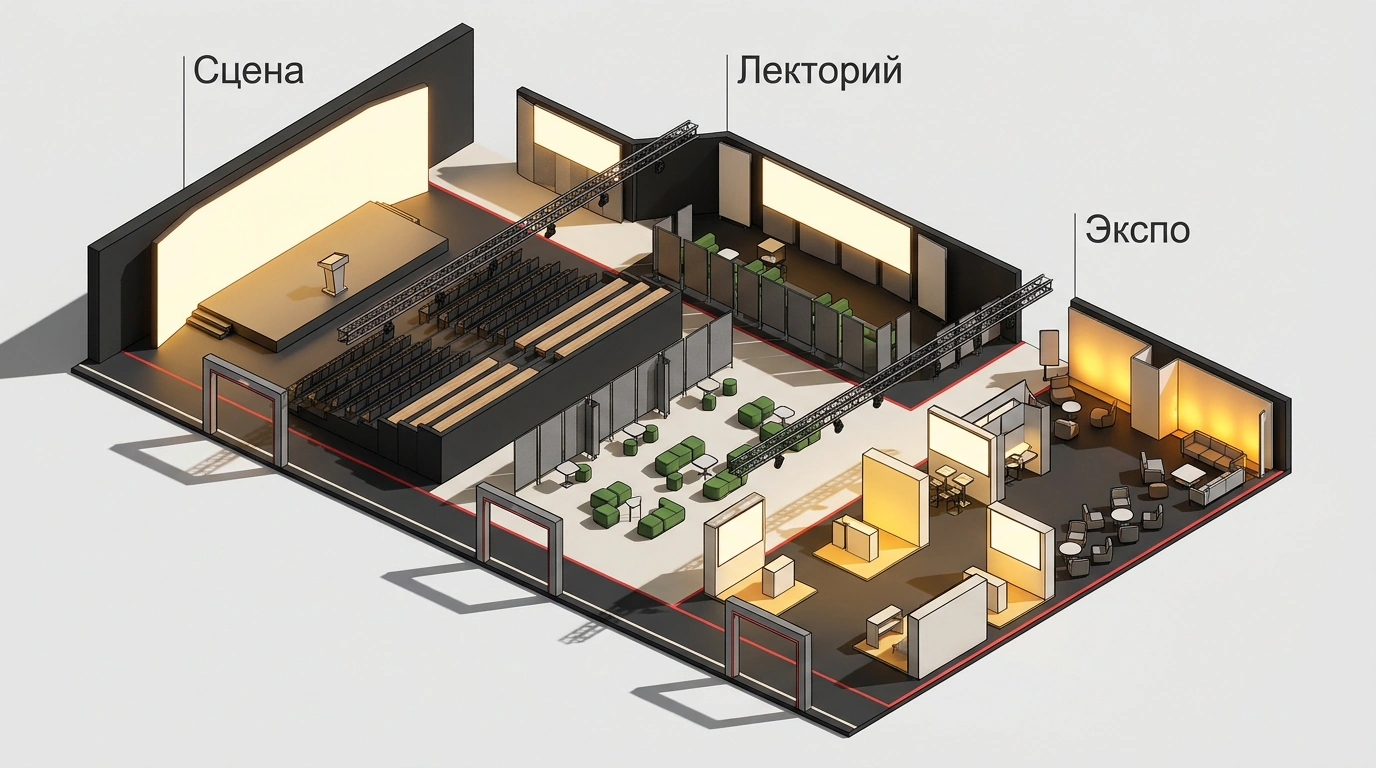
Before a major event, clients nod calmly at hardware lines: giant LED walls, concert audio, even stage holograms are easy to picture. Then eyes hit "Concept & Script Development," sparking the classic pushback: "For that money, we need to see something tangible." Worse, on launch day, even pricey events stumble: props go to the wrong floor, catering misses a delayed lunch, and nobody knows who calls the vendor.
Here is how to decode program budgets before paying deposits and assign venue ownership so launch day holds together.
Why 'Script Development' Sparks Pushback and What Lives Inside It
Brains picture rental halls and LED screens instantly, while "script" sounds like overpriced paper. In 2004, Canadian marketer Michel Laroche and colleagues studied how service intangibility drives buyer anxiety—finding that mental intangibility (vague descriptions and difficulty picturing the outcome) triggers far more fear than lacking a physical object. A blank budget line hits that nerve.
Inside sits event directing: engineering the entire day's logic—business goals, guest journeys by segment, pacing, wayfinding, and contingencies. Emcee lines are a tiny fraction.
VNV PRO's dealer conference shows this clearly. A manufacturer launching a new product line wanted higher sales. Before booking entertainment, the team asked dealers what blocked sales—flipping the agenda from long keynotes into objection workshops, hands-on product labs, and executive roundtables. Every activity had a job. If an agency can't explain what business job a "cool activation" performs, cut it.
Prevent post-deposit friction during the RFP: separate pitch concepts from detailed production, and specify four deliverables in writing—concept count, document depth, revision rounds, and director attendance at rehearsals. Request a past full script sample upfront and lock final file deadlines.
Auditing Scripts on Paper, Trimming Smartly, and Measuring Return
When budgets tighten, teams often cut the wrong muscle. At an AI platform launch, slashing demo booths while keeping a flashy stage show leaves guests clapping without ever testing the tool. Simplify decor and sizzle reels instead—keep live specialist demos intact.
Trim smartly by sorting activations into three buckets: must-have (test drives, demo stations), amplifiers, and pure decor—cutting from bucket three first. Calculate cost per meaningful contact adjusted for depth: a 1,000,000 RUB interactive zone across 500 guests costs 2,000 RUB/touch, while 300,000 RUB for 50 private buyer consults costs 6,000 RUB—yet in complex B2B, 50 real negotiations beat 500 drive-by booth scans.
Swap pricey packaging without losing mechanics: replace custom installations with live expert demos, celebrity panels with practitioner roundtables, and open booths with pre-booked slots to cut idle time. Check cascade effects (cut the moderator, assign a timekeeper; cut a meeting room, find a quiet corner), and shrink scope alongside budget—three full sessions with Q&A beat five rushed ones. Ask one test question: what does the guest lose if we delete this line?
Before paying production, walk the venue as one specific guest—say, a procurement director hunting an engineer—using a timing plan (walking times + queues) and a minute-by-minute run of show listing time, zone, owner, and AV cues.
Five Script Checks Before Venue Rigging
- Trace routes for three distinct guests (client, partner, press): identical paths mean segments weren't designed.
- Measure walking times on the venue map with queue buffers—a 7-minute walk listed as 3 breaks the schedule by break one.
- Calculate station throughput: a 10-minute test for 5 people serves max 30/hour; 200 guests require extra stations or slot booking.
- Verify Plan B for three crises (headliner 20 min late, double crowd turnout, AV failure) with named owners and swaps—'we'll figure it out onsite' fails.
- Sign off the doc pack (concept, schedule, director's script, flow map, RACI matrix) and schedule a full technical run-through before doors open.
Bake measurement in before launch. Headcount and "10/10 for the band" prove nothing if guests forget your brand. Track target actions (demos, consults, trials, sales meetings) with one owner and unified participant IDs to prevent double counting. Measure perception shift via matched 2–3 question pre/post polls among the same attendees (noting sample size—it shows directional shift, not solo causation), then track CRM pipeline progression across your normal sales cycle.
Why Venues Fall Apart Without Clear Boundaries
A spotless script still breaks onsite when five to seven parallel projects run under one roof—expo, stage, AV, logistics, catering, staffing, and security—all on different clocks.
The "genius producer holds everything in their head" model breaks around 1,000 guests. One distraction, and props hit the wrong floor, performers wait unescorted at doors, or catering misses a 40-minute lunch shift.
Look at how Aventura agency staffs a major venue:
Team Breakdown at a Large Event Venue
Performers aren't filler—while main-stage sets change, vocalists, dancers, and interactive hosts engage foyers and side stages on tight slots. Organizers form the backbone: zone owners and deputies who cover breaks within clear authority. Volunteers handle directions, greeting, and simple errands—never vendor disputes or stage crises.
The #1 onsite trap comes from good intentions ("I'll help out"): two bosses on one zone. One person confirms catering menus while a colleague messages the vendor a tweak; the vendor freezes or delivers wrong, and minutes vanish while two leads argue over who owned the call.
One Owner Per Zone: Delegating Authority to Hold Event Day
Fix chaos with zonal ownership: divide the venue into 5–7 autonomous blocks, each with strictly one owner supported by 2–10 assistants (hands, not co-bosses). Even a zone with 120+ performers has one owner. When a mic dies at 19:40, there is zero time to call a committee meeting.
| Venue Zone | Owner's Scope | Instant Onsite Decisions |
|---|---|---|
| Logistics | People, gear, and freight delivery | Dispatches replacement carrier transport |
| Catering | Procurement, plating, meal schedule | Syncs service shifts directly with kitchen |
| Stage & Show | Performers, hosts, run of show | Reorders slots and cues backup acts |
| Technical / AV | Lighting, audio, screens, comms | Swaps dead mics or channels immediately |
Scale up by adding dedicated owners for volunteers, security, expo, and VIP hospitality.
Never appoint zone owners then micromanage them—that exhausts the lead producer and kills ownership. Hand each owner their zone budget, direct vendor contacts, and authority to solve onsite issues without upward approval.
Replace vague tasks ("watch the stage") with concrete zone checklists: radio chargers in Room 2, volunteer meals at 13:00, spare badges at reception. Run 3-minute zone standups onsite reporting exceptions only ("green" if on plan) so the lead producer holds the big picture instead of checking battery levels.
No fixed headcount rule exists: 5 organizers can run a 500-guest summit, while a 10,000-person city festival needs full teams per location. Two hundred badged people still drown in chaos without boundaries; thirty pros with clear borders hold any pace. Draw your "who owns what, reports to whom, and escalates where" map before launch—if it reads clearly in one minute, your venue will hold.