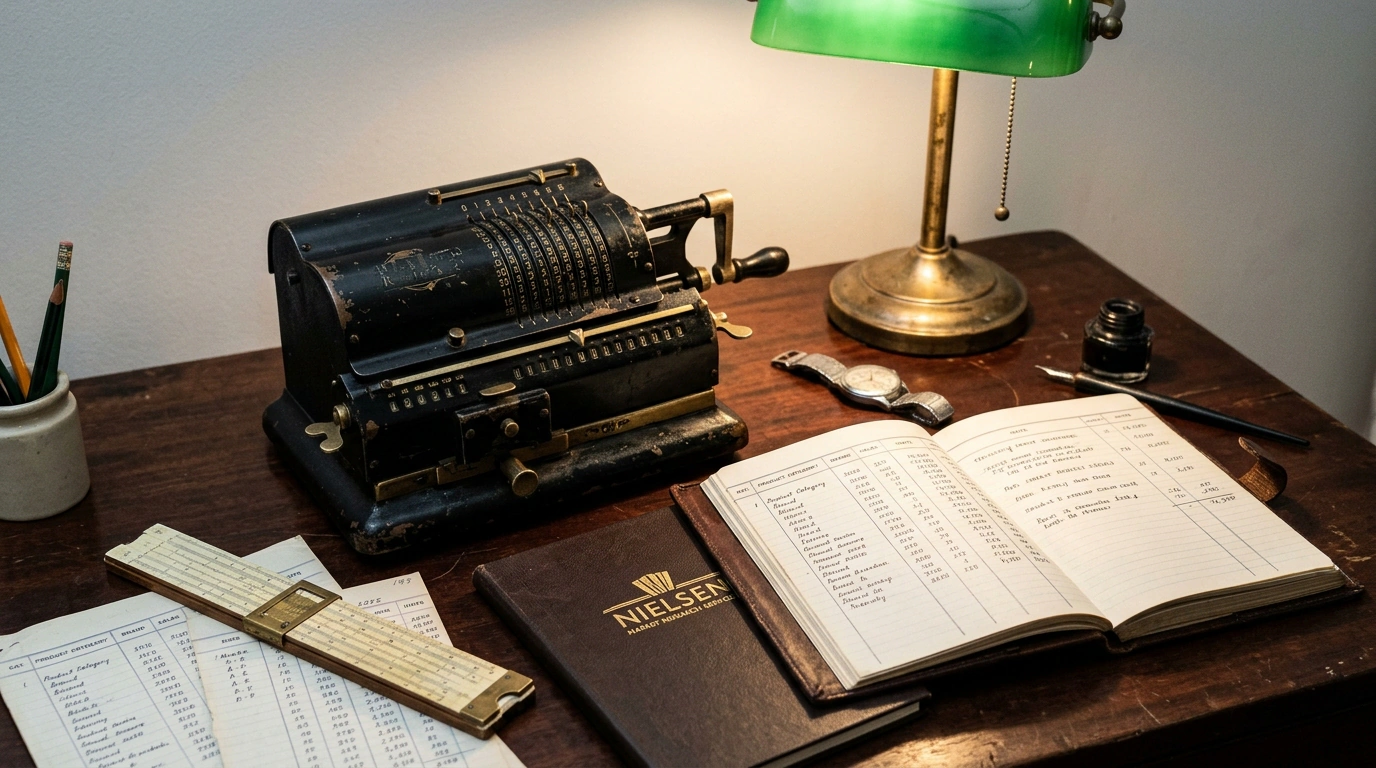
Today a marketer opens a dashboard and sees in sixty seconds where a buyer came from and which second viewers closed a video. A century ago, businesses flew blind: factories shipped pallets to wholesalers, advertisers paid for radio airtime, and everyone guessed who actually bought or listened. Order arrived thanks to Chicago electrical engineer Arthur Nielsen—who never originally planned to work in marketing.
How an Engineer Entered Marketing—and Saved His Firm With One Train Ticket
Born in Chicago in 1897, Nielsen graduated top of his electrical engineering class at the University of Wisconsin in 1918. In 1923, he borrowed $45,000 from fraternity brothers to found the A.C. Nielsen Company, testing industrial gear like turbines, conveyors, and machine tools—building his lifelong habit of checking instruments on site instead of trusting glossy brochures.
His firm entered consumer market research in 1929—just as the Great Depression hit. Industrial audit demand collapsed, pushing the company to the brink of bankruptcy with cash left for a single train ticket to New York to pitch one last prospect. Arthur asked his own son to invest as a shareholder; despite his wife's objections, the family bet saved the business.
Auditing Real Shelves and Coining 'Market Share'
Before 1933, consumer goods ran like pumping water into a factory pipe and guessing at the gate how many townspeople actually drank. Makers saw distributor shipments, not whether goods moved into shopping baskets or gathered dust in backrooms.
In 1933, A.C. Nielsen launched the Nielsen Drug Index and Nielsen Food Index. Field auditors regularly visited representative pharmacies and grocers, checked purchase invoices, and physically counted shelf and backroom inventory—revealing real register demand rather than warehouse shuffling. Two years later, in 1935, Nielsen introduced market share, comparing each brand's retail sales against total category sales to show true competitive standing for the first time.
Turning Viewer Attention Into Ad Currency With the Audimeter
Next came radio—then measured by memory surveys and diaries (try recalling on Friday which station played Tuesday morning without fibbing to look smarter).
At a 1936 New York conference, Nielsen spotted the Audimeter, built by MIT professors Robert Elder and Louis Woodruff. Wired to a radio's tuner, an electromechanical stylus logged minute-by-minute on wax paper (later film) when the set ran and which station played. Nielsen bought the patents, refined the hardware, launched the Nielsen Radio Index in 1942, adapted it for TV in 1950 (Nielsen Television Index), and introduced non-overlapping DMAs (Designated Market Areas) in 1955 for regional ad planning.
Nielsen expanded to London in 1939, handed the presidency to Arthur Jr. in 1957, entered the International Tennis Hall of Fame in 1971, passed away in 1980, and joined the US Advertising Hall of Fame posthumously in 1986. Every modern analytics pixel still runs on his engineering rule: measure what people actually do, not what they say.