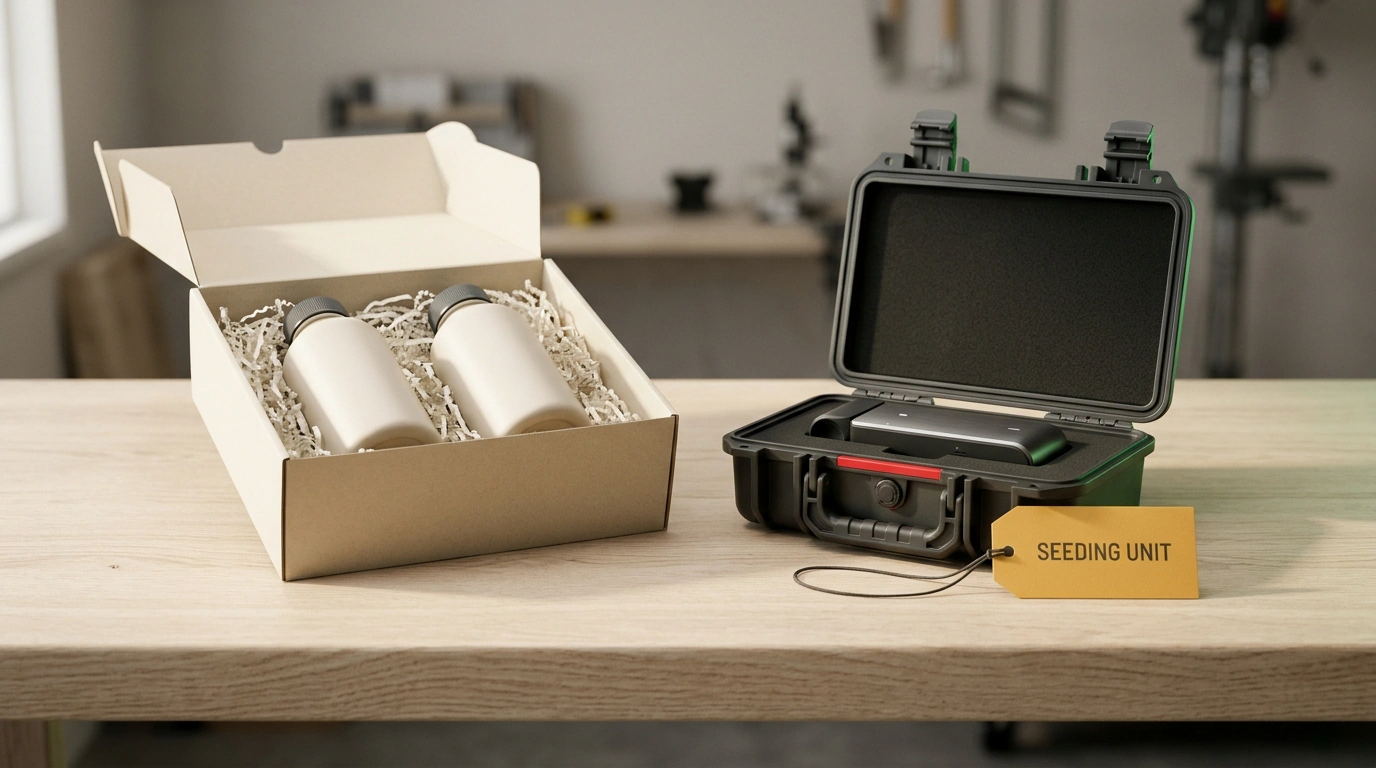
Two launches, two seemingly opposite stories. Beverage brand Rasa sends 800 parcels to creators without a single contract, over two-thirds never post a word, and the team calls the campaign a win. At the other end of the market, e-bike maker Juiced Bikes launches its Scorpion model with just three pre-production prototypes for the entire country—and raises $1.2 million on Indiegogo on day one.
Both tactics share one name: product seeding. Put simply, it means sending your product to creators, bloggers, or journalists for free or on temporary loan to earn authentic mentions, reviews, and content without paying a sponsorship fee. Both approaches worked. One relied on shipping warehouse inventory at scale; the other squeezed maximum coverage out of three expensive machines nobody could afford to give away.
Seeding breaks the moment you apply a low-cost consumer playbook to expensive hardware—or expect a 100% posting rate from free gifts with zero obligations. Let's unpack both mechanics with real numbers, from mass e-commerce gifting to rotational tech loaner pools, loan agreements, and ad-disclosure traps.
Why a One-Third Posting Rate Without Contracts Is a Win, Not Waste
When founders send out their first hundred free boxes, they usually expect simple fairness: "I gifted a great product, so they'll at least share a couple of Stories." Reality hits fast. Out of 100 boxes, 25 or 30 creators post content; the rest just use the item at home or forget it. It feels like 70% of the budget went down the drain.
Product seeding funnel: shipping 800 no-contract parcels, filtering unboxings, and scaling organic reach.
To see what is normal versus broken, compare three real campaigns with different rules upfront. Seeding teams track voluntary posting rate—the share of recipients who choose to create content without any contractual obligation.
Posting Rates in Product Seeding Campaigns by Agreement Type
The chart shows why chasing an "industry average benchmark" misleads you. Beautyblender hit nearly 100% not through magic, but because it ran a structured credit-based sampling program: skip a review, and you lose access to future drops. Comparing that to an uncontracted gift is like comparing a concert ticket to handing out flyers outside a subway station.
Far more telling is the gap between Rasa and Animal House Fitness. Both offered identical terms: a free parcel with zero strings attached. Yet Animal House Fitness's MonkeyFeet (a foot attachment for lifting dumbbells with your legs) got twice as many creators to hit record as Rasa's adaptogenic drinks.
The reason is obvious. MonkeyFeet is unusual and visual: strap it on, hook a dumbbell, film a 15-second clip, and viewers immediately ask what it is. Plus, it launched during a home-workout boom. Rasa's drinks take effort: open the tin, brew it, drink it for days, decide if you like it, and figure out how it fits your feed.
Read any posting rate through three filters:
- How easily the product shows on camera. Quirky gadgets or bold accessories beg to be filmed; consumables with subtle effects ask more of the creator.
- How long it takes to feel a result. A blender makes sense sixty seconds after unboxing; skincare or supplements need weeks of testing.
- What rules you set upfront. When you demand nothing, nearly a third of 800 recipients posting voluntarily is a powerful filter revealing genuine fans who raised their hands.
Anatomy of Mass Seeding: Five Real Campaigns Under the Microscope
Hear "send products to creators," and it sounds like one playbook: build a list, ship boxes, wait for views. In practice, mass seeding solves at least five distinct business goals—from scouting future ambassadors to feeding paid social ads with fresh creatives. Here is how five brands did it by the numbers.
| Brand | Product | Creator Terms | Main Goal | Measured Outcome |
|---|---|---|---|---|
| Rasa (via Aspire) | Adaptogenic drinks (Matcha Cloud, Deep Dream Cacao) | 800 recipients, no obligations | Awareness and scouting future ambassadors | 236 creators, 424 posts (~1.8 each), 342K impressions, 3.46% ER |
| BlendJet (via Skeepers) | Portable blenders and color bundles | Inbound opt-in (creators applied) | Content and testing non-obvious niches in 3 months | 2.99% ER, $11K+ EMV, 10K+ view clips on TikTok and Shorts |
| Beautyblender (via Skeepers) | Makeup sponges and cosmetics | Structured sampling with credit accountability | 100 reviews per SKU on Sephora and Ulta | 1,966 reviews across 16 campaigns, 4.9/5 rating, 99% recommend, 2–3 week launch |
| Animal House Fitness (Kynship agency) | MonkeyFeet leg trainer | 166 no-strings recipients + ad-rights buyout | Paid social video creative pipeline in 4 months | 113 creators, 375 posts/Stories, 90% rights approval, 10–15 ads/week, 4.4x ROAS, $1M+ revenue |
| 4moms (now UPPAbaby; via Aspire) | High-ticket baby swings | Free product + affiliate commission | Driving partner sales over 6 months | $65K affiliate sales, 300+ conversions, creator-content ads lifted conversions +30% |
Two quick definitions from the table if you don't live in ad dashboards daily. EMV (Earned Media Value) estimates what you would have paid ad networks to buy the same organic reach and engagement. ROAS (Return on Ad Spend) measures paid-traffic payback: Animal House Fitness's 4.4x means every $1 spent on ads returned $4.40 in revenue.
Now look inside each mechanic, because that is where the real value sits.
Rasa's ambassador scouting funnel. The brand had a small marketing team without time to hand-vet and negotiate with dozens of strangers. Instead of gambling on 30 paid deals blindly, Rasa seeded widely and watched. Each posting creator averaged nearly two posts—meaning they actually built the drink into their mornings. Next, the team ignored vanity likes and read comment sections to see which creators enthusiastically answered followers about taste, ingredients, and brewing. Those were the people worth signing to long-term paid contracts, with near-zero creative risk.
BlendJet's inbound shift. Tired of scraping profiles and sending endless "hey, did your box arrive?" DMs, BlendJet flipped the flow on Skeepers so creators applied to test the blender. The smartest move was reserving quota for unexpected niches. Fitness creators obviously use portable blenders for protein shakes. BlendJet deliberately seeded beauty and lifestyle creators without rigid briefs. People filmed the blender on trips, in kitchens, and in morning routines, giving the brand fresh clips for its site, socials, and paid ads.
Beautyblender's warehouse math. Before fixing its workflow, the brand lost 70% of seeded stock: 100 shipped sponges yielded only 30 reviews. Hitting 100 reviews on a single Sephora or Ulta product page meant burning roughly 334 warehouse units. Switching to a credit-accountability system cut the requirement to about 103 units for the same 100 reviews—slashing product, packaging, and shipping costs more than threefold. They also split drops into two streams: new launches for early feedback, and bestsellers to keep retail listings fresh with recent ratings.
Animal House Fitness's ad-creative assembly line. Agency Kynship ignored follower counts completely. Their sole filter was whether a creator could shoot energetic, clear video. Once 113 creators voluntarily posted MonkeyFeet clips, Kynship followed up to buy content usage rights for paid ads. Nine out of ten agreed. Media buyers got a steady pipeline of 10 to 15 fresh, authentic videos every week without studio rentals or heavy production.
4moms closing parent fears. Selling an expensive baby swing through a bare affiliate link rarely works; parents triple-check safety, dimensions, and fabric washability. 4moms gave partners the actual unit and didn't rush deadlines. Creators used it in daily life first, then filmed honest reviews. Better yet, parents' questions in the comments about cleaning, assembly, and durability immediately became topics for the next wave of partner videos.
Two more smart mass-seeding twists worth noting: Murphy's Naturals mixed family, outdoor, and retail creators to show repellents in ten everyday settings, while skincare brand Peach & Lily launched a new product via "blind" seeding—creators tested the formula and shared reactions before even learning the brand name.
Traps of the Pretty Box, Bad Selection, and 'Free' Product
In practice, plenty of seeding campaigns stall before couriers even drop off the boxes. Three common illusions usually cause the failure.
Illusion one: chasing reach and pretty unboxings. A brand orders custom embossed boxes with cards and confetti and ships them to a mega-influencer. They film a Story saying "so aesthetic!", collect 5,000 likes, and never touch the item again. If your goal is performance ad creatives or sales, that post is nearly useless. A small creator who spends the first three seconds showing how your item solves a daily annoyance—and gets "where do I buy this?" comments—makes you far more money.
To dodge this trap, bring your social manager together with the teams that will actually use the content. A marketplace manager, media buyer, and brand marketer define a "good video" very differently. Polished clips that look great on a brand grid often flop on click-through rate in ad accounts.
Illusion two: believing seeding is "almost free" because you pay zero creator fees. Put the real numbers in a spreadsheet, and hidden costs jump out: cost of goods (plus lost retail sales if stock is tight), packaging, kitting, fulfillment, domestic shipping and international customs duties, team hours or agency retainers for vetting and follow-up, plus budgets for usage rights, editing, ad spend, and affiliate payouts.
Look again at the two highest-revenue cases above. Animal House Fitness hit $1 million by pairing seeding with paid ads; 4moms hit $65,000 by pairing seeding with an affiliate program. A gift in a box rarely drives trackable direct revenue on its own. It creates fuel—authentic video, trust, and vetted partners—while the commercial layer on top converts it into cash.
Illusion three: copying competitors instead of finding the right stage. Protective-case brand Mous showed a better way. Instead of mailing Google Pixel 7 cases to ten studio tech YouTubers for another "phone on a gray desk" review, they teamed up with mountain biker Sam Pilgrim. He ran a live crash test jumping and bailing right outside Google's San Francisco headquarters. No studio creator with softbox lighting could match that proof—and no velvet gift box buys that kind of credibility.
When Your Product Costs $1,000: Why Classic Gifting Breaks
Now flip the scenario. You aren't selling $15 tea or a makeup sponge; you sell a $1,500 laptop, gaming monitor, e-bike, or pre-production engineering prototype. Giving away 800 units "just in case someone posts a Story" will bankrupt the company before launch.
Rotational testing pool for premium hardware: three protective cases holding pre-production units rotating among creators.
In high-ticket hardware and scarce tech, opportunity cost takes over. Every time you hand one of your few test units to Creator A, you simultaneously deny that unit to Creator B.
Say you have four test units for a new gaming monitor launch. A popular lifestyle creator with a gorgeous desk setup asks for one to "match their aesthetic." Handing them one of four units instead of a specialist tech reviewer—someone who measures real refresh rates, panel response times, and color accuracy—hurts launch revenue. The smart play is politely declining a physical unit at launch and offering an in-person demo or a spot in wave two once inventory arrives.
To keep emotions out of those calls, tech brands sort their lineup using a simple matrix.
| Hardware Category | Gift When | Lend (Temporary Loan) When | Decline or Offer Demo When |
|---|---|---|---|
| Low-cost accessories | Warehouse stock is healthy and creator shows practical use | Accessory belongs to a limited edition or large test kit | Creator lacks relevant audience or real use case |
| Expensive consumer electronics | Permanent ownership builds strategic ties and yields multiple posts | Multiple strong reviewers need access to the same unit | Creator lacks test gear, expertise, or time for a full review |
| Pre-production prototypes | Permanent ownership is explicitly cleared by the product team | Creator signs an NDA and follows strict handling and return rules | Prototype is unstable, irreplaceable, or unfit for solo testing |
| Specialized equipment | Creator integrates the tool into ongoing workflow for long-term value | A fixed window covers testing core features | Creator lacks technical setup for a meaningful test |
At the same time, don't swing to the opposite extreme and demand everything back. A return model carries its own cost and friction across seven hidden expenses:
- Two-way shipping.
- Protective transit cases and freight insurance.
- Manager hours chasing replies, reminders, and deadlines.
- Post-return inspection, cleaning, and refurbishment.
- Lost cables, power bricks, and minor chassis scuffs.
- Hardware wear and tear after multiple loan cycles.
- Downtime in transit and inspection when the unit earns zero coverage.
Cheap accessories are almost always cheaper to gift than to ship back and forth and inspect. Your main decision rule is retail price paired with replacement lead time. If the next batch of a moderately priced gadget takes six weeks to arrive by sea, every box in your office temporarily becomes a scarce asset you must manage tightly.
Scarcity Strategy: Juiced Bikes' Three Prototypes and Loaner-Pool Mechanics
Return to our opening story. Before its Scorpion crowdfunding launch, Juiced Bikes had exactly three pre-production units. Mailing them to three media outlets for two weeks would have frozen the entire PR fleet for just three articles—with no guarantee they'd publish by launch day.
PR firm Max Borges Agency did the opposite. They brought all three bikes to New York and ran a tight schedule of one-on-one in-person media demos. Journalists booked slots, rode the live bikes, interviewed engineers and brand reps, and recorded first impressions right on site. Three physical bikes served dozens of top outlets. Result: $1.2 million on Indiegogo on day one and coverage in Forbes, Wired, CNET, Fortune, and Business Insider.
Juiced Bikes Scorpion e-bike from the three-prototype PR launch case (Source: maxborgesagency.com)
The same tactic worked elsewhere. Launching VAVA's mobile pet camera on Indiegogo with very few prototypes, ASTRSK PR paired live journalist demos with embargoed shipments across tech, lifestyle, and pet media—yielding 20+ original stories and TV spots on NBC, Fox, and Cheddar.
Xiaomi's global Redmi Note 11 launch scaled it further. Due to logistics limits, Eleven International could only seed the base model—not higher tiers—to global press before release. Instead of spreading thin, they focused select outlets on the budget model's standout advantage. Within 18 hours of embargo lift, 2,730 articles published worldwide—up 18.2% from the prior generation's launch.
Still, in-person demos don't fit every product; sometimes a reviewer needs a week or two at home. That is where a loaner pool comes in: a fixed fleet of test units rotated on a strict schedule, inspected, wiped to factory settings, and shipped to the next creator.
Rule one for a small pool: never ship units for identical unboxings. Assign units to answer buyers' biggest questions. Suppose you have four test units of a portable power station. Unit one goes to an electronics reviewer to measure true capacity, charge speed, and real wattage output. Unit two goes to a camping creator to test weight, weather sealing, and solar charging in the woods. Unit three goes to a remote-work creator running a laptop, monitor, and router through a simulated blackout. Unit four goes to a DIY builder pushing high startup loads with a rotary hammer and saw.
Four boxes answer four major buyer objections across different segments instead of producing four clones of the same desk video. Score tech creators on five criteria: technical expertise, test environment or measuring gear, audience fit, unique angle, and reliability within a fixed loan window.
With slightly larger fleets, assign roles and launch in waves. Suppose you have ten test headphones and eighteen strong reviewers waiting. Shipping all ten on day one is a mistake. Here is a balanced wave-one split.
Wave-One Allocation of a 10-Unit Test Headphone Pool
Wave scheduling keeps momentum alive past launch week: once those first five units return and pass inspection, they immediately roll into wave two for competitor comparisons, follow-up Q&As, and firmware-update tests. Keep demos and full reviews distinct: a 30-minute showroom session delivers a hands-on preview, never a substitute for two-week battery and durability testing.
To calculate how many reviews your pool can support, use a simple cycle formula: testing window + two-way transit + inspection and reset time. A standard 21-day cycle equals 14 days with the reviewer, 4 days in shipping, and 3 days of prep. Over a 63-day campaign, five active units theoretically yield 15 independent reviews. In real life, someone always ships late or asks for two extra days—adjust the sliders below to see how delays and reserve buffers change real pool capacity.
Loaner Pool Capacity Calculator
As the calculator shows, even a harmless two-day return delay can wipe out an entire wave of reviews over a campaign because cycles stop fitting inside the window. And if you cut your reserve unit to squeeze out one extra wave-one review, a single cracked screen or lost charger stalls the whole waitlist.
Logistics, Embargoes, Registers, and Legal Pitfalls
In loaner hardware, the real headache starts not at shipping, but when it is time to get units back. Brands' most common—and costly—mistake is assuming return terms go without saying.
Tech outlets follow very different editorial policies. Engadget typically returns review hardware after testing, though it sometimes keeps units for long-term coverage. TAV Reviews selectively accepts gear and either returns it or follows pre-agreed vendor terms. Both guard editorial independence strictly and always disclose how they got the product. If a brand ships a box silently without paperwork and emails two weeks later saying "please send it back, Alex needs it tomorrow," it risks burning bridges and blowing launch dates.
A solid benchmark for mature execution is Nothing's Community Review Program. Reviewers get phones on a fixed loan window, pay zero for outbound or return couriers, and before shipping sign an NDA (banning leaks of unannounced features) and agree to an embargo date (banning publication before official release time).
Nothing devices — an example of a brand running the Community Review Program for returnable demo units with NDA and embargo terms (Source: nothing.tech)
Rather than relying on habits, lock a simple Review Unit Loan Agreement before shipping any high-value unit. Cover ten specific points.
Ten Essential Clauses in a Hardware Loan Agreement
- Device identification: exact model, serial number, included accessories list, and baseline condition.
- Loan period: testing window length, latest return-shipment date, and expected warehouse arrival.
- Ownership: explicit clause stating hardware remains company property.
- Return logistics: who books the courier, pays shipping, and insures the return parcel.
- Care and condition: acceptable normal wear, ban on opening or modifying hardware, and damage reporting rules.
- Extensions: how many days ahead extensions must be requested and approved.
- Confidentiality: embargo dates and ban on disclosing unannounced specs.
- Data security: creator's duty to wipe personal accounts, files, and passwords before shipping back.
- Editorial independence: confirmation that the creator is free to give an honest review with no positive-coverage requirement.
- Disclosure: requirement to inform the audience that the brand loaned the device for testing.
Notice the strict wall between two obligations: returning hardware is an inventory duty, while publishing a review is a separate editorial arrangement. A creator has every right to return a laptop on time and publish nothing if they disliked it. Inside the box, include a concise fact sheet: exact specs, compatibility notes, setup steps, known bugs (especially on pre-production units), and a direct tech-support contact—pure facts without dictating conclusions.
Next comes ad disclosure law. Under US FTC rules (16 CFR Part 255), both an uncontracted free gift and a temporary loaner unit create a material connection. If a creator posts a review, they must disclose it clearly and conspicuously inside the post or video itself (spoken aloud, on-screen text, or above the "more" fold—not buried in profile links). Built-in platform toggles on YouTube or TikTok may fall short if easily missed. Clear wording like "Ad," "Sponsored," or "Brand gifted me this product" works; vague tags like #sp, #spon, #collab, #ambassador, or "thanks brand" fail compliance. Under Section 5 of the FTC Act, both the creator and the brand share liability—regulators expect brands to brief creators and monitor compliance. If you operate in Russia or the EU, remember these are US rules; check local ad-labeling laws (such as Russia's Federal Law "On Advertising" and ERID tokens) with counsel.
Now for warehouse operations. A basic influencer spreadsheet with "Name / Link / Status" fails for loaner pools. You need a Review Unit Register where each row tracks a specific serial number like TECH-001..TECH-004, showing current reviewer, ship date, return deadline, post-intake condition, and next available date. Always separate expected availability from confirmed availability.
Why does that save launches? Watch the domino effect. Reviewer B holds phone TECH-002, due back July 17, but asks for five extra days to finish battery tests. Return shifts to July 22; inspection and reflashing take three days until July 25. Creator D's July 20 shipment slips by five days. Your team now faces two choices: delay Creator D, or ship your reserve TECH-004 and run temporarily with zero backup.
Every returned unit must clear five prep steps before going back out:
- Inspect the chassis for physical damage and test all hardware functions.
- Verify cables, adapters, and included accessories.
- Wipe all previous accounts, photos, and passwords.
- Factory-reset and install the target firmware version, logging it in the register—otherwise one reviewer tests buggy old firmware while another tests a patched build, creating conflicting reviews.
- Replace worn packaging and photograph condition before handing off to the courier.
After inspection, classify each unit into one of four states. In Good condition, it enters the next wave immediately. With Cosmetic damage, decide if scuffs will ruin close-up video shots for the next reviewer. With Functional damage, freeze shipment until repaired—shipping a glitchy unit "just to hit a deadline" practically orders a negative review. Missing / irreparable units get written off and the campaign calendar gets recalculated.
To keep wave two from collapsing, stick to five habits: check in two days before return deadlines, require advance approval for extensions, keep at least one reserve unit, confirm next-reviewer ship dates only after physical inspection, and log return reliability on every creator's card. Long term, a reviewer who returns gear on time with every cable intact often beats a bigger creator you have to chase for three weeks.
Turning Successful Seeding into Partnerships and Performance Sales
The biggest mistake after a strong seeding wave is celebrating reach screenshots, closing the sheet, and moving on. Seeding truly pays off at step two, when you turn one-off recipients into a repeatable sales channel.
First, match your primary business goal to the right seeding model and KPIs so your team doesn't report likes when leadership wants sales or retail reviews.
| Business Goal | Working Model | KPIs to Track |
|---|---|---|
| Find future ambassadors | No-strings voluntary seeding | Voluntary posting rate, repeat-post share, paid-contract conversion |
| Unlock new audience segments | Seeding non-obvious creator niches | Niche engagement rate (ER), purchase questions in comments, cost per usable clip |
| Boost retail product pages | Credit-based structured sampling | Cost per review, completion rate, total reviews per SKU |
| Source paid-social creatives | Seeding + separate content-rights buyout | Cost per usable ad clip, rights approval %, paid ad ROAS |
| Drive attributed sales | Seeding inside an affiliate program | Affiliate revenue, CAC, net profit after gift COGS and commissions |
From there, run a simple relationship ladder. Creators enter via zero-pressure voluntary seeding. In your CRM, sort everyone who posted into two buckets: one-off mentions and "hot" creators who posted multiple times or sparked buyer questions. Approach the hot group with commercial offers: license their best clips for paid ads (like Animal House Fitness's 90% approval rate), invite them into an affiliate program (like 4moms), or sign long-term ambassador deals.
Watch one legal detail that trips up newcomers: sending a free gift or loaner unit gives you zero rights to the creator's content. Even if a creator films a brilliant, glowing video about your product, you cannot simply download it and run it as an ad. Ad usage rights, channels, license duration, re-editing permissions, and fees always require a separate written agreement. The same holds for competitor-exclusion clauses: independent reviewers almost always compare new gear against rivals, so asking for exclusivity belongs strictly in paid sponsorship contracts with a clear competitor list, term, and fee.
Never demand the item back or pressure them—the gift is theirs to keep. At most, send one polite check-in asking if it arrived safely and how first impressions went.
Yes, creator surveys are great for catching awkward packaging or usability flaws. However, if a detailed report is mandatory, agree on and compensate it before shipping.
Bestsellers open new niches and use cases faster because they are market-proven, while new launches generate early reviews and release-day buzz.
Yes—nano-influencers in tight niches perform well early on because their audiences already care deeply about that product category.
Tech brands with pricey hardware have three more ways to extend campaign ROI for months. First, an expensive gadget doesn't pay for dozens of hours of filming, testing, and editing—if you want a guaranteed, briefed integration, budget a creator fee on top of the hardware. Second, don't chase only net-new reach: find creators who already bought your product with their own money. They cost zero loaner units, and you can reward them with direct tech support, early feature access, or paid collabs built on genuine loyalty.
Third, with written permission, embed strong quotes and clips from independent reviews directly onto product pages, comparison guides, and post-purchase welcome emails. One thorough review keeps overcoming buyer objections six months after launch. And if a product's price makes buying cycles stretch across months, judge seeding by proxy metrics rather than instant sales alone: targeted site traffic, branded search lift, video watch depth, clicks to product cards, and buyer questions in comments.