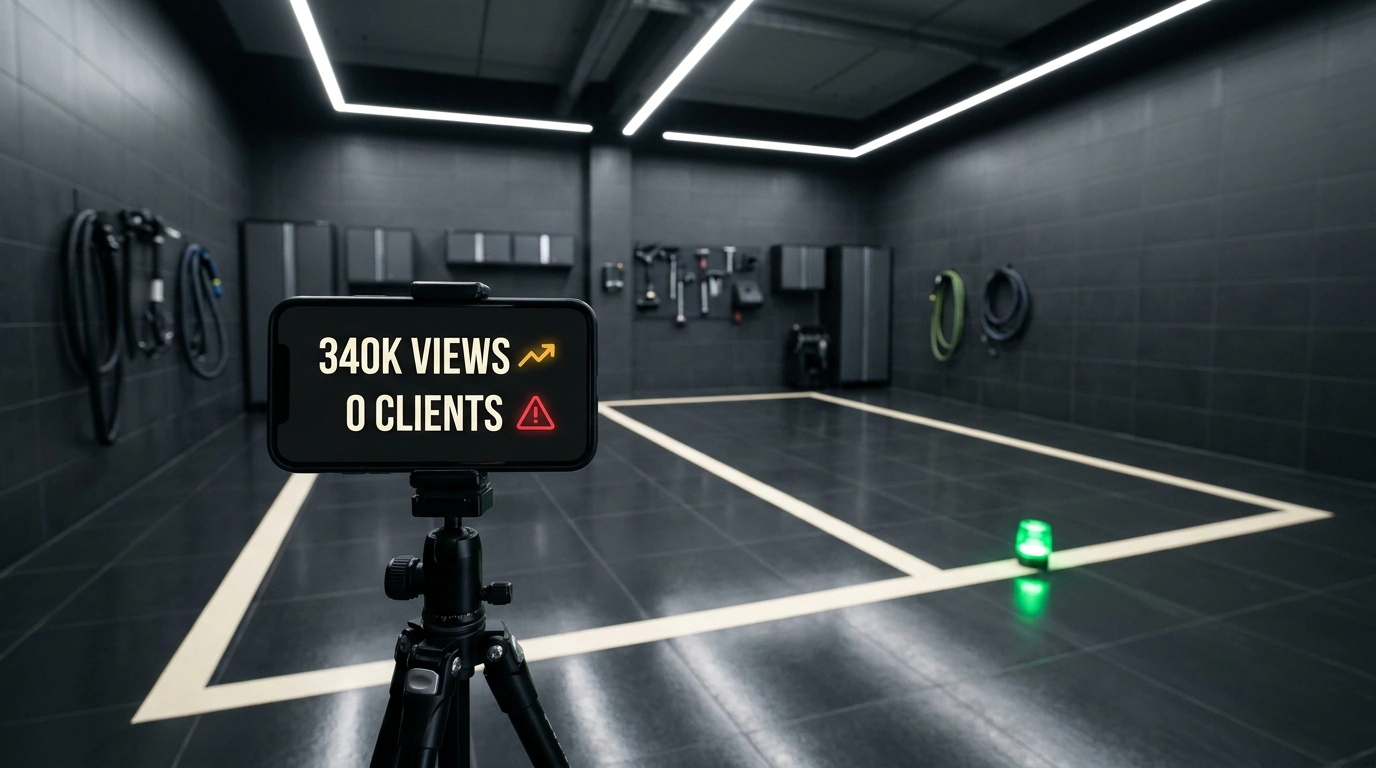
340,000 Views That Make Drivers Avoid Your Car Wash
An ordinary detailing car wash in Yekaterinburg ran social media like hundreds of shops: showing paint polishing, sharing care tips, getting modest views. Then the team filmed a "relatable" comedy skit to hit recommendations. It blew up—2.5 minutes long and 340,000 views in one day.
The problem? The script vented staff frustration by making ordinary paying customers the butt of the joke, built around two caricatures.
Character one was the receptionist's "dream client." Arrives early at 11 a.m., immediately orders rain-repellent glass coating, seat deep-cleaning, and full trim dressing. Hears 14,000 ₽ and four hours, calmly says he'll pick it up tomorrow so techs don't rush. Leaves a 1,000 ₽ tip "for chocolate," returns next day, and drives off without inspecting a thing because it smells amazing.
Character two was the "cheapskate" viewers were supposed to laugh at. Arrives twenty minutes late asking for exterior and interior wash. Told 2,200 ₽, he notes he paid 2,000 ₽ six months ago and asks to skip rear floor mats to stay on budget. Next, he requests an intake form, work order, and receipt. Waiting, he drinks two teas and complains it's slow. At pickup, he spots water drops, asks about scratches, chips, and interior dust—referencing detailing brush videos. At the register, he uses his legal 15% discount (300 ₽) and pays in coins to seal the caricature.
Now look at that "villain" through the eyes of an ordinary Yekaterinburg driver. What terrible crime did he commit? Questioned a price hike, asked for a receipt and work order, inspected his car after service, and used a discount the shop itself issued—basic consumer rights.
Instead of warmth, that video builds a wall. Viewers immediately think: "If I show up for a 2,000 ₽ wash, skip extras, and ask for a receipt, they'll label me a cheapskate and mock me behind my back." Three hundred forty thousand views look great in a monthly report; for the shop, it is pure anti-advertising.
That gives us a core rule of marketing humor: laugh with the customer at shared everyday absurdity or your own mistakes, never at the buyer, their budget, or their caution. The second a business mocks the people paying its bills, trust collapses faster than the clip finishes playing.
The Vanity Reach Trap: Why an Izhevsk Coffee Shop Shouldn't Copy Aviasales
The Yekaterinburg detailing clip is a textbook symptom of viral SMM—chasing vanity reach with memes, skits, and provocations for six-figure view counts while the cash register sits empty.
A joint study by DOT Digital Agency and LiveDune across ~10,000 brand posts on VKontakte, Telegram, and Instagram (owned by Meta, designated extremist and banned in Russia) shows how far the pendulum swung.
Shift in Brand Social Content Mix (DOT x LiveDune)
Brands nearly stopped talking about what they sell and switched to comedy. The math behind that shift is brutal: around 85% of comments on viral clips don't mention the product at all. Viewers praise the actors, point out background props, or tag friends without remembering the company name. One-off hits barely scale either—on average, businesses shoot ~100 clips over up to a year before finding a repeatable formula. Giants like X5 Group can hit their first million views in 16 days; small shops lack that runway.
Take the textbook flower shop whose capybara-catching clip hit 11 million views and zero orders. People came for the cute animal, smiled, and scrolled—they didn't need flowers and lived thousands of kilometers away. Luxury hotels fall into the same pit when chasing cheap gag traffic, flooding their account with crowds who can't afford tens of thousands of rubles a night.
Copying bold federal brands like Aviasales causes the same damage locally. A nationwide flight search engine benefits from broad buzz and has PR teams ready to manage blowback. An Izhevsk café or Yekaterinburg car wash gains nothing from nationwide views—their buyers live two neighborhoods away and just want good coffee and clean cars. Same goes for "inside-joke" industry humor: peers chuckle while real buyers scroll past.
The Opposite Extreme: How Three-Page Scripts Kill Creator Ads
While small shops chase product-free memes, larger brands hiring creators often crash into the opposite ditch: total control.
The rush into short video is understandable—Mediascope puts TikTok's monthly Russian reach around 56.4 million users aged 12+, peaking at 68–69 million despite upload limits. Brands buy creator seeding there, then make the classic blunder: trying to shoot a corporate commercial through a creator's mouth.
They email a three-page script, demand word-for-word slogans, force the creator to stand stiffly in front of a logo, and repeat the brand name five times. The creator reads the brief woodenly, posts it, and viewers swipe away in one second.
Payback takes a double hit. First, an authenticity penalty: followers subscribe for the creator's natural voice and wit, so press-release phrasing kills trust and conversion instantly. Second, algorithmic throttling: feeds watch first-second retention ruthlessly, burying mass-skipped ads.
The reverse extreme—telling creators "film whatever you want, you know best"—loses too. Without guardrails, creators misstate specs, skip key benefits, or violate ad-labeling rules.
The working standard is Directed Freedom (checklist instead of script), cleanly dividing ownership:
| Brand's Zone (Strict Guardrails) | Creator's Zone (Creative Freedom) |
|---|---|
| Accurate product facts and core benefits | Plot, pacing, and video structure |
| Legal compliance and ad-labeling rules | Natural voice, phrasing, and native humor |
| Working links, promo codes, and clear CTA | Visual framing, editing, and filming setting |
When brands verify facts and compliance while leaving delivery to the creator, you get true native integration—an ad matching the channel's tone that viewers don't swipe past in second one.
Bringing the Product Back on Camera Without Wasting Budget
Dropping empty memes doesn't turn your feed into a boring price list. Product-centered content can go viral on its own when the item or service stays the hero.
Accessory brand Craighill proves this: its clips lean on tactile beauty, mechanical motion, and crisp item sounds—viewers watch to the end because they want to hold the object. Major brands like Chistaya Liniya pull the same hook with real factory behind-the-scenes stories. Jonah Berger's STEPPS framework (Social Currency, Triggers, Emotion, Public, Practical Value, Stories) helps stress-test ideas, yet won't save a clip with zero reason to buy.
Compare fighting your audience versus backing them in the energy-drink TikTok showdown. A cosplayer built armor from Monster Energy cans, bringing the brand hundreds of thousands of free views. Monster hit him with trademark complaints and got clips removed. Red Bull immediately shipped him cases of cans and gave full creative freedom. His video switching allegiances hit 700,000 views and 170,000 likes in under 24 hours amid cheering comments. One brand chose rigid control and got backlash; the other let organic creativity run and walked away with a free viral hit.
Four Questions Before Filming a Clip or Sending a Creator Brief
- Product test: will viewers leave more curious about your product/service, or just laugh and forget your name?
- Humor-target test: who looks foolish on screen? If it's a normal customer with a budget, questions, or a coupon—trash the script.
- Geography & ticket test: would random out-of-town viewers ever become paying local buyers in your price tier?
- Brief test: are you sending a tight checklist of facts, legal labels, and CTA—or a three-page memorized corporate script?
When all four line up with real business goals, video builds trust and register sales instead of vanity lines on a slide. Ten thousand local viewers treated with respect around a clear product beat a million-view capybara meme every time.