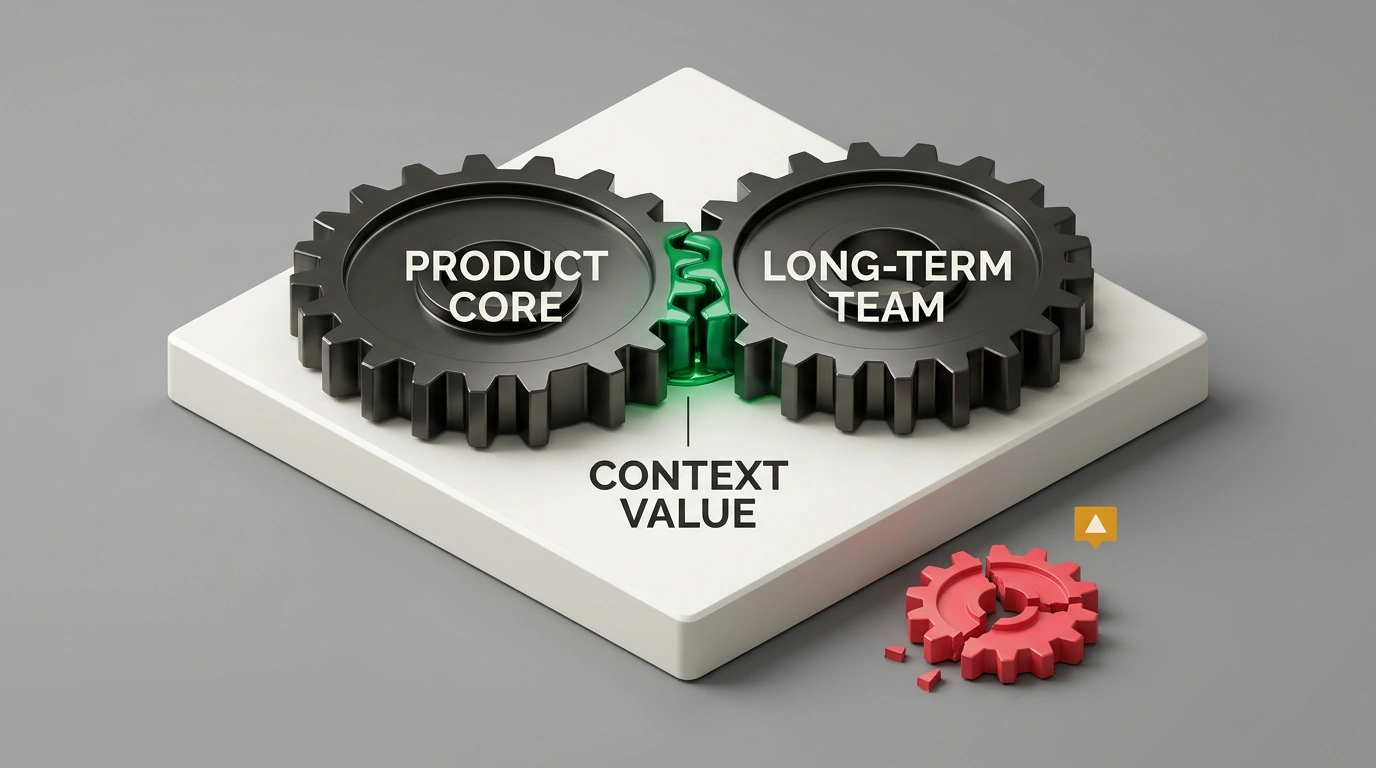
Should a business stick with one content team for years, or does rotating agencies bring fresher ideas? Every marketing head wrestles with this. Markets love short sprints: launch in a month, skim wins in a quarter, move on. That works for one-off promos with a fixed start, budget, and end date. Social media and content marketing don't fit inside a 90-day box.
Swapping agencies every six months makes you pay twice: first in cash for endless onboarding, then in reach and stress while each new crew repeats the exact same comment-section mistakes. An April 2025 study by the ANA and 4A's shows a clear global shift: average brand-agency tenure more than doubled over the past decade, even though digital shops still turn over far faster than full-service partners.
Average Brand–Agency Relationship Tenure (ANA & 4A's, 2025)
The loudest number sits on top: mandatory reviews—corporate policies forcing a re-pitch every few years regardless of performance—cut tenure by more than half, trapping marketing in perpetual onboarding. Independent agencies also hold clients noticeably longer than holding-company networks, where account teams shuffle more often.
What Compounds Over Years—and Why Briefs Can't Capture It
In a month, an outside team learns your catalog, prices, and top buyer pains. Over years beside your business, they learn what drives the product day to day: which formats spark real debate, which topics irritate followers, and which hours audiences actually read. You stop burning budget re-testing basic hypotheses from scratch because past wins and flops live in shared memory.
From that base, project-specific quality standards form naturally. Writers and designers sense the line between bold wit and cringey hype, protect visual codes, and stop bringing half-baked drafts. Iteration by iteration, a distinct Tone of Voice emerges across every channel—something impossible to invent in a one-hour kickoff call.
Long horizons also reveal real trends. One quarter shows random spikes or dips that tempt teams to kill working series prematurely. Across years, seasonality, shifts in buyer habits, and format fatigue show up early—letting the team refresh angles before stats drop.
Client workload plunges too. Early on, you spend hours filling briefs and editing posts through three rounds. Once context and trust build, your partner catches tasks in half a sentence and runs operations without micromanagement. Better yet, when your in-house marketers or brand managers turn over, a long-term agency acts as institutional memory—preserving past decisions and winning mechanics so new hires ramp up fast.
Three Multi-Year Runs: B2B Manufacturing and Real Estate
Yekaterinburg content studio Ish, Mish! (running B2B and real-estate socials since 2014) illustrates how compounding works.
With manufacturing-trading firm Santekhkomplekt-Ural, the partnership spanned six years around a two-year pause. Even after the break, deep product knowledge let the team regain autonomy fast. Rather than waiting for post-by-post instructions, they proactively pitched custom formats like a "Kids' Month" special and a "Pulse of the City" brand video, with full client trust.
With developer City21 (formerly City-XXI Vek), work has run continuously since 2017—scaling from one residential complex to seven simultaneously in 2020–2022, each with its own audience and context. Cookie-cutter templates would have failed; the team built a system giving every property a distinct voice while mastering the full lifecycle: pit-stage launch comms, construction updates, pre-handover community building, and post-move-in engagement.
With fellow developer Atlas Development, also since 2017, social work grew from individual complexes into an umbrella developer brand—winning WOW AWARDS while running smoothly enough to stop draining daily executive attention.
The Price of Comfort: Three Traps in Long Relationships
Long partnerships bring real risks if left on cruise control.
Trap one is burnout and 'tunnel vision.' After years inside one product, writers feel nothing new remains to say and slide into stale templates. Cure it with a "fresh eyes" rule: pull teammates from unrelated client accounts into quarterly brainstorms. Outsiders spot tired clichés immediately and bring fresh angles.
Trap two is vendor dependency. If your company has zero documented brand DNA and all logic lives inside an external agency's heads, parting ways shatters communications. Build a transparent system on your side: keep brand guidelines, Tone of Voice, and decision logs inside company docs so switching teams leaves a foundation, not chaos.
Trap three is the "good enough" trap. High trust easily slides into complacency—clients stop giving candid feedback, and agencies run on autopilot. Break inertia with regular strategy sessions where the partner re-defends hypotheses against business goals instead of presenting a routine table of published posts.
Five Habits to Keep Autopilot Away
Even strong teams drift into routine unless challenged by business goals. Five habits keep long-term partners sharp:
- Keep the team wired into the business. Share new launches, shifting priorities, audience changes, and competitor moves instead of limiting chats to content-calendar approvals.
- Leave room for initiative. Blindly executing rigid specs kills true partnership. Set clear inputs and guardrails, then leave space to test—strong teams push back with better ideas when they see them.
- Refresh formats regularly. Last year's hit column may pull silence today. Run strategy reviews to track behavior shifts, test new formats, and rebuild hypotheses before production turns into an assembly line.
- Judge quality alongside numbers. Reach and engagement tell half the story. Check positioning fit, audience relevance, brand voice, and business impact—plus whether the team brings proactive ideas, defends choices well, and works independently.
- Don't hoard feedback. Sit down quarterly to review what works, what needs changing, and new business goals. Keep it two-way: you evaluate their output while they flag bottlenecks in your internal approvals.
Quarterly Sync Checklist With Your Content Team
- Team received updated inputs on products, priorities, and competitors for the upcoming quarter.
- A 'fresh eyes' brainstorm included specialists outside the day-to-day account.
- Brand guidelines, Tone of Voice, and key decision logs are updated and stored on the client side.
- Partner re-defended core content hypotheses instead of delivering a routine post-count report.
- Held a two-way review: client rated quality and proactivity; team flagged client-side bottlenecks.