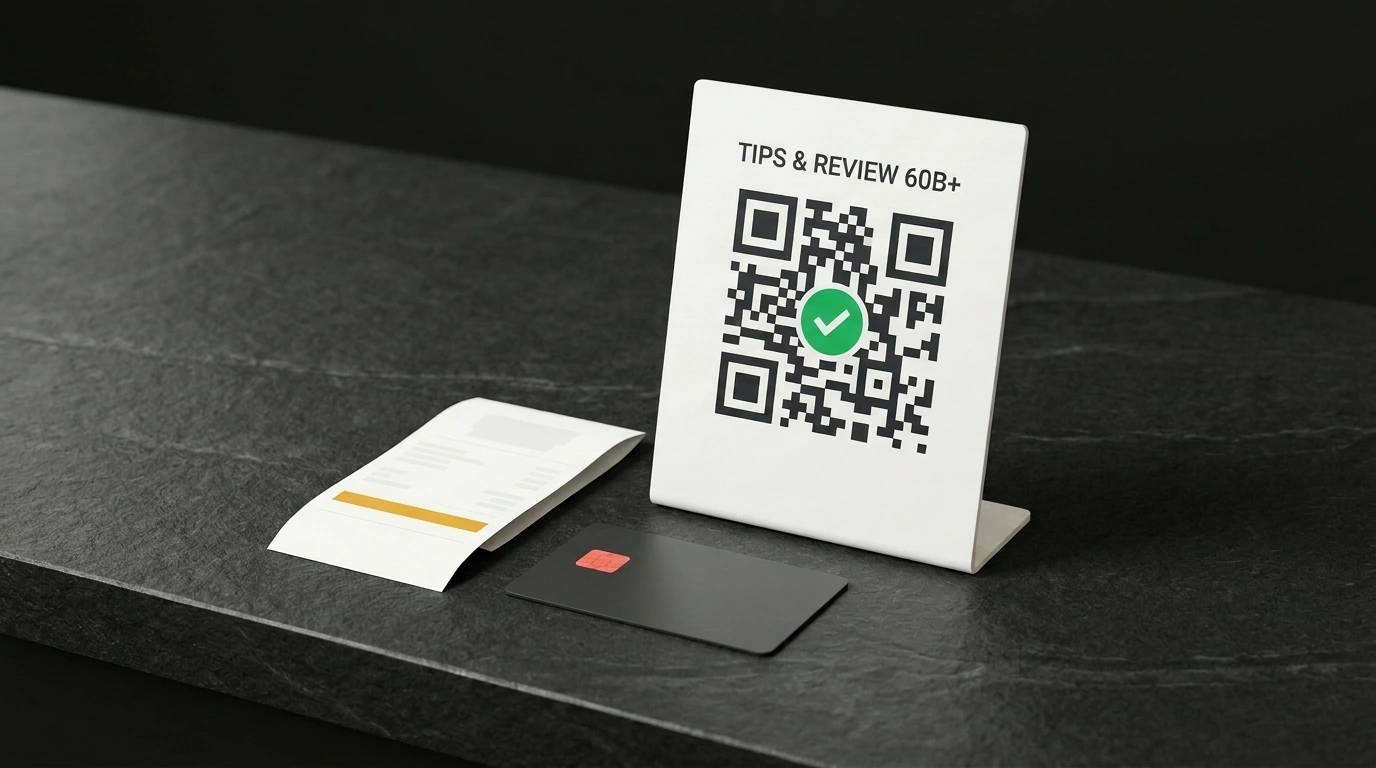
Russia's tipping market has crossed 60 billion rubles a year. Picture only restaurant servers holding card terminals, and your mental image is outdated. In H1 2026, digital tips in premium retail jumped sixfold, according to Alfa-Bank ecosystem service Netmonet. While it doesn't disclose raw transaction counts or partner totals, the shift is plain to see: QR tipping now runs inside Azbuka Vkusa supermarkets, luxury hotels, beauty clinics, and high-end real estate showrooms.
The automation paradox is driving this. The more self-checkout kiosks, algorithms, and AI handle routine tasks, the higher buyers value human care. Any script can scan an item; only a sharp specialist reads a shopper's mood, matches complex skincare, or rescues a tricky store request. When a customer voluntarily pays extra above their bill, marketers get the purest financial signal possible: value exceeded expectations.
How QR Tips Moved Beyond Restaurants into MarTech
Two quick definitions to align terms. MarTech (Marketing Technology) covers digital tools helping businesses capture customer data, measure service quality, and bring buyers back. Phygital (physical + digital) links great in-person service on the floor with a lightweight phone touchpoint that saves the interaction.
In premium categories, price and location stopped being enough long ago. Real estate developer PIONEER notes that luxury buildings share similar specs—the real fight happens in showroom service, key handover, and post-move care. Beauty clinic BABOR Beauty Institute views tips the same way: direct proof of a "wow effect" where results beat expectations.
Guest friction is near zero. Netmonet requires no app download or signup: scan a QR code or tap an NFC tag (a tiny contactless chip on a counter or badge) and pay via SBP, card, Mir Pay, or AlfaPay. On the business side, offline service gains a structured data point that never existed before.
Under the Hood: Analytics, LTV, and Four Metrics Never to Confuse
Inside the Netmonet dashboard (admin.netmonet.co), managers see live performance by store, shift, and employee, plus written reviews exportable to Excel. Tip payouts to staff are only half the value; real insight starts when you connect tip data and comments to purchase history in your CRM.
That immediately illuminates LTV (Lifetime Value—total revenue one customer brings over their relationship). Buyers with a trusted consultant or stylist become less price-sensitive, accept cross-category recommendations, and book add-on services. Joining visit frequency, basket size, and tip logs in CRM shows on hard numbers which staff habits drive repeat sales—turning top performers' behaviors into team training.
Staff management gets fairer too. Managers see why guests thank specific employees instead of guessing, and can route tips to one specialist or split across a shift for team-driven sales. Staff earn direct income and recognition without bloating payroll, while internal team morale is tracked separately via eNPS (employee willingness to recommend the workplace).
Just don't lump every signal from the gratitude screen into one bucket. Each metric serves a distinct job:
| Tool | What It Captures | How to Use It | Common Mistake |
|---|---|---|---|
| Tip comment | Immediate 'right here, right now' emotion | Spot winning staff habits and buyer preferences in CRM | Treating it as a full brand-loyalty score |
| Classic NPS | Willingness to recommend the brand | Ask separately to measure word-of-mouth potential | Replacing NPS with % of buyers who tipped |
| UGC | Public review for future shoppers | Publish on website and socials to build trust | Posting private tip comments without author consent |
| eNPS | Staff loyalty toward employer | Track burnout and incentive-plan impact | Judging team morale solely by tip totals |
Keeping them separate prevents crooked analytics. A warm tip note enriches a CRM profile nicely, yet turning it into public UGC requires explicit customer permission.
Intercepting Negative Reviews Before Maps—and the One-Tap Finale
Brand memory hinges on two moments: the emotional peak of a visit and its very ending. Rating and tip screens sit right at the exit while the buyer is still inside or stepping out. That enables the most practical retention play of all: negative-feedback interception.
Intercepting customer dissatisfaction on the tipping screen: alerting the manager immediately before a 1-star map review posts.
Picture a buyer snapped at by pickup staff, handed the wrong item, or kept waiting too long. With nowhere to vent on the spot, twenty minutes later they open Yandex Maps, 2GIS, or social media and leave a 1-star review that lingers for months. Put a fast rating-and-issue button on the final screen, and the alert drops straight into CRM or a manager's phone. You get a golden few-minute window to call, apologize, fix the error, and defuse the clash before it goes public.
What if the buyer is thrilled and leaves a tip? Marketers often itch to pop up a 10-question survey, a Telegram subscribe button, and three review-site links. Bad move—overloading the finale ruins the afterglow.
Stick to one targeted action matching what they just bought. Someone just picked a fragrance or skincare regimen with a consultant? Right after tipping, offer one tap to save the specialist's picks in the brand app and set a refill reminder. Zero pressure, pure utility. That is where retail is heading: a one-tap phygital finale merging payment, loyalty points, personal thanks, and CRM updates—still emerging rather than universal, yet major chains are already wiring it up.
Where Mechanics Shine and What Annoys Buyers
At Ararat Park Hyatt Moscow, the line between routine service and tip-worthy care is summed up in four words: "You made my day." Serving coffee without spilling is baseline service already included in the bill. Extra gratitude appears when staff show genuine care that brightens a guest's day.
Rule one: keep gratitude personal. Buyers rarely trust faceless screens. Yandex Lavka tested this at scale: adding a courier's photo and two lines about their personal goal boosted tips by 31%. At Viceroy Chicago, guests wanted to thank bellhops and housekeepers yet carried no cash; personal QR codes for luggage help and in-room housekeeping cards brought staff over $4,000 in the first three months.
Rule two: match the interface to your store format. In delivery or large hotels, buyers barely meet the courier or never see the housekeeper, so the screen introduces them with a photo, name, and role. In a luxury boutique or showroom, the buyer just spent thirty minutes talking face-to-face with a stylist. A loud intro card feels clunky there; opt for a sleek NFC counter plaque, branded QR stand, or native app screen.
Pre-Launch Check for QR Tipping in Retail & Services
- Tip prompt feels strictly optional, never like a forced paywall before checkout.
- Post-tip screen shows at most one context-relevant action—no long surveys.
- Low ratings route straight to CRM or a manager with a clear response SLA.
- Transfer terms are transparent with zero surprise buyer-side fees.
- Shift QR codes and NFC tags are verified and mapped to the right staff or zones.
QR codes and slick dashboards don't manufacture loyalty on their own—they simply make existing floor-service quality measurable. Ruining it is easy: make prompts pushy, tack hidden fees onto guests, mix up cash-register QR codes, or delay staff payouts. Checkout's final seconds are fragile; winners remove friction and leave buyers an easy choice.