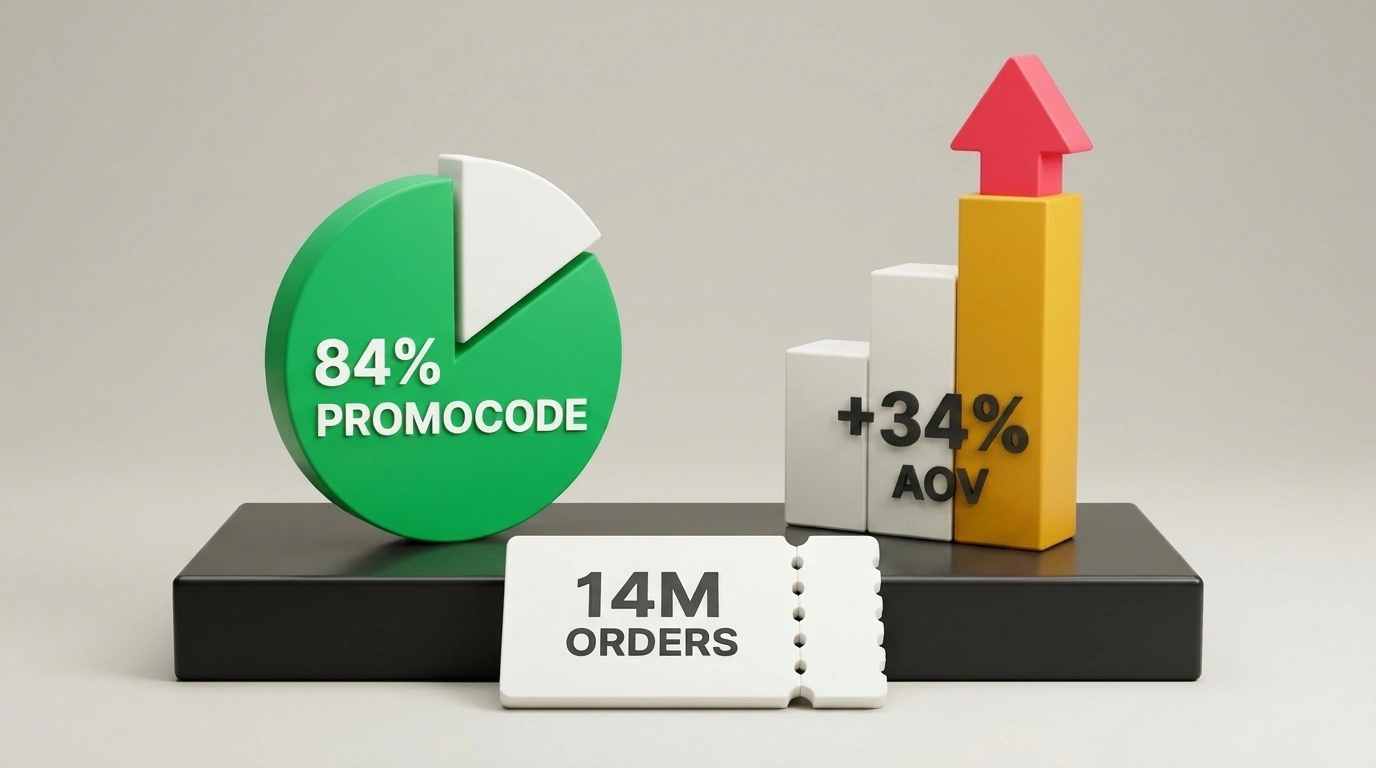
Whenever a store negotiates with a creator, the same tug-of-war pops up. The brand asks for a referral link to track clicks cleanly; the creator buries a long UTM-tagged URL in the description, and conversions stall. Data from Admitad, AKAR, and ARIR across 14M+ Russian online orders in 2025 and the first nine months of 2026 flips that habit: 84% of creator-driven sales happen via promo codes (up from 77% a year earlier), with 91% of creators now using personalized codes.
Inside the creator channel, codes are red-hot—yet zooming out to the full affiliate market exposes a striking gap: creators generate just 6% of affiliate sales. The format has already proved it sells, while most brands still barely use it.
84% vs. 6%: Why the Channel Sells Yet Remains Underused
To see the gap clearly, check who takes orders under CPA (Cost Per Action—paying partners strictly for completed, paid orders rather than views or likes). Coupon aggregators (sites shoppers visit seconds before checkout for a discount) and cashback apps capture the biggest share.
Channel shares in affiliate marketing sales, January–September 2026 (Source: Admitad, NRF'10)
The split is stark: coupon sites and cashback services pull over 40% of affiliate sales together, while all Russian creators combined sit at 6% (the remaining 51.7% isn't broken down in the public summary). Yet both work differently. Coupon sites intercept shoppers already standing at checkout looking for a deal. Creators generate new demand: followers trust them, see the product in action, and buy on their recommendation.
Why do links lose so badly to codes? Mobile habits. Watching vertical video or listening to a podcast on a commute, copying a long link and typing card details inside a social app's built-in browser feels clunky. Remembering a short word on screen, opening the store app or laptop at night, and typing the code at checkout is effortless.
Standard links break in three spots too: switching devices, Safari's ITP (stripping third-party cookies fast), and ad blockers. Smart Promo Codes fix this with hybrid tracking: the system watches both links and cart codes, always giving priority to the code. Even if a buyer never clicked a link and typed the word on another device, the creator gets credit. Personal codes also shield commissions from hijackers—cashback browser extensions or last-second coupon visits can't steal the payout. Stores sync redeemed codes via server API/Postback, tag managers like GTM, or scheduled CSV uploads.
The 'Cheapskate Shopper' Myth: Who Actually Uses Creator Codes
Store owners often worry that offering promo-code discounts attracts bargain hunters with tiny baskets who kill margin and vanish. Hard order data crushes that fear.
Over the past year, average order value (AOV) via creator promo codes jumped 34%, from 3,138 ₽ to 4,207 ₽—while total Russian e-commerce AOV rose just 6%. Shoppers arriving from creators with a code spend noticeably more than the market average.
Average order value of creator promo-code purchases vs. overall e-commerce (Source: Admitad, NRF'10)
Platform differences are even sharper. Dzen creators drive the heaviest carts at 5,816 ₽ AOV—38% above the overall creator average—as adult text-review readers comfortably make bigger purchases. VK posted the fastest annual jump, with creator promo-code AOV surging 49%.
To be fair, the public report omits AOV figures for Telegram and YouTube and doesn't calculate net store profit after discounts and network fees. Still check your own unit economics in a spreadsheet before setting big discounts. That said, 14 million orders thoroughly debunk the myth that promo codes bring only low-ticket bargain hunters.
Noon, February, and the Top Three Categories: Timing and Assortment
Even a strong offer underperforms with bad timing. Creator promo orders follow a clear daily curve: ~75% arrive between 10:00 and 23:00, peaking squarely at noon. Practical takeaway for creators: publish posts or clips in the morning so followers see your code before 12:00.
Seasonally, order volume peaks in February and March around gender holidays and spring demand, while September delivers the year's highest AOV thanks to back-to-school family shopping.
Creator codes sell steadily across ten-plus categories, yet half of all orders cluster in just three:
Product Category Shares in Creator Promo-Code Orders
Everyday logic explains it: clothes, home gear, and gadgets look great on camera and weave naturally into daily life—wearing a jacket outdoors, testing a vacuum, assembling a desk. Followers see real use instead of sterile marketplace photos and buy faster. Meanwhile, nearly half of volume spans seven-plus other categories, proving strong demand beyond the top three.
Five Rules for Brands and a Playbook for Creators
Why do creator CPA programs print monthly orders for some stores and fizzle after two posts for others? Admitad Group points to five setup rules:
- Give every creator a unique Smart Promo Code. One shared code turns analytics into guesswork; personal codes prove who actually drives sales versus bot views.
- Plan codes like a long-term media calendar, prepping flash promos (short, boosted deals) ahead of February, March, and September peaks.
- Agree on repeat touches. One Stories mention acts like a lottery—only followers ready to buy today convert. Repeat reminders catch the rest.
- Upload a large code pool to your CPA network. Networks like Admitad hold tens of thousands of partners; issuing 20 test codes leaves eager creators staring at an empty shelf in peak season.
- Make the offer genuinely competitive. Offering creators 3–5% off when your homepage banner gives 10% for email signup makes creators walk away—nobody risks audience trust for a weak deal.
Brand Pre-Launch Check for CPA Promo Codes
- Smart Promo Code tracking is wired (API/Postback, GTM, or regular code-redemption exports).
- Enough personal codes are loaded into the affiliate network to scale, not just 5–10 test slots.
- Codes stay active for months, with boosted flash promos ready for February, March, and September.
- Creator offer beats or offers unique value over standard homepage discounts.
- Repeat-mention cadence is agreed upfront instead of a single one-off post.
For creators and webmasters, the mirror logic holds. One-off flat-fee posts only skim buyers ready to purchase that day; everyone else remembers the brand and buys two weeks later after the post is buried. Moving to long-term CPA partnerships with regular reminders multiplies sales—brands see clear ROI and renew terms, while creators earn steady income instead of endlessly hunting one-off sponsors.
To maximize conversions, creators only need three habits: pick brands matching follower interests, publish before noon peak, and state exact discount %, expiration date, and a direct store link right in the post. Fewer steps between trust and checkout mean higher conversion.