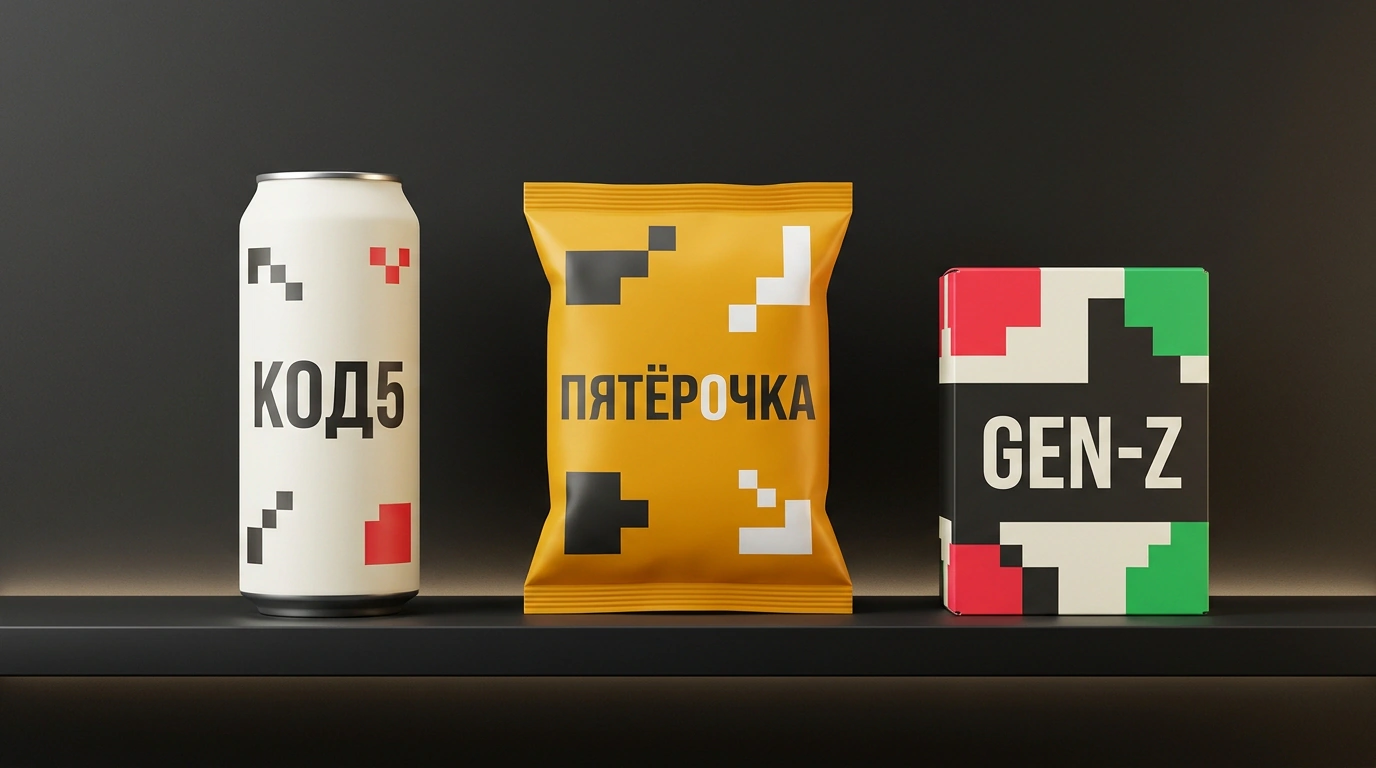
In late November 2026, Pyaterochka rolled out KOD5—12 launch products aimed at 18-to-26-year-olds, expanding across its 26,000 stores. The twist is age-first positioning: for the first time, the discounter built a private label around one generation rather than a price tier like "budget" or "mid-plus."
One Brand Across Four Aisles: Snacks, Drinks, and Ready Meals
KOD5 launched cross-category—covering snacks, sweets, drinks, and ready-to-eat food under one name. Day-one items include salted peanuts, a coconut bar, "Crab-flavored Crab" chips, and "Beef Latiao" chips (inspired by spicy Chinese wheat-gluten snacks popular in short-form videos), alongside two mojitos, mango cream soda, and two prebiotic lemonades made with Fahrenheit. Limited New Year editions add "Duck in Lingonberry Sauce" and "Horseradish Terrine" chips. Plans target 50 SKUs in 2027 (adding functional foods) and 100 in 2028.
Entering multiple aisles beats testing two chip flavors alone. Young shoppers pop into neighborhood stores for quick combos—a snack, a can, something sweet. Bright pixel-art packaging meeting you across neighboring shelves captures the whole impulse basket, turns boxes into in-store billboards, and lowers launch costs for every new SKU.
Why Build Viral Flavors In-House Instead of Buying From Suppliers
Private label (STM) means store-owned brands contract-manufactured to keep brand margin in-house. Strategy Partners estimates average gross margin on private labels near 35% versus 26% on national brands. At Pyaterochka's scale, that adds up fast: private labels drove 25.5% of turnover in 2025 (11.2B+ units) and climbed to 28.3% of unit volume in H1 2026.
Shopper demand backs it up. Per NTech data for H1 2026, Russian store brands are outpacing overall grocery retail by a wide margin.
Russian Grocery Retail Growth in H1 2026 (NTech)
Store brands beat market growth in both units and rubles: shoppers no longer see them as cheap bottom-shelf compromises.
Second is shelf trend-speed—moving a viral social flavor into physical stores fast and pulling it once buzz fades. Agreeing on a quirky limited run with a giant supplier takes months and splits margin. Under KOD5, Pyaterochka briefs factories directly and runs collabs like Fahrenheit—giving niche brands access to 26,000 stores while keeping Gen Z from ordering Asian snacks on marketplaces. It also fits Pyaterochka's wider cleanup, trimming its private-label roster from 77 brands down to 35 umbrella lines.
The Cost of Chasing Hype: Where the Line Could Stumble
Viral flavors like latiao or holiday duck sell the first bag out of curiosity and social-media photos. Hype doesn't guarantee a second purchase: once novelty fades, KOD5 competes on taste and quality, not price. That is why safe staples—salted peanuts, coconut bars, classic mojito—sit alongside wild flavors to anchor steady turns while limited drops rotate.
Even with hit recipes, scaling from 12 to 100 SKUs faces real supply headwinds. Strategy Partners flags rising ingredient and packaging costs, tight contract-factory capacity, and manufacturing/logistics labor shortages. Small limited-edition runs cost more than staples, meaning 35% margins aren't guaranteed—and any flavor missing turnover targets gets pulled from federal shelves fast.