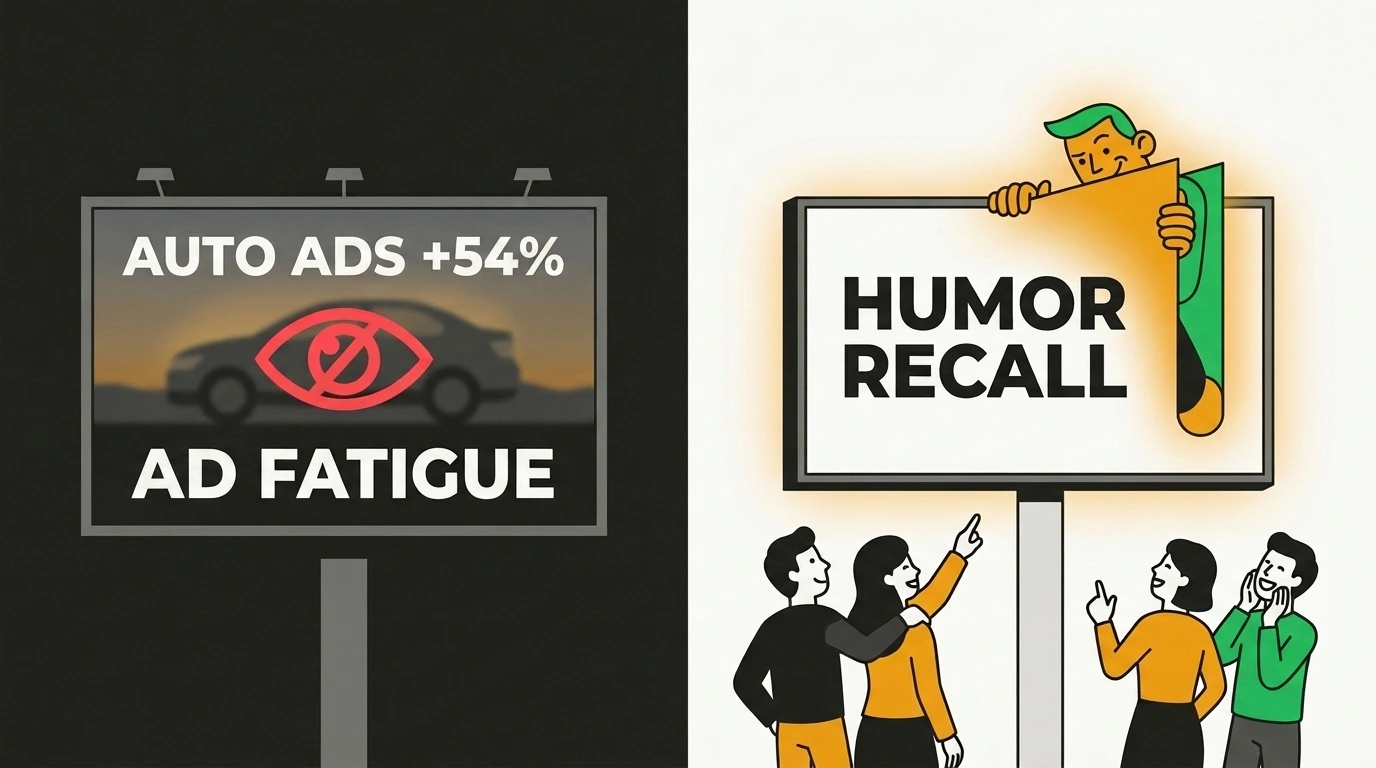
It sounds logical: want to beat rivals in a crowded market? Shoot a glossier spot, pour money into reach, and run it relentlessly. On paper, bulletproof. Open autumn 2026 numbers across Russian autos and global travel, and that logic shatters.
When Ad Spend Outruns Sales and Memory
Russia's top 15 car brands spent 15.2 billion ₽ on ads over a year—up 54% YoY. Research by eLama, RecPlace, and Name Digital / Radio Plus shows spend drifting far from sales. Top spender Changan poured 3.2 billion ₽ (21% of total spend) for ~5% market share. Lada flipped it: 11% of spend for 24.9% of sales. Haval balanced closer at 10% spend and 13.1% sales.
Ad cost per car sold swung from 5,000 ₽ to 591,200 ₽—a 118x gap. Digital took 72% of spend, where video delivered 20.3% of impressions yet ate 57.5% of online budgets. Video CPM averaged 76.4 ₽ versus 14.4 ₽ for static ads (5.3x pricier). Flooding identical auctions heats media costs while sales stall—meanwhile, geo-services drove roughly a third of unique dealership calls and leads because buyers check ratings and reviews, not glossy commercials.
Travel shows the same fatigue. In TOURISE and LIONS Advisory's IDEAS That Travel report polling 8,374 travelers across 13 countries (including the US, Germany, China, and UAE), 50% couldn't recall the last tour operator or destination ad they saw, and 7% were unsure. Ad recall sank even as demand rose: 39% plan to travel more, rising to 51% among Gen Z.
Why? Sixty percent say vacation ads all look identical, and 43% struggle to tell brands apart. Creative blindness takes over: eyes skip sea, palms, pools, and sunset couples. Your spot sells "taking a vacation," and the viewer books with whoever ranks first in search—you just funded category advertising.
What Actually Breaks Audience Blindness
If pretty visuals and endless repeats fail, what sticks in memory? A Buzzoola (MTS Ads) survey of Russian viewers gives the answer.
Which Ad Approaches Russians Remember Best (Buzzoola / MTS Ads)
Humor leads by a mile, beating "pretty visuals" exactly two-to-one, followed by strong emotion and original ideas. Big-budget favorites—celebrities and pounding frequency—sit dead last. You can't force a boring ad into memory by repeating it; brains crop dull spots out.
By channel, video platforms lead recall (53%), ahead of sites/apps (16%), TV (10%), socials (8%), messengers (7%), and OOH (7%). Inside ads, music and jingles hook memory most (22%), beating the product itself (17%), character or brand (15% each), slogan (9%), and discounts (8%). For brand recognition, sonic cues rank #1 at 34%, beating logos (23%) and brand colors (16%). Viewers recognize brands with their ears before their eyes.
The No-Logo Test Before Launching Campaigns
Generic ads are born in approval meetings. "Safe" creatives feel easy to defend—banks promise convenience, developers show smiling families, restaurants pull stretchy cheese. The catch: nobody notices them.
Before buying media, run a no-logo test. Cover the brand name and show the cut to an outsider. If they name three rivals it could fit equally well in sixty seconds, you made a category postcard. Next, play it with eyes closed: if voice or jingle doesn't give your brand away, you are wasting your top memory anchor.
"Wake up to an ocean view" drowns in noise; a funny bit about surviving airport transfers with kids without losing your mind gets saved and shared. Trade postcards for everyday moments, customer fears, surprising product truths, characters, or humor.
Five Questions to Stress-Test Any Ad Creative Before Launch
- Would a viewer identify your brand if you hid the logo and name?
- Does the spot deliver one sharp idea instead of vague category promises?
- Could someone retell the plot or joke an hour later?
- Does it show a real product trait rather than abstract 'comfort'?
- Beyond trendy shots, does it carry a distinct voice or recognizable sound?