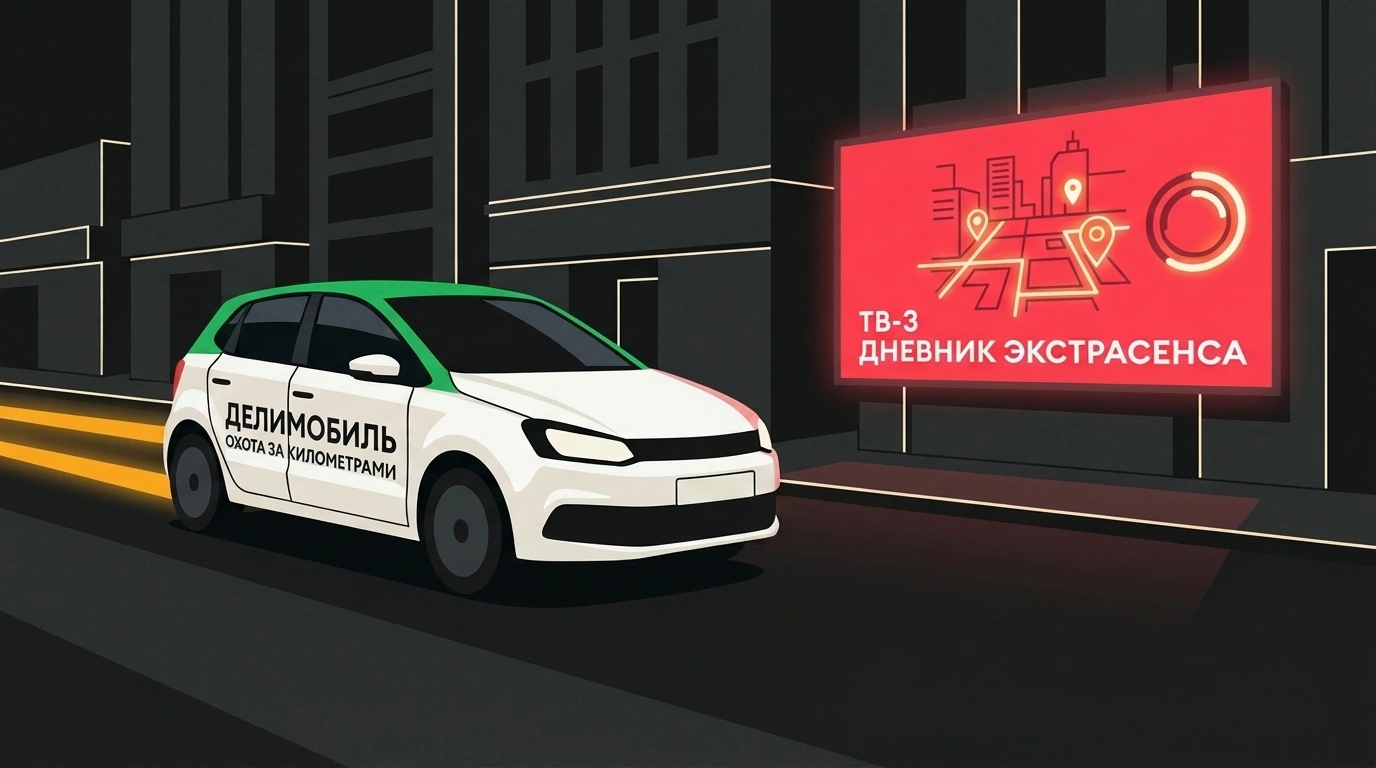
Open a carsharing app in the morning, grab the nearest car, and walk over. Whatever ad wraps the doors barely registers. Traditional transit OOH (Out-of-Home vehicle advertising) usually works that way: brands buy vinyl wraps, cars roam the city, and proving anyone noticed is nearly impossible.
From November 9 to 22, 2026 in Moscow, TV-3 and Delimobil flipped that script for the 16-episode detective premiere Vozvrashchenets (airing Nov 16, spanning one warm-up week and premiere week). Drivers stopped grabbing the closest car and started hunting branded cars blocks away.
Why Standard Car Wraps Miss Male Audiences
Vozvrashchenets targets solvent men aged 25–44—tough to hook with typical promo games and quizzes, which women engage with more while pragmatic male drivers scroll past. Regular car wraps act like flyers under wipers: half-second glance, filtered out by the next traffic light.
To break banner blindness, TV-3 and Delimobil turned cars into a street-level game—like a coffee loyalty card where stamps auto-log without reciting your phone number at checkout.
How the In-App Race Worked
Partners fused physical wraps with app UI. Wrapped Vozvrashchenets cars hit Moscow streets while appearing with bright "digital wraps" on Delimobil's in-app map, making them easy to spot among thousands of vehicles.
On November 9, a clickable map pin appeared: "Driving to TV-3 Prizes," opening an in-app hub with prizes, personal progress, and a live mileage leaderboard. Most importantly, zero friction at entry: no forms, promo codes, or receipt photos. Telemetry tool Finder tracked promo-car kilometers automatically by vehicle ID, while push alerts nudged drivers back to climb the ranks—removing the "upload your receipt to a bot" drop-off.
Leaderboard Results and Format Boundaries
Two weeks of OOH paired with live vehicle telemetry delivered verifiable numbers:
| Metric | 14-Day Result |
|---|---|
| Total mileage of TV-3 branded cars | 650,000+ km |
| Mileage vs. control group of standard cars | 2x higher |
| Share of men aged 25–44 among participants | 82% |
| Average bookings per participant | 4+ |
| In-app campaign hub visitors | ~150,000 people |
| Moscow push-notification recipients | 1M+ people |
| Top-5 leaderboard winners' mileage | 22,000+ km |
All three sides won: drivers chased prizes on regular trips; TV-3 earned long, repeat trip-length exposure while active cars multiplied street impressions; and Delimobil—whose own ad platform serves 13–14M users across 26–27K cars—drove fleet utilization and revenue directly.
Banks, telecoms, auto goods, and mass releases can copy this play if they partner with an app holding maps and live telemetry (carsharing, scooters, taxis, gas chains, delivery, or fitness trackers) where gameplay boosts partner revenue. Still, public data leaves gaps: wrapped-car count, budget, prize pool, and actual TV-3 viewership lift aren't disclosed—in-app uplift is crystal clear, while cost per TV viewer stays hidden.