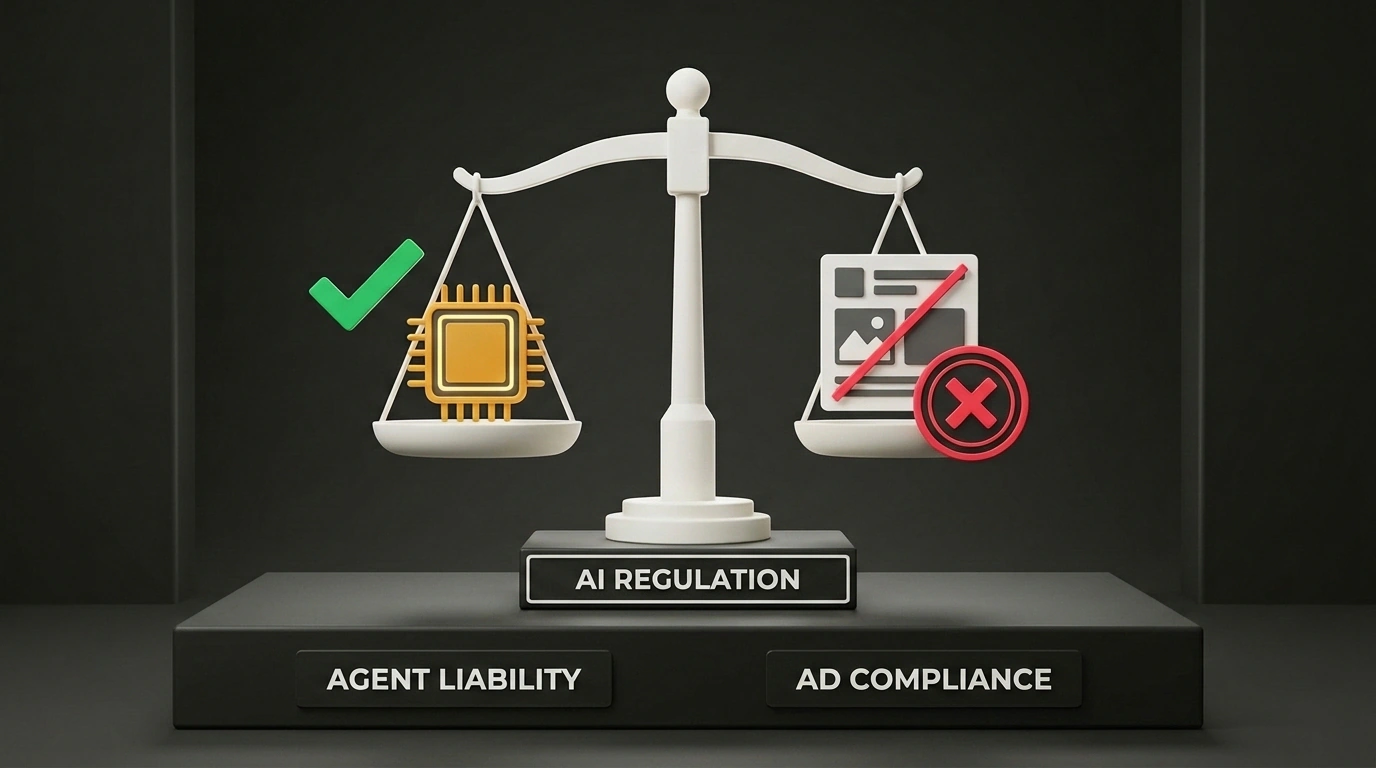
Who pays when an AI agent places a wrong order, and how did a sponsored chocolate listing inside a grocery search bar become illegal advertising? Here are four regulatory and corporate shifts set to hit e-commerce, marketing, and AI workflows in 2027.
Economy Ministry Proposes Legal Status for Autonomous AI-Agent Purchases
Russia's Economy Ministry added agentic commerce rules to its draft National Digital Platform Strategy through 2036. Shoppers will be able to task autonomous AI agents with comparing marketplace offers, picking items, and executing purchases without manual step-by-step confirmation.
The core legal question: if an agent buys the wrong item or causes losses, who is liable? Current law has no answer. The government must define ID rules for agents, operators, and users while splitting liability among buyers, platforms, and AI developers—starting inside an experimental legal sandbox (EPR), with external AI data-access and safety rules targeted by 2030.
For sellers, ad budgets may shift too: Yakov & Partners AI advisor Sergey Kobelev expects promo spend to migrate off marketplaces toward external AI platforms steering agent choices—primarily Yandex and Sber. Survey data shows 32% of Russians already cut shopping spend using AI, as models hunt lower prices instead of impulse buys.
Digital Development Ministry Drafts 'Sovereign' vs. 'National' AI Model Rules
Russia's Digital Development Ministry and IT firms opened consultations on bylaws for Federal Law No. 243-FZ (July 26, 2026) on AI support, targeting March 1, 2027 for rollout. Rules apply strictly to foundation models of 1B+ parameters (excluding small applied tools), creating two tiers:
| Criterion | Sovereign Model | National Model |
|---|---|---|
| Foundation | Built entirely in Russia | Foreign open-source base permitted |
| Control | Full domestic development cycle | Russian developer controls weights & fine-tuning |
| Data | Stored and processed in Russia | Stored and processed in Russia |
Why register? Priority state support and access to government training datasets (excluding personal data and statutory secrets). Models pass five steps: legal/cultural testing at an independent lab (ISP RAS proposed), filing with the Ministry, security agency clearance, and final sign-off by the government digital-development commission.
SAP Weighs Cutting at Least 10,000 Jobs Amid AI-First Restructuring
Per Bloomberg, German enterprise software giant SAP is discussing cutting at least 10,000 roles—over 9% of its 110,000+ global staff—across product, engineering, and sales under CEO Christian Klein's AI-first push. Nothing is final: SAP says it reviews structure regularly with no layoff orders issued yet, pending union talks. Still, the two-year shift is stark—2024's ~10,000-role restructuring leaned on voluntary buyouts and reskilling, whereas corporations increasingly tie AI rollouts directly to headcount cuts.
Retail Media Precedent: UK's ASA Bans Paid Chocolate Search Ads on Sainsbury's
On November 25, 2026, the UK Advertising Standards Authority (ASA) banned three paid Tony's Chocolonely search ads on Sainsbury's website. Audited August 12, searching "Chocolate" returned three "Sponsored" bars upfront with photos, prices, Nectar discounts, and add-to-cart buttons. Why illegal if the user searched "chocolate"? ASA applied CAP Code Rule 15.19—banning paid online ads for high fat, salt, or sugar (HFSS) foods since January 5, 2026. Organic search listings stay legal; paid "Sponsored" boosts turn shelf placement into banned ads. Tony's paused retail-media sponsored search for HFSS items, and Lindt was sanctioned the same day for a paid Sainsbury's promo block.