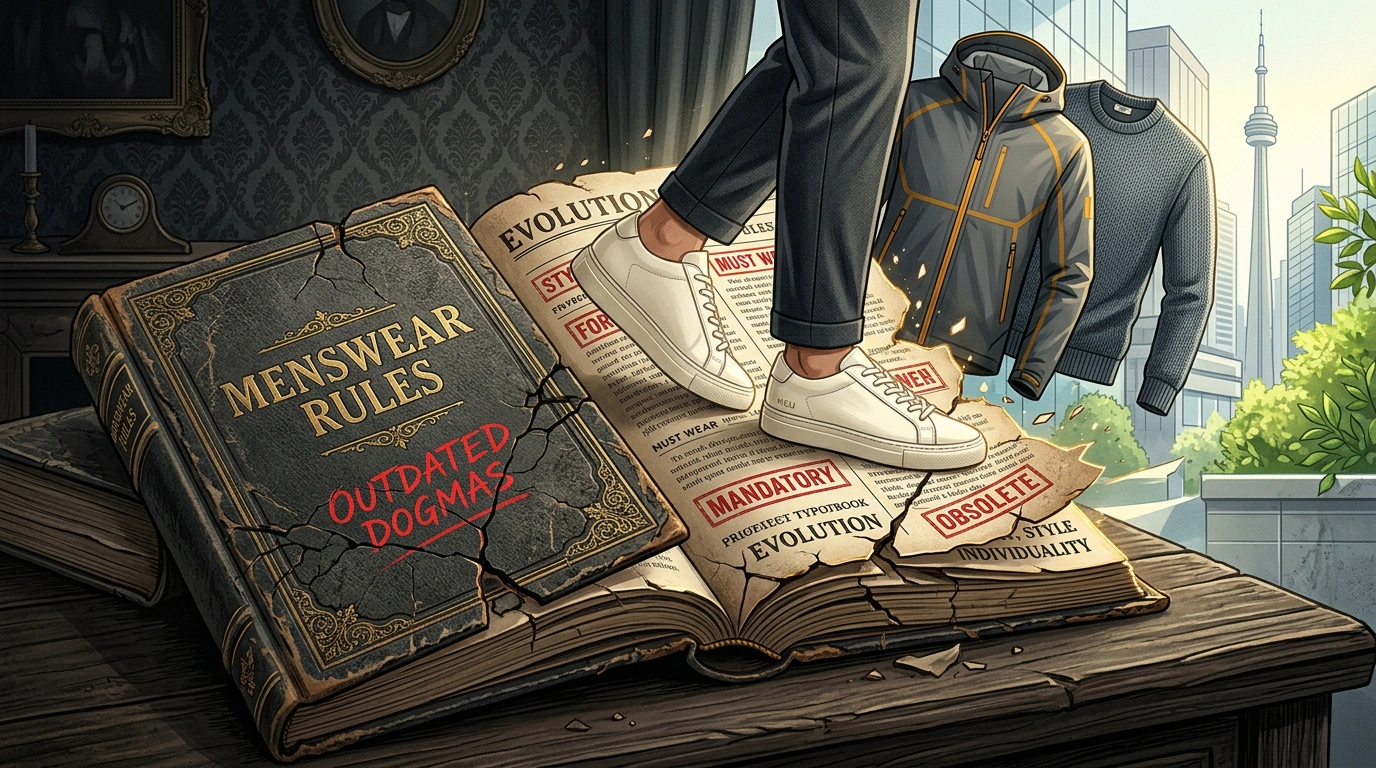
Spend ten minutes on menswear forums and you'll run into self-appointed "gentlemen" lecturing guys with half-century-old dogmas. You've seen those pompous rules: "Zero synthetics on the tag—100% natural fibers only!", "Only clowns wear sneakers with tailored trousers!", "A real man wears leather-soled oxfords!", "Trends are just marketing traps for sheep!"
After reading that, a guy either dresses like a stiff 19th-century professor—feeling awkward and boxed in—or gives up on style altogether, thinking it requires suffering and a fortune.
Menswear creator Harry Has rightly dismantles these outdated internet myths. Real style isn't built on obeying rigid bans. It comes from understanding context, freedom of movement, and modern materials.
The internet fashion police: how rigid rules crush individuality
The biggest flaw with traditional menswear rules is how disconnected they are from modern city life. Etiquette designed for private London clubs in the 1920s—when men rode in private carriages—makes zero sense when you're hopping on the subway, working from a café, or walking along a wet boulevard to meet a date.
Style is an extension of your personality and comfort. When your clothes restrict movement or you're terrified of ruining leather soles in a drizzle, people around you sense that tension immediately. Let's retire four stubborn style myths for good.
The "100% wool" myth: why modern fabric tech beats old rules
One of the loudest clichés claims any synthetic fiber on a care label equals cheap junk. Purists insist on pure 100% wool or 100% cotton.
Textile engineering has moved miles ahead. Take Cordura Combat Wool—a blend of fine merino wool and high-tenacity nylon—which survives over 50,000 Martindale abrasion cycles, far outlasting pure wool that wears thin at the elbows and thighs.
Adding 2–3% elastane to heavyweight cotton chinos or denim prevents baggy knees and lets you move freely, while 15–20% polyamide in a wool overcoat fights pilling and shrugs off sleet. Modern technical blends are engineered for durability and comfort; fearing them is pure nostalgia.
Sneakers vs. dress shoes: real-world smart casual
Another favorite purist myth insists thin-soled dress shoes always look higher-status than sneakers. Yet wearing heavy black brogues with jeans and a tee on a casual date often looks stiff, forced, and out of place.
In modern city style, clean leather sneakers—timeless Converse Chuck 70s, crisp minimalist white trainers, or slim retro pairs like Adidas Sambas—paired with relaxed wool trousers and an overcoat look fresher, sharper, and far more natural. That balance shows you read the room and know how to blend ease with polish.
Trends as a menu, not a command
"I'm above trends—I stick to timeless classics," is a common excuse from guys who haven't updated their closet in ten years. The irony? What they call "classic" is usually just the trendy cut from a decade ago.
Skinny jeans gripping your calves and tiny, tight blazers with narrow lapels weren't timeless—they were 2012. Ignoring how silhouettes evolve toward straighter, relaxed trousers, softer shoulders, and fluid drape makes an outfit look dusty.
Trends aren't orders you must follow by buying disposable TikTok hype. Think of trends like a restaurant menu: scan what's available, pick what flatters your build, lifestyle, and personality, and make it your own. Experiment with silhouettes and trust how you actually feel in your clothes.