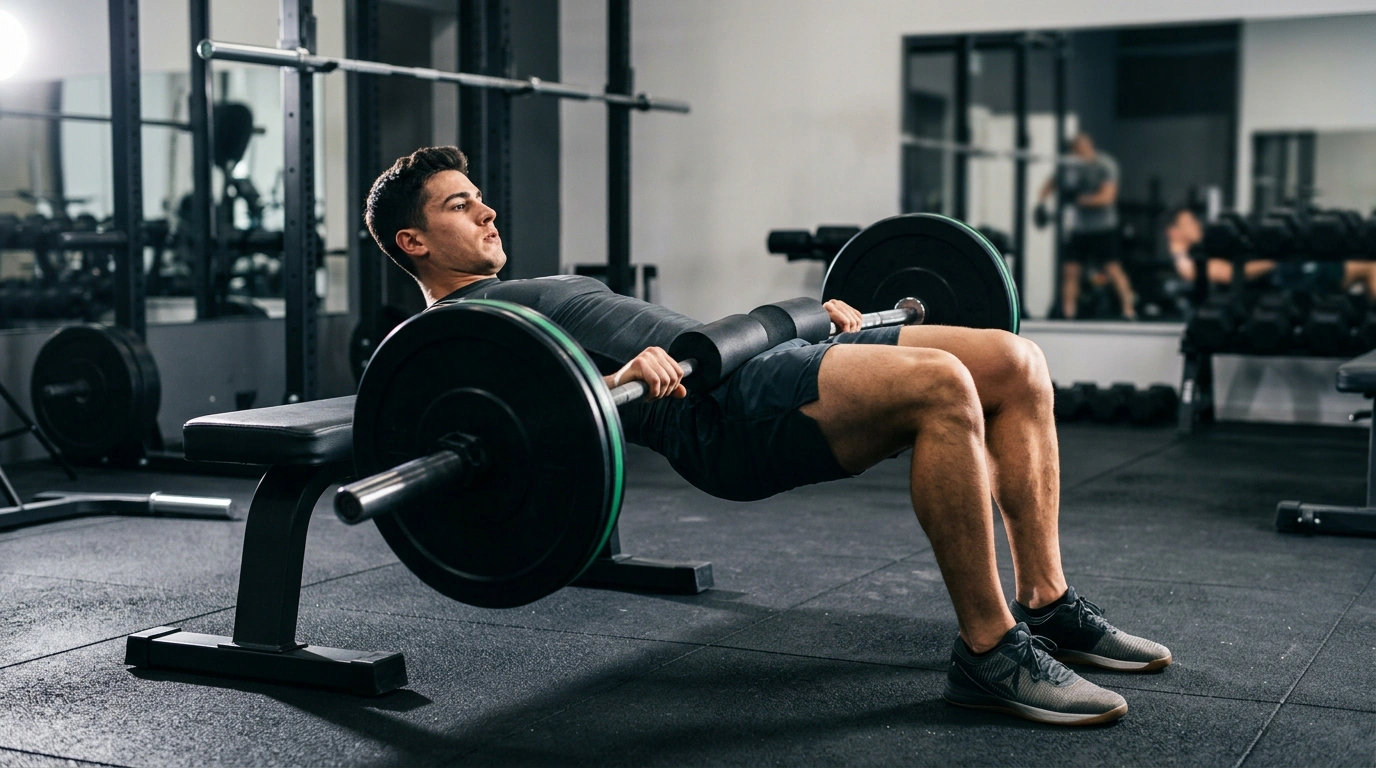
Walk into any gym on a Monday evening and you'll see the same old scene: guys crowding the bench press and curling dumbbells in front of the mirror. For years, men's fitness revolved around the 'beach-body upper half.' The assumption was simple: build broad shoulders and a big chest, and hide your legs in baggy sweatpants.
Lately, though, a viral trend has taken over social media and athletic circles: glutemaxing, or targeted glute training for men.
At first, it looked like an internet meme. After ten years of strength training, fitness creator Dylan (@glutemaxguy) launched a challenge to train his lower body six times a week 'until my glutes don't fit in my pants anymore.' Soon a whole Glute Max Club formed around the idea, along with the Great Cake Competition led by 29-year-old Jacob, where 30 participants track their progress on 3D body scanners.
Beneath the memes, however, sits hard biomechanics. A strong lower body isn't just about looks. It is the main engine of male health, posture, and athletic power.
The Athletic Standard: Why Bellingham and Alcaraz Win From the Hips
Look at elite athletes today, from soccer star Jude Bellingham to tennis players Carlos Alcaraz and Frances Tiafoe or pro rugby players. They don't carry bloated bodybuilder arms, yet their physiques look powerful and balanced.
Their secret weapon is explosive hip power. In sprinting, sharp cuts, jumping, and sudden braking, the glute muscles fire first. They generate the initial drive that launches the body forward.
Strong glutes also change how clothes hang on you. Men's trousers were cut for flat silhouettes for years, leaving extra fabric sagging awkwardly at the back. Building lower-body muscle creates clean lines in classic chinos and athletic-fit jeans, highlighting a sharp, sporty frame.
The Anatomical Triad and 'Gluteal Amnesia'
Rehab specialists at Hinge Health point out that your glutes consist of three interconnected muscles:
- Gluteus Maximus: the largest muscle in the body and the primary hip extender.
- Gluteus Medius: located on the side of your pelvis. It stabilizes your hips whenever you step forward and shift weight onto one leg.
- Gluteus Minimus: a deep stabilizer that keeps the head of your femur centered in the hip socket.
Now think about a typical city guy's day: eight hours at an office desk, an hour behind the wheel, and the evening on the couch. Your hip joints stay flexed for hours, causing the front hip flexors to tighten up.
That triggers reciprocal inhibition: tight front muscles send a signal to your brain that literally shuts down the gluteus maximus. The result is 'gluteal amnesia,' often called Dead Butt Syndrome.
When you walk or climb stairs with sleeping glutes, your lower back and hamstrings are forced to do the heavy lifting. Over time, that leads to chronic lower-back pain, anterior pelvic tilt (an overly arched spine), a protruding belly, and knees caving inward under load.
We already broke down how to wake up lazy glutes by training the gluteus medius: without it, squats put unnecessary stress on your joints.
To rebuild the mind-muscle connection, three foundational exercises are enough:
- Barbell Hip Thrust: rest your upper back on a bench with the barbell across your hips. It delivers peak contraction at the top without loading your spine vertically.
- Romanian Deadlift (RDL): focus on stretching your hamstrings and driving upward by squeezing your glutes rather than arching your lower back.
- Bulgarian Split Squats: single-leg squats force your gluteus medius to stabilize your knee.
A strong physique is built systematically. Remember our guide on the foundation of a strong male physique: consistent training and quality sleep beat random workout fads every time.
Glutemaxing grew out of the looksmaxxing wave, which makes it easy to fall into a mental trap. The Cut reported the story of 45-year-old Tom, who developed an obsession with his lower-body shape after a layoff, constantly comparing himself to fitness models.
Keep this in mind: pelvic shape and muscle insertions are set by genetics. You don't need to look like a social media showcase. Your real goal is a pain-free back, an easy stride, and an athletic silhouette.
A man's body looks most attractive when it is balanced, capable, and ready to move. Bring glute training into your week, and you'll lose the back aches while your pants finally fit like they were tailored for you.