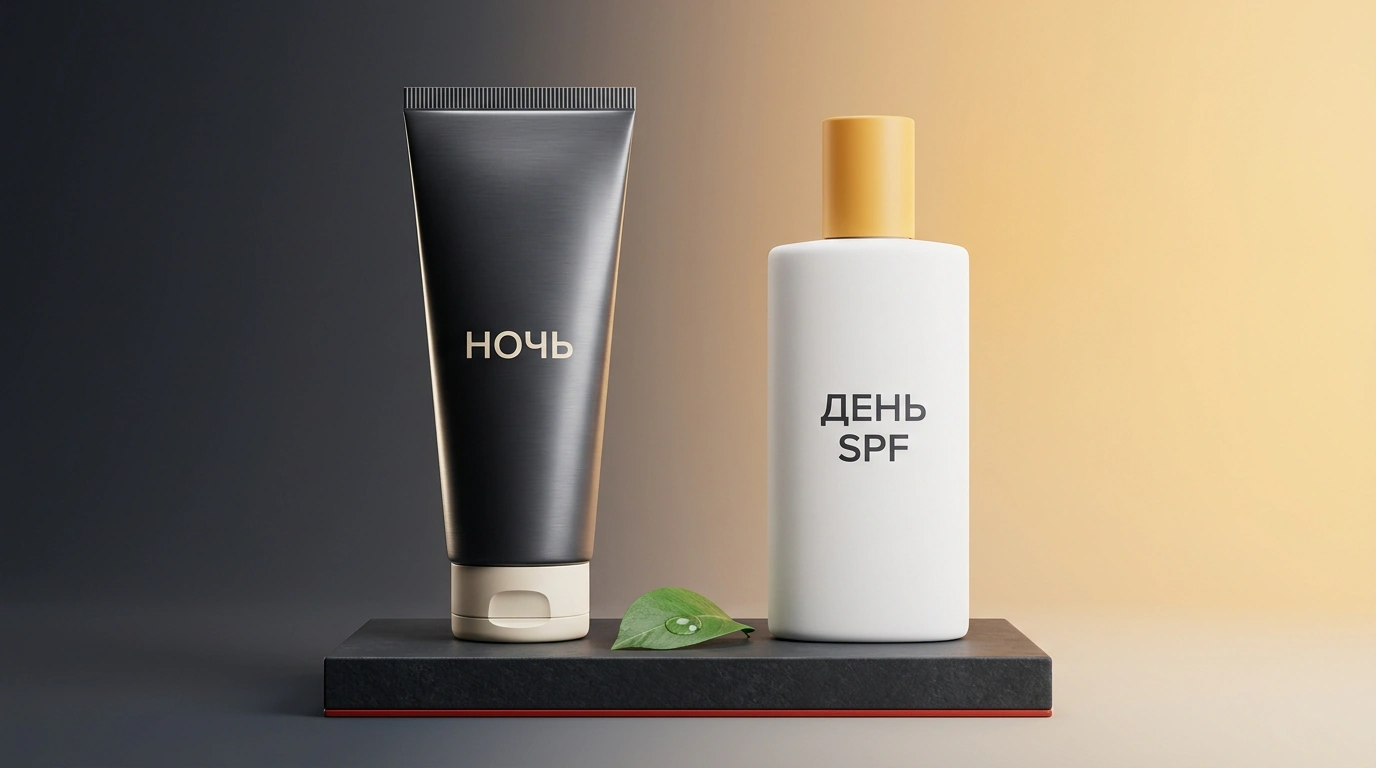
At first glance, the plan looks solid: you get a prescription for tretinoin, apply it at night for post-acne marks, uneven texture, and early fine lines, and consider your skin routine handled. Meanwhile, sunscreen stays tucked away until a summer beach trip. It's cloudy outside and you won't get a sunburn anyway, so why bother putting something on your face every morning?
In reality, skipping daily SPF turns months of consistency into walking up a down escalator. At night, your skin gets the signal to rebuild; by morning, UV light quietly tears down what your body just started repairing. Without daily sun protection, a retinoid works at half strength—and against stubborn dark spots, it can lose the fight completely.
Remodeling under demolition: how UVA and tretinoin pull in opposite directions
Skin aging comes from genetics, hormones, and time, yet the lion's share of visible facial aging comes from photoaging—cumulative damage from ultraviolet sunlight. Over time, that's what brings deep creases, sagging, dull tone, and dark spots.
Under the surface, UVA rays do the main sabotage. They reach deep into the dermis and switch on matrix metalloproteinases (MMPs)—enzymes that literally snip away collagen and elastin fibers. Those two proteins act like steel rebar holding up your skin's firmness. While UVA weakens the deep frame, UV light at the surface (the epidermis) disrupts how keratinocytes mature, leaving skin rough, dry, and gray-toned. At the same time, sunlight pushes melanocytes to pump out extra pigment.
Tretinoin is a prescription vitamin A derivative that pushes back from the opposite side. Its molecules bind to retinoic acid receptors inside skin cells and reset how they behave. On the surface, cell turnover evens out and texture gets smoother. Deeper in the dermis, it sparks new collagen production and dials down the enzymes that break it down.
The picture is straightforward: tretinoin is the repair crew, and sunscreen guards the front gate. Using a retinoid without morning SPF is like plastering a wall while a wrecking ball taps the outside every day. Forgetting sunscreen once in a rush won't instantly "cancel" tretinoin, and clinical trials don't show a magic exponential multiplier. Still, day after day, unprotected sun eats away the exact results you started the course for. Hyperpigmentation takes the worst hit: you fade spots at night, and UV wakes your pigment cells right back up in the morning.
The sunburn myth: why your face stings early in a course
A common scare story around retinoids says you'll put on tretinoin tonight and burn on your walk to the subway tomorrow. The real mechanism is subtler.
In dermatology, sunburn threshold is measured by minimal erythema dose (MED)—the smallest amount of UV needed to visibly redden skin. Tretinoin itself isn't a classic phototoxic drug and doesn't directly crash that threshold.
The catch lies elsewhere. During the first weeks of adjustment (retinization), tretinoin thins the compacted outer layer and often causes dryness, peeling, redness, and a dip in barrier strength. When your skin barrier is stressed, your face reacts much more sharply to sun, wind, and temperature swings, and some reviews note a temporary drop in barrier defense early on. That feeling of "burning" faster is real—it's just an irritated barrier speaking, not phototoxicity.
Meanwhile, the strict "nighttime only" rule comes down to chemistry: classic tretinoin formulas break down in light (photodegradation). Apply it in the morning, and daylight degrades the active before it can work. At night it works undisturbed in the dark, and in the morning SPF takes the baton.
Blue light and dark spots: when tinted SPF with iron oxides matters
If your main goal is clearing stubborn post-blemish marks or keeping melasma in check, clear UV filters alone sometimes fall short.
Patent blueprint-style infographic showing how mineral iron oxides block visible blue light
The culprit is visible light in the 400–700 nm range, especially high-energy blue-violet light (HEV). Standard transparent sunscreens block UVB and UVA well, yet let visible light pass right through. Research indexed on PubMed shows blue light directly triggers opsin-3 photoreceptors on melanocytes, driving extra pigment production. As a result, dark spots deepen or bounce back even when UV is blocked.
That's where iron oxides step in—mineral pigments in red, yellow, and black shades added to tinted sunscreens. They give a natural skin tint while physically reflecting and absorbing visible blue light. Clinical studies show tinted SPF with iron oxides holds back melasma and post-inflammatory hyperpigmentation noticeably better than untinted sunscreen.
If you dislike tinted sunscreens or can't find a shade match, there's an easy workaround: apply regular broad-spectrum SPF, let it set, and dab a concealer or tinted product containing iron oxides over stubborn spots. Just remember makeup alone doesn't replace sunscreen—your UV base still goes underneath.
And let's cool down the gadget panic while we're here. Daytime sunlight delivers orders of magnitude more blue light than a phone or laptop screen. Putting on tinted SPF at night before scrolling in bed makes zero sense; the real exposure happens outdoors during the day.
An honest timeline: why the mirror looks the same after one week
At the gym, feedback is quick: lift for two weeks and you already feel tighter. Skin runs on a slower clock, and that's where half of guys quit.
Sunscreen cuts UV damage from morning one, yet works cumulatively and won't erase wrinkles in a week. Tretinoin moves slower still: it shifts gene expression, wakes up fibroblasts, and triggers collagen remodeling—a gradual rebuild of your dermal scaffolding. Your body can't manufacture dense new collagen in a few nights. Biopsies show shifts under a microscope earlier, while visible changes in the mirror take patience.
| Stage of Course | What Happens in the Skin | What You See in the Mirror |
|---|---|---|
| First few weeks | Adjustment to the retinoid, faster surface turnover | Dryness, redness, peeling, higher sensitivity |
| 6–8 weeks | More even keratinocyte maturation in the epidermis | Early shifts in smoothness and overall texture (varies) |
| 3–6 months | Steadier cell turnover and calmer pigment activity | Clearer tone, fading spots, softer fine lines |
| 6–12+ months | Gradual structural collagen remodeling in the dermis | Firmer skin density and smoother deeper creases |
Tossing the tube or hopping between products during the peeling phase is the surest way to zero out your progress right before the curve turns upward. This duo wins over time: morning SPF blocks fresh damage, and every tolerable evening your retinoid lays down another brick.
A simple AM/PM routine and safety boundaries
You don't need ten bottles crowding your sink to run this pair—two core steps carry almost the entire workload.
In the morning, a gentle cleanser—or just rinsing with water if your skin is dry and not shiny—is plenty. Add a separate moisturizer only if your skin feels tight, since many sunscreens already sit in a hydrating lotion base. Finish with a generous layer of broad-spectrum SPF 30 or higher across your face, neck, and ears. Following American Academy of Dermatology (AAD) guidance, reapply roughly every two hours outdoors, and right after swimming or heavy sweating.
At night, wash your face and let your skin dry completely (if you lean dry, try "buffering" by applying moisturizer first before the active). Next comes an easy trick to protect sensitive spots: dab a thin layer of plain petroleum jelly around your eyelids, nose creases, and mouth corners so tretinoin doesn't migrate there. Then spread a thin coat of tretinoin. Ease into it rather than using it every night from day one, building up gradually; if irritation flares up, pause for a couple of nights and stick solely to gentle washing and moisturizer.
Working AM/PM Routine Without Barrier Burn
- Morning: gentle wash or water rinse, moisturizer if your skin feels tight.
- Daytime: generous broad-spectrum SPF 30+ (tinted with iron oxides if fighting dark spots); reapply every 2 hours outdoors or after water/sweat.
- Evening: cleanse, dry skin or buffer moisturizer, petroleum jelly on eyelids, nose creases, and mouth corners.
- Retinoid: thin layer of tretinoin introduced gradually, taking a break if strong irritation hits.
Keep two medical boundaries in mind. First, unlike over-the-counter retinol, tretinoin is a prescription medication, so a dermatologist should choose your strength and schedule—this breakdown covers general mechanics, not personal medical advice. Second, topical retinoids are avoided during pregnancy and while trying to conceive as a precaution; during breastfeeding they are generally considered acceptable if kept away from chest skin, though any use then should be cleared with a doctor.