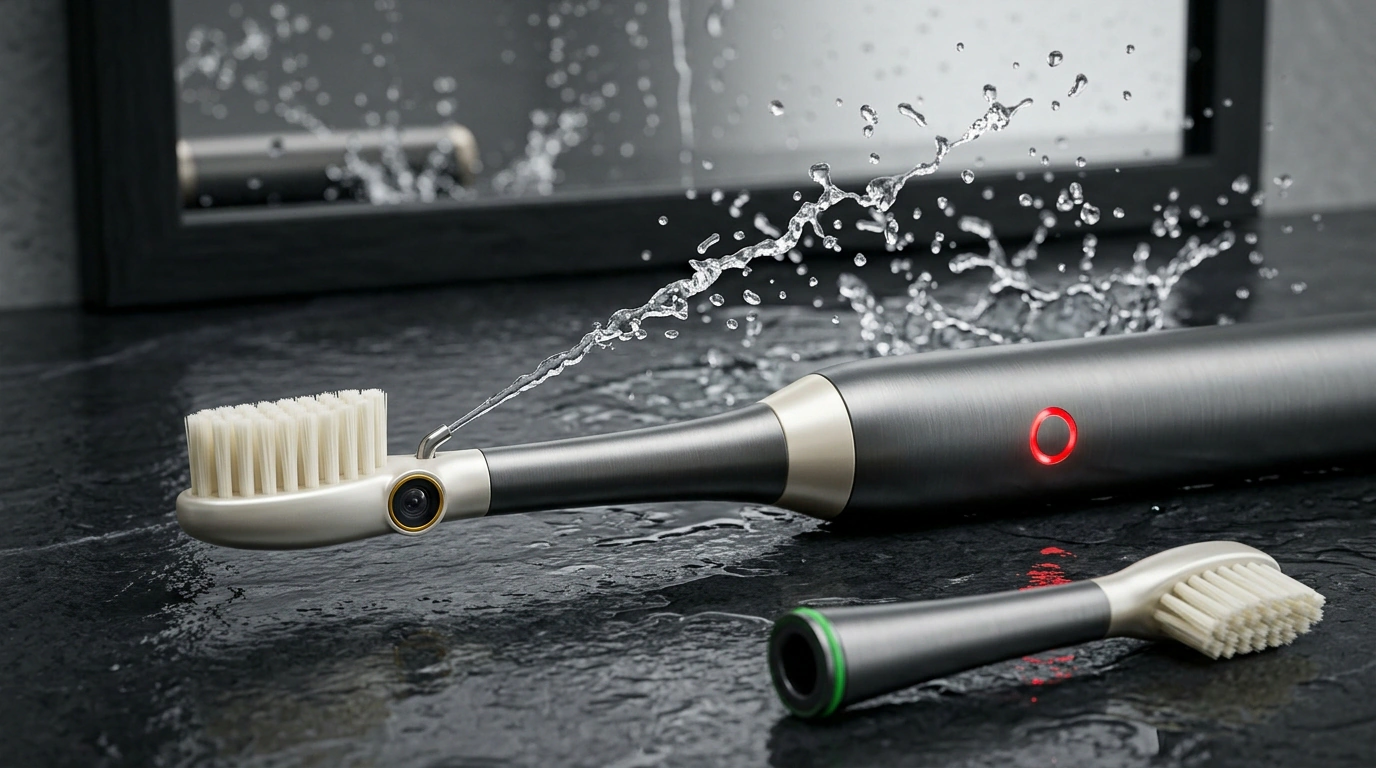
On September 1, 2026, in Paris, Dyson rolled out a device that sounded like an April Fools' prank, except it carried a real price tag of £420 in the UK and $500 in the US. Meet the Dyson CameraJet: an electric toothbrush packing a built-in camera, artificial intelligence, and a water flosser into a single handle.
Fresh breath and a clean smile make up half your first impression with women. When you're standing at arm's length, no expensive cologne covers poor hygiene. That's why the men's grooming market constantly tempts you with space-age gadgets: spend five hundred bucks, and your routine takes care of itself. In just two weeks, the CameraJet saga showed what happens when you turn a simple morning habit into an overcomplicated tech toy.
A 1x1 mm camera, AI targeting, and a stealth toothpaste subscription
On stage, the pitch sounded impressive. Dyson claimed it had studied oral hygiene for over a decade and spent more than six years building the brush. They aimed at a real pain point: people hate flossing, miss the gaps between teeth, and want tech to aim for them.
Engineers squeezed a 1x1 mm, 100,000-pixel macro camera shooting around 28 frames per second straight into the brush head. Video feeds into an "AI Gap Optical Targeting" algorithm trained on hundreds of thousands of dental images, with promo materials boasting 16 million lines of code. While you brush, the system hunts for gaps between teeth and fires a cone-shaped jet of water or mouthwash into them.
Essentially, they stuffed a water flosser inside a toothbrush. To keep it firing at any angle, Dyson added an "anti-gravity" reservoir, a three-second auto-refill dock, and a live feed from inside your mouth to the MyDyson app. Why anyone wants a livestream of their gums at 7 a.m. is another question, though it sounded bold on presentation slides.
Behind the slick showcase sat a hidden consumables trap. Regular toothpaste doesn't work in it because standard formulas use SLS (sodium lauryl sulfate) to foam up. Thick foam acts like dense fog over the camera lens, blinding the AI. So Dyson launched its own non-foaming SLS-free toothpaste at £10, low-foam mouthwash at £8.50, and replacement heads at £25 ($30) for two. You pay five hundred dollars for the brush, then keep paying extra just so its camera can see.
What happens in a real bathroom—and why dentists dislike the hybrid
On paper, a two-in-one combo saves time. In a normal bathroom, things flip upside down fast.
As a plain electric toothbrush, CameraJet cleans fine: smooth teeth, gentle on gums. The catch is that a standard Oral-B delivers the exact same clean for a fraction of the price. Oral-B and Philips Sonicare have pricey flagships too, yet they also offer affordable models and constant sales. Dyson rarely discounts, so at a premium price you expect magic—not an obstacle course.
The real surprise hits when the water jet kicks in. For the camera to spot gaps, you have to glide the brush at a steady speed and exact angle. With your mouth closed, the lens barely sees anything even with its built-in light, so the jet refuses to fire. You have to open your mouth. Immediately, pressurized mouthwash sprays across your mirror, sink, and T-shirt. Morning brushing turns into bathroom cleanup.
Everyday ergonomics bite back too. The long handle doesn't fit in a normal toiletry bag, and the charging dock eats half the counter. In the UK, an almost comical oversight popped up: British bathroom safety codes ban standard 230V outlets and USB-C ports. Engineers spent six years teaching AI to spot tooth gaps, yet forgot where Brits would plug in the charger. Users had to keep the dock in another room and carry the brush back and forth daily.
| Criterion | Dyson CameraJet | Regular Electric Brush + Floss |
|---|---|---|
| Upfront price | £420 / $500 | From £20 basic to £150–250 mid-range (£600–800 flagships) |
| Consumables | Proprietary SLS-free paste, special rinse, heads | Any fluoride toothpaste and standard floss |
| Hygiene sequence | Mixed into one step; fluoride washes right off | Floss → rinse → brush without rinsing fluoride off |
| Travel & bathroom | Long handle, bulky dock, UK outlet issue | Fits any dopp kit, battery lasts weeks |
From a dental standpoint, brushing and rinsing at the same time makes little sense. Hygienists recommend a clear order: floss first, rinse next, and brush last with fluoride toothpaste—leaving the fluoride on your teeth rather than rinsing it away immediately so it can strengthen enamel. The hybrid mashes all three steps together and blasts away your paste mid-brush.
The American Dental Association (ADA) puts it plainly: both string floss and water flossers work well when they carry the ADA Seal. String floss scrapes tight contacts better mechanically, while water flossers shine for reducing gum bleeding and cleaning around braces or implants. Consistency is what actually counts. Any gadget that forces you to wipe down mirrors and haul a charger across the apartment ends up gathering dust on a shelf.
Two weeks to vanish: breakdown timeline and the 'quiet recall'
For many buyers, the brush didn't even survive long enough for spray fatigue to set in. Days after launch, complaints flooded the internet: units arrived dead, wouldn't charge, overheated, leaked, or died permanently after a couple of uses.
Press review units failed too. Consumer Reports reported its sample died less than 24 hours after unboxing before editors could even brush with it. A replacement sent a week later lasted only a few days and left a messy, subpar clean. An Allure reviewer's unit broke in under three weeks.
Dyson's response poured fuel on the fire. After staying quiet for a week, the company put out a statement on September 9 praising "strong global demand" and briefly mentioning a "component issue" in a small batch of early units. On September 15—exactly two weeks after launch—orders were paused in France, followed by the UK, the US, and Singapore. Even then, Dyson insisted it wasn't a recall.
Only on September 30 did Dyson admit a manufacturing defect in a batch of jet tubes created a risk of water leaking into the handle. The company never disclosed how many units were affected or the failure rate. CameraJet returned to sale in October, yet the damage to trust was done. Buyers, including makeup artist Wayne Goss, spoke out publicly about struggling to get refunds for broken units, while social media slapped it with the nickname ScammerJet.
A streak of pricey misses and the takeaway for men's grooming
Zooming out, CameraJet fits a longer pattern of expensive Dyson missteps. A company that once shook up the market with the Supersonic hair dryer and Airwrap styler increasingly builds gadgets to flex engineering muscles without asking if anyone needs them.
In 2023 came the Dyson Zone headphones with a clip-on air-purifying visor: another six-year project that looked like a sci-fi movie prop and quietly went out of production in 2025. Earlier, in 2017, Dyson announced an electric car, then killed it in 2019 as commercially unviable after burning roughly £500 million.
Even in its core UK vacuum market, numbers slipped. According to The Telegraph, SharkNinja took the UK lead starting in 2022, Dyson's British revenue dropped from £417 million in 2021 to £358 million in 2023, and around a thousand UK jobs were cut. Meanwhile, sticker prices kept climbing.
How Dyson Cordless Vacuum Entry Prices Rose in the UK
In under twenty years, the entry ticket to Dyson's cordless vacuums shot into the stratosphere while rivals closed the quality gap at far lower prices. Launching a buggy camera toothbrush and dragging out refunds on top of that burns through goodwill fast.
For a guy who takes care of himself and hates wasting money on hype, this whole story works as a smart filter. The more complicated an everyday grooming tool gets, the more parts it has to break, demand pricey refills, or annoy you before coffee.
No-Hype Hygiene Kit That Actually Works
- A reliable electric toothbrush with a timer and pressure sensor—cleans just like pricey flagships and lasts for years.
- Plain string floss every evening—physically clears tight plaque where bristles can't reach.
- A standalone water flosser if you have braces, implants, or sensitive gums—stronger and more reliable than built-in hybrids.
- Standard fluoride toothpaste from any pharmacy—zero need for £10 proprietary tubes.
Looking sharp and feeling confident come from simple habits you run on autopilot, without babying a charging dock or wiping mouthwash off the mirror. A normal electric brush and a pack of floss cost a fraction as much, fit in any bag, and get the job done quietly without cameras, livestreams, or sixteen million lines of code.