When you walk into the gym wanting a solid build, it is tempting to overcomplicate everything: buy a shelf of supplement tubs, schedule five chest machines, and burn out your shoulders to failure. On paper it looks hardcore. In reality, your wallet shrinks while your lifts stall. Strength training runs on simple mechanics—let's look at four spots where cutting the noise helps most.
Which Supplements Make Sense and Which Are Pure Marketing
First out of the cart are general multivitamins. Taking them 'just in case' is like buying flood insurance while living on a mountaintop. Get a blood test instead and fix real gaps—vitamin D, magnesium, zinc, or fish oil—and save vitamin C for the first sign of a cold.
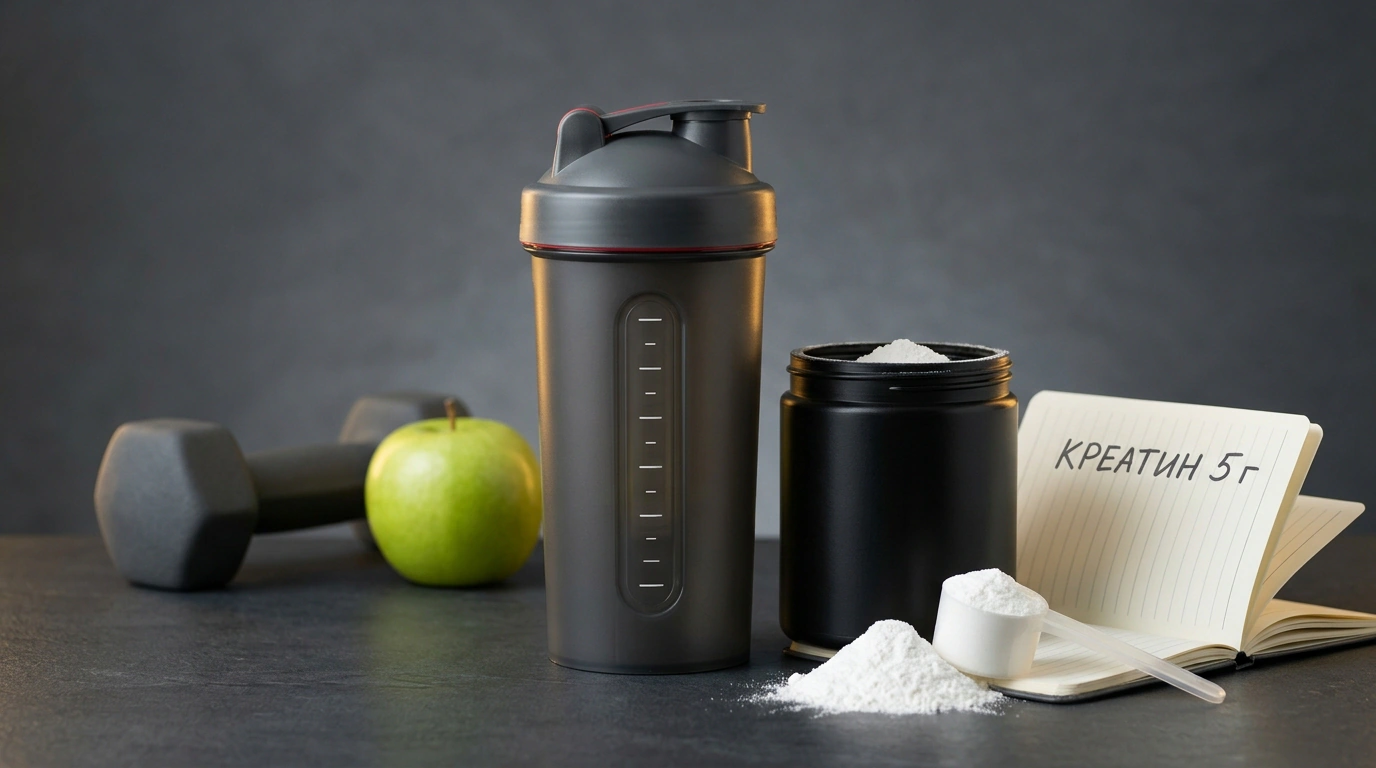
With creatine, your goal decides. Per the International Society of Sports Nutrition (ISSN) position stand, creatine monohydrate at 3 to 5 g daily remains the most proven, safe supplement for strength and power, with growing interest in cognitive stamina too. There is one catch: it pulls water into muscles and adds roughly 2 kg on the scale. For barbell lifting, that helps. If you focus on calisthenics like pull-ups and dips, where relative strength (strength per kilo of bodyweight) rules, an extra couple of kilos of water can slow you down—especially if you already eat plenty of red meat. Rumors linking creatine to hair loss have almost no solid clinical backing, though guys with genetic hair loss sometimes stay cautious.
Before training, plain caffeine works great, yet expensive pre-workouts or exact 200 mg pills aren't needed: an espresso gives you the same lift for less. Whey protein is similar. In the 2010s, marketing pushed a strict 'anabolic window,' claiming you had to chug 20 to 30 g of powder right after your last set. The ISSN protein review settled that years ago: total daily protein matters most—1.4 to 2.0 g per kilogram of body weight (up to 2.3 to 3.1 g/kg for lean lifters cutting hard). Whey isolate is convenient because it digests easily, mixes cleanly, and saves you from endless chicken Tupperware. Still, daily food builds your physique, not shaker magic.
Why Compound Presses Build a Strong Chest Without Isolation Flyes
Gyms are packed with guys spending thirty minutes on cable crossovers and flyes from five angles to 'hit the inner chest.' It looks busy. It adds very little.
In practice, 80 to 90% of chest development comes from compound lifts—multi-joint movements that recruit several joints and muscle groups together. Pairing a horizontal press (bench press or push-ups) with an incline or vertical press (dips, incline press, overhead press) covers the job. Genetics shape how your chest looks and responds, of course, yet the mechanics hold for everyone.
The reason is simple: compounds have huge room for progressive overload. Triceps and shoulders assist on presses, letting you add weight and reps for years. On isolation flyes, you hit a ceiling fast: adding serious weight risks your shoulder joints, leaving you chasing a pump without real load progression.
The Math of Side Raises: How to Beat Huge Weight Jumps on Cables
On cable lateral raises, one plate feels too light, so you drop the pin one slot down—and your arm barely lifts off your hip. That isn't weak willpower; it is simple math and weight-stack increments.
Adding 5 lbs (about 2.3 kg) to a 100 lb overhead press is only a 5% jump. Your body handles that smoothly. On side raises for your medial delts, working weights are small—around 20 lbs (9 kg)—so those same 5 lbs create a massive 25% jump. Your shoulder isn't ready for that spike, so your form breaks down immediately.
- Widen your rep range: if you usually stop at 8–10 reps, push the current weight up to 12+ clean reps before moving the pin down.
- Use micro-loading to stay in a moderate rep range: hang a small plate on the weight stack, use a wrist cuff while holding a light dumbbell, or strap on a light wrist weight.
- Accept a temporary rep dip: hit 10 reps, bump the weight up, and only manage 5—that's fine as long as form stays strict and joints feel good; build your reps back up from there.
That keeps body swing out of the lift and gives your side delts steady, controlled progression.
How to Get Stronger Without Getting Bigger: Upgrading Your Nervous System 'Software'
Sometimes you want the opposite: real strength for pull-ups, combat sports, or a lean build without extra size. A simple analogy helps: muscles are the 'hardware,' while your nervous system is the 'software.' You can gain strength by upgrading the software—neuromuscular adaptation—where your brain learns to fire existing muscle fibers faster and more smoothly.
Lever one is training style: frequent heavy work kept far from failure. Pick a weight or skill you could do for 5 max reps, then perform sets of just 1 to 2 reps with long rest breaks and full recovery days. Brad Schoenfeld's meta-analysis confirms that muscle grows across wide rep ranges near failure, while max strength responds much better to heavy, low-rep work.
Lever two is even stronger: nutrition. Without a calorie surplus and extra protein, your body simply lacks the raw materials to add noticeable size even as your strength climbs. Most guys, though, don't need to split strength and size artificially—normal training pulls both up together, and solid compound lifts with good food build both at once.