Before a night out, you wash your face with harsh soap until it feels 'squeaky clean,' scrub away the flakes on your nose, and slap a thick cream on top. It feels like your skin should look smooth in no time. Behind the scenes, though, an emergency is already underway: alkali and friction strip away intercellular lipids, moisture escapes rapidly, surface acidity rises, and barrier-building enzymes stall. By morning, your skin turns red, feels tight, and stings even from plain water.
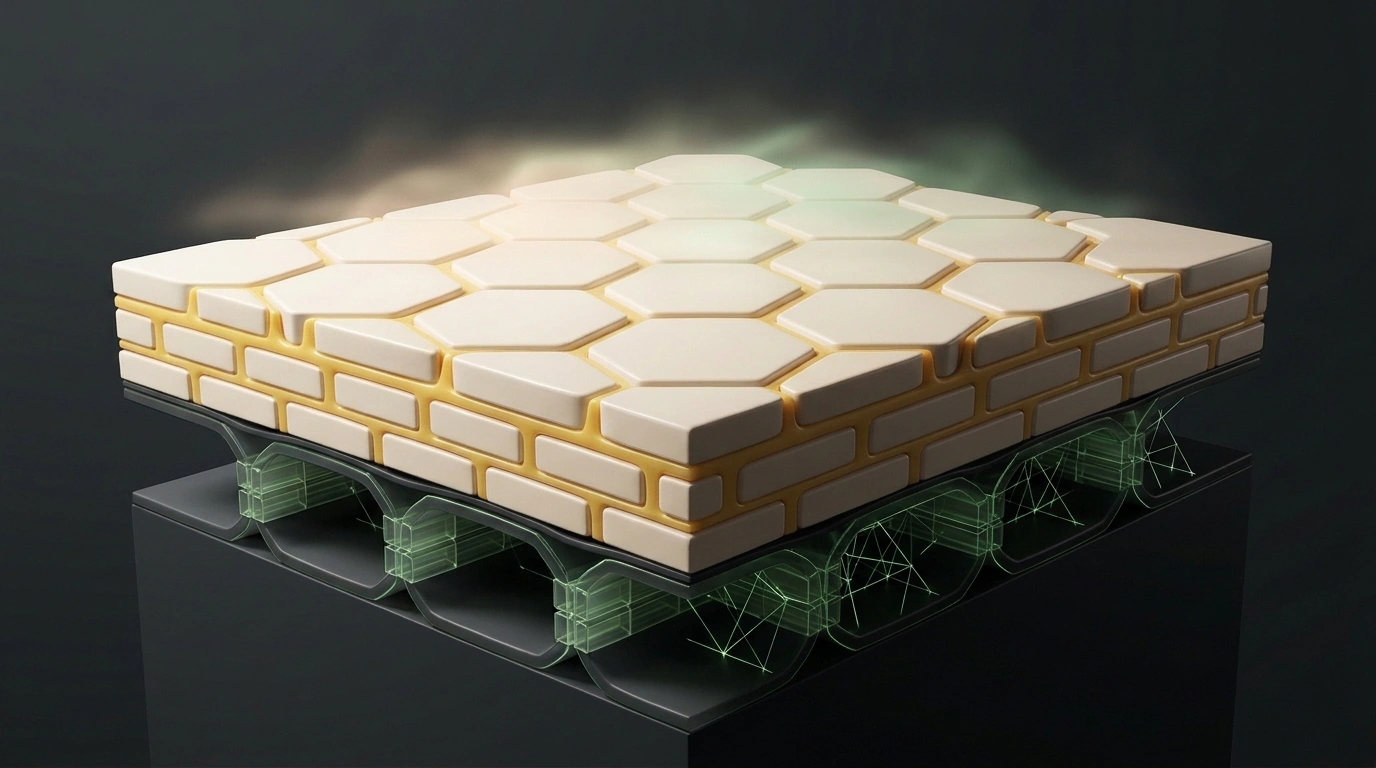
Ads usually picture the skin barrier as a simple wall of bricks and mortar. That image is handy, yet heavily oversimplified. In reality, your skin runs as a living defense system with four connected circuits: physical, chemical, immune, and microbial. When one breaks down, the others react right away. That is why dryness, burning, and constant irritation rarely go away with just one jar of 'ultra-rich' cream.
Four Defense Circuits Instead of One 'Brick Wall'
Picture a well-run nightclub with smart security. Heavy doors and bouncers guard the entrance, the inside stays at a set climate, security patrols the floor, and calm regulars fill the tables so troublemakers have nowhere to sit. Your skin follows the exact same logic.
The physical barrier is those doors and walls. Its top floor is the stratum corneum: flattened dead skin cells (corneocytes) tightly sealed in intercellular lipids. By weight, this 'mortar' is roughly 50% ceramides, 25% cholesterol, and 10–15% free fatty acids, and by molecule count all three sit close to a 1:1:1 ratio. Ceramides hold the structure and lock in water, cholesterol provides flexibility, and fatty acids keep the surface acidic. Deeper in the epidermis sits a second lock: tight junctions between cells.
Structure of the epidermal layers of the skin: stratum corneum, keratinocytes, and lamellar granules (Source: Wikimedia Commons / OpenStax)
When the physical barrier cracks, transepidermal water loss (TEWL) spikes. Moisture from deeper layers evaporates into the air, while irritants and allergens slip in more easily. In the mirror you see dryness and flaking; on your skin you feel stinging and sudden reactions to products you used to tolerate.
The chemical barrier maintains the working climate. Healthy skin is slightly acidic, with a normal pH of 4.5–5.5. This acid mantle is essential for enzymes that assemble mature ceramides, especially β-glucocerebrosidase (which peaks near pH 5.5) and acid sphingomyelinase. Inside corneocytes sits the natural moisturizing factor (NMF): amino acids, pyrrolidone carboxylic acid (PCA), urocanic acid, and lactate, all breakdown products of the protein filaggrin. NMF holds onto water, without which barrier enzymes stall. Antimicrobial peptides (AMPs) on the surface add another layer against harmful microbes.
The immune barrier is the internal patrol. Langerhans cells (which spot foreign substances), resident memory T-cells, and gamma-delta T-cells stand watch in the epidermis. They constantly communicate with skin cells to tell real threats apart from harmless neighbors. When that calibration fails, inflammation drags on, as seen in atopic dermatitis (eczema), where a cream alone cannot switch off the immune misfire.
The microbial barrier is the crowd of friendly regulars. Bacteria, fungi, and viruses live on your skin, and their mix changes by body zone. Helpful commensals release compounds against dangerous rivals, help maintain an acidic pH, and signal calmly to your immune system. For instance, certain strains of Staphylococcus epidermidis keep Staphylococcus aureus in check and support steady immune signaling, while Staphylococcus aureus is frequently linked to eczema flares. The goal of skincare is to keep your microbiome balanced, not to sterilize your skin.
How One Broken Link Triggers a Chain Reaction
Because all four circuits are linked, damage at the entrance quickly reaches the top floor. First, the physical barrier takes a hit: lipids wash out, TEWL climbs, and irritants sink deeper. Chemistry follows as the surface turns alkaline, pushing pH above 4.5–5.5. Under that shift, ceramide-building enzymes slow down while serine proteases (kallikreins) wake up. They break the bonds between stratum corneum cells too early, leaving your face flaky.
Next, the microbiome shifts. A dry, alkaline environment favors Staphylococcus aureus, tilting the balance toward inflammation, and immune cells launch a response. Prolonged inflammation hits back at the physical barrier and blocks it from patching the holes. That is how atopic dermatitis locks into a vicious cycle: dryness, itching, inflammation, and further barrier breakdown feed each other. Slathering on heavier cream while you keep damaging one of the links every day is like bailing water out of a boat with an open hole.
Bathroom Habits That Quietly Wreck Your Barrier
Most skin damage comes from simple daily mechanics. The clearest example is washing dishes with bare hands. Dish soap is built to strip grease and has a noticeably higher, more alkaline pH than skin. In a couple of weeks it washes out lipids and disrupts the acid mantle faster than winter frost. Frequent washing with bar soap and harsh surfactants until your skin feels tight and 'squeaky' does the same thing. That said, there is no need to panic over a normal facial cleanser—products formulated specifically for the face are usually gentle enough.
The second mistake is scrubbing off flakes with harsh exfoliants and layering strong acids. The stratum corneum thins out, water loss shoots up, and your cheeks turn red and stingy. Jumping too fast into retinoids causes a similar mess: high strength or daily use from day one triggers retinoid dermatitis—an inflammatory turnover with redness and peeling, not a simple 'lack of moisturizer.'
Burning and persistent redness after acids or retinoids do not mean a product is working harder. They signal stratum corneum damage and inflammation that set your skin back.
Fragrances and preservatives are another story. They can cause two distinct types of dermatitis: irritant (direct damage from a harsh ingredient) and allergic (a targeted immune reaction to a specific allergen). In the second case, moisturizer won't fix the problem, and if the allergen is inside your cream, things will only get worse. You need to find the trigger and get patch-tested by a dermatologist. One more unnecessary hit is antibacterial hand soap: it cleans no better than regular soap, yet irritates skin more and breeds resistant microbes.
Different Zones, Different Rules: Building a Calm Routine
Skin varies across your body in thickness, oil and sweat glands, lipids, and microbiome. What rescues dry hands in winter can easily backfire elsewhere.
The trickiest areas are skin folds (armpits, groin, stomach folds, or under the chest). Skin-on-skin friction, occlusion, and trapped sweat overhydrate the stratum corneum until it softens and breaks down (maceration). The skin turns fragile and becomes a greenhouse for yeast (Candida) and bacteria, leading to intertrigo, or chafing rash. Heavy occlusives like petroleum jelly only trap moisture inside these areas and speed up inflammation.
| Body Zone | Key Features and Main Risk | What Works | | --- | --- | --- | --- | | Face and scalp | Active oil glands, distinct microbiome; often harmed by overwashing, scrubs, and harsh actives | Gentle cleansing without 'squeak,' gradual introduction of acids and retinoids as tolerated | | Hands and feet | Household chemicals, cold, friction; fast lipid loss and cracking | Gloves for dishes, plain soap instead of antibacterial, rich barrier creams | | Forearms and shins | Fewer oil glands, naturally drier skin | Warm showers without rough loofahs, regular moisturizing | | Skin folds (armpits, groin) | Friction, trapped sweat, maceration, risk of intertrigo and Candida | Reduce friction, control moisture, gentle cleansing; skip heavy occlusives |
A solid men's routine rests on four pillars. First, gentle cleansing without that 'squeaky' feel, dish gloves, and regular soap instead of antibacterial formulas. Second, a steady pace with acids and retinoids without believing pain equals progress. Third, smart hydration: humectants pull in water so enzymes can work, emollients soften skin, and occlusives seal moisture on dry areas. To rebuild the lipid matrix, formulas combining ceramides, cholesterol, and fatty acids work best. Fourth, knowing where cosmetics stop: if the root issue is an allergen, chronic immune inflammation, or an infection in a skin fold, see a dermatologist instead of buying a tenth jar of cream.
Quick Check on Your Basic Routine
- No tightness or 'squeaky clean' feeling after washing
- Gloves on for dishwashing and cleaning with household chemicals
- Acids and retinoids introduced gradually without constant stinging
- Regular hand soap used daily instead of antibacterial soap
- Heavy occlusives applied to dry zones, not warm, damp skin folds