'Life falling apart? Let's just sprinkle some testosterone on top.' Exercise scientist Dr. Mike Israetel aimed that sharp line at men hunting for a hormone fix for every problem. It hits the bullseye for all physique work. Building a solid body you feel proud of in the mirror—and more confident with on dates—usually stalls because of self-deception. You stop a set at the first burn and call it all-out. You grind pull-ups while dodging the muscle-up transition. You order meal boxes and wait for magic. Let's unpack four traps like that.
True Failure Shows in Speed, Not Burn
On paper it sounds simple: for muscle growth, take sets close to failure, leaving 0–3 reps in reserve (the RIR scale). You type '12 reps, 2 in reserve' in your notes and head off to rest. In reality, you easily had five or six reps left in the tank.
The trap is basic: once blood fills the muscle and the burn kicks in, your brain sounds an alarm and whispers that you are at the limit. A 2023 study and a 2024 paper confirm this skew: even experienced lifters miss their RIR estimate by about one rep on average, and far from failure (5+ RIR) or on high-rep sets, the burn throws off judgment even more. Accuracy only sharpens right near zero.
The honest effort gauge is the speed of your final reps. You push as hard as you can without slowing down on purpose, yet your body crawls upward at a snail's pace. That is real work.
On parallel-bar dips, the line is unmistakable. You barely lock out the last full rep and know you can't reach straight arms on the next one—that is technical failure. You keep pushing partial reps until you literally cannot move anymore—that is muscular failure. Grinding to total failure on every set makes no sense. Still, one controlled test set to true failure every few weeks acts as an honest compass and lifts effort across your whole program.
The 'Baby' Muscle-Up on Rings: Cracking the Hardest Phase
A classic gym scene: a guy knocks out 15 clean pull-ups, handles dips easily, tries a ring muscle-up—and gets stuck right at chest height. Assuming he lacks 'raw' strength, he goes back to grinding basics. Months pass, and the muscle-up still won't budge.
The bottleneck sits in a three-part technical chain: the false grip, the pull-to-dip transition, and coordination. In a regular grip you hang by your fingers, forcing a frantic regrip at the top. With a false grip, your wrists sit curled over the rings from the start so your elbows roll forward smoothly without fussing.
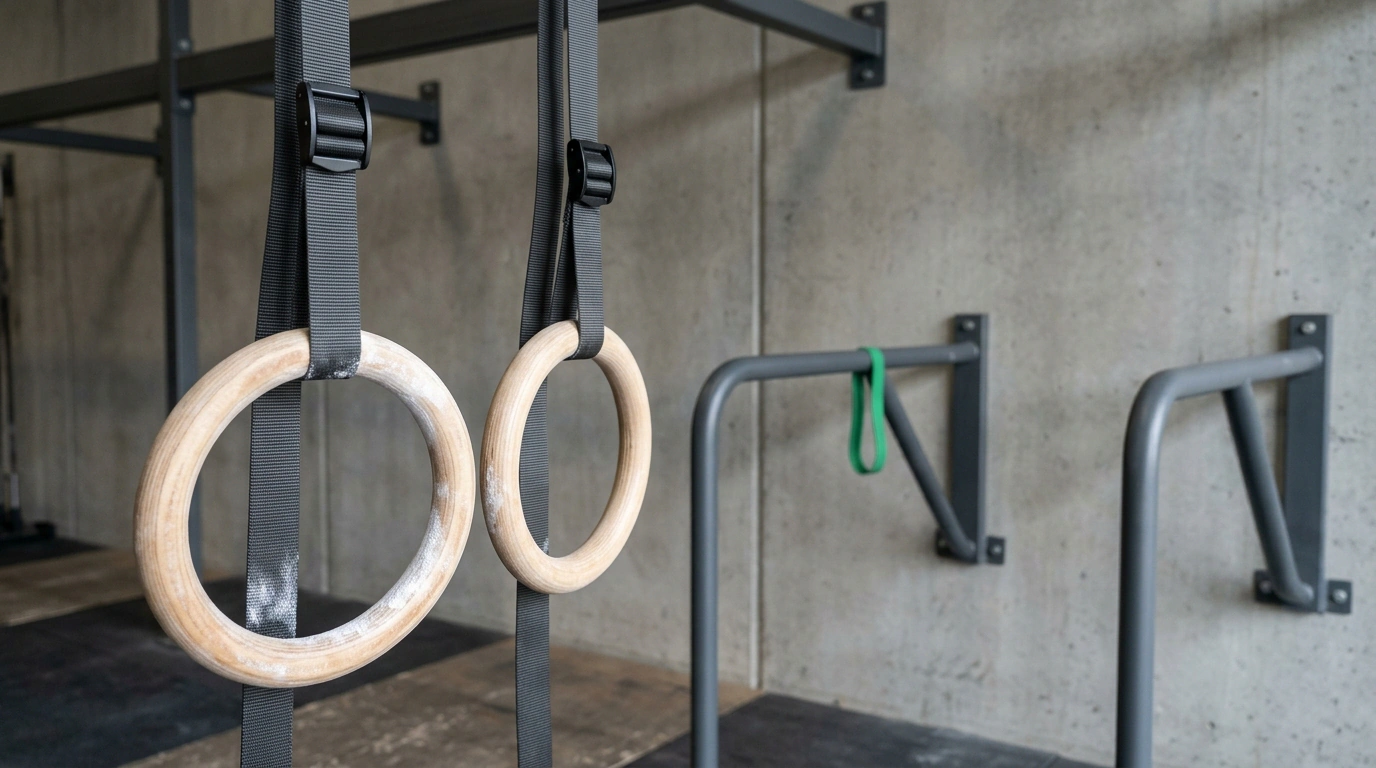
The best drill to build it is the 'baby' muscle-up on low rings. Set a false grip and keep your feet on the floor. That support takes off excess body weight and lets you groove the full path without kipping: high pull to the chest, tight transition, and press to lockout. The main rule is holding the false grip the entire way.
The other half of the trick is lowering slowly back down through the transition (the negative phase). It greases the movement pattern in reverse and trains your forearms to hold your wrists above the rings under load. Two weeks of this drill moves the skill faster than hundreds of sloppy kipping attempts.
Is Meal Prep Delivery Worth Paying For While Cutting?
Meal-delivery ads sell a dream: save piles of time and money while eating restaurant-grade food. Reality is simpler, yet still useful.
In an honest, unsponsored test, a couple of months on pre-made meals during a deliberate cut helped drop 10–15 pounds (roughly 4.5–6.8 kg). The secret wasn't any 'superfood magic' in the dishes. Small fixed portions and pre-counted calories and macros on the label did the work. Cooking time really drops, and spending can even dip—mostly because you simply eat less.
Subscribing to boxes forever makes little sense. Delivery rescues you during a fat-loss phase or a brutal work month, yet long-term, spending one hour a week cooking and packing containers gives you better control over ingredients and budget. Knowing how to cook a decent meal pays off in daily life too. If you want to test a service, try it for one month without illusions and judge by real numbers.
Testosterone and TRT: Fix Sleep and Lifestyle First
Men's group chats and clinic ads push one message nonstop: once you hit 40, almost everyone needs testosterone replacement therapy (TRT). Mike Israetel answers bluntly: that is a myth.
Lock down your baseline first: regular strength training, solid food, stress control, quality sleep, and cutting out excess alcohol. Only after those habits stick does checking testosterone labs make sense. Chronic short sleep and drinking drive hormone levels down on their own. Adding injections on top of broken habits is like painting over rust and dirt.
Testosterone replacement therapy is a prescription treatment strictly for clinically confirmed hypogonadism (a persistent shortage of your own hormone). Self-prescribing is dangerous: before any decision, a doctor checks reversible causes of low levels (excess weight, sleep apnea, alcohol, stress), fertility risks (suppressed sperm production), blood markers, and prostate health.
Endocrine Society clinical guidelines require double confirmation: persistent deficiency symptoms plus clearly low fasting morning total testosterone measured on two separate days. If your lifestyle is already dialed in and levels still test objectively low while dragging down how you feel, doctor-prescribed therapy can genuinely restore your energy.