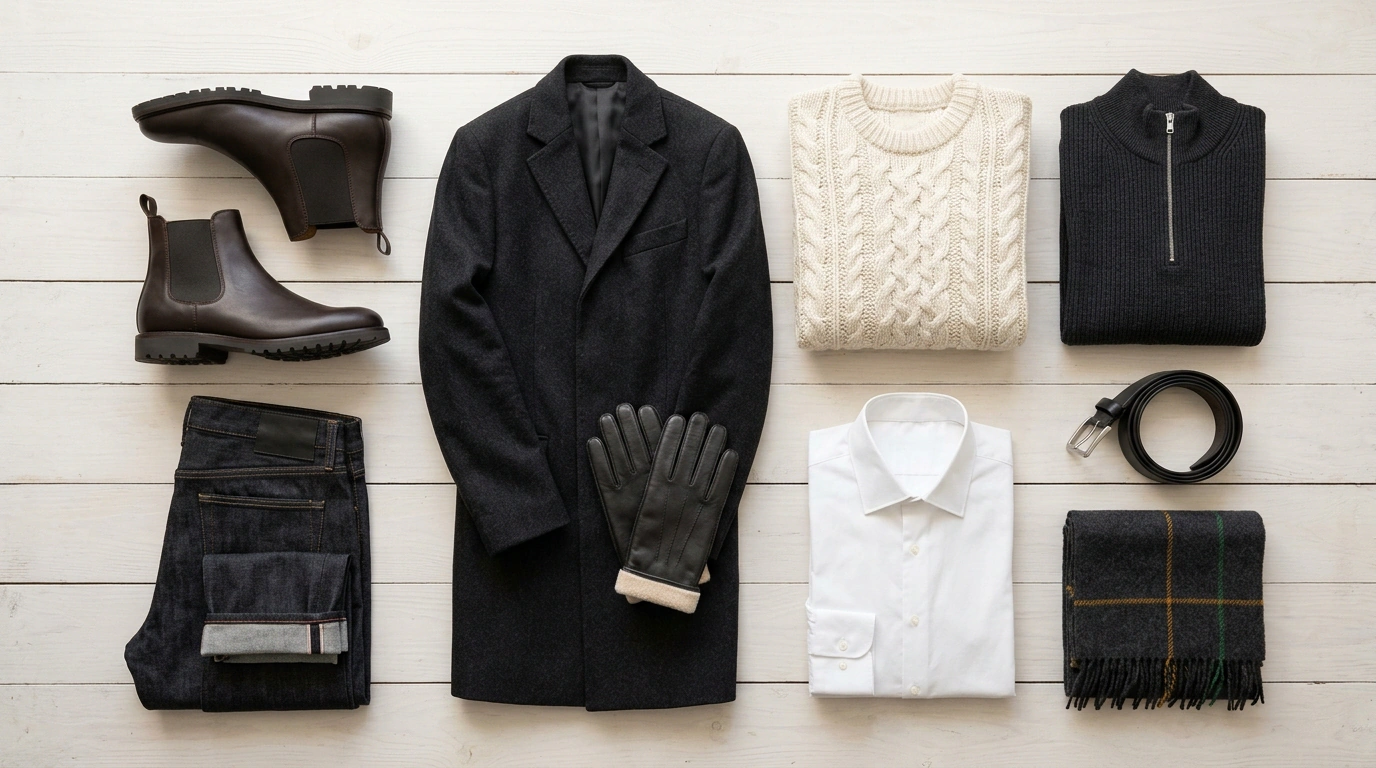
In winter, a simple city rule applies: 80% of your first impression comes from your outerwear, shoes, and accessories. While you walk from the subway to a coffee shop or wait outside for a date, nobody sees the crisp shirt buttoned underneath. Most guys respond to the first freeze by pulling on one giant puffer jacket and turning into a walking sleeping bag. A stuffed closet won't fix that. All you need are ten smart basics that mix effortlessly, hold heat, and keep your silhouette sharp.
Layering Without the 'Sleeping Bag' Effect
Staying warm in winter works much like a good thermos. It keeps water boiling not with foot-thick walls, but with a snug inner layer next to the heat and a solid outer shell. Clothing obeys the same physics.
The first and most underrated piece in a winter capsule is an ultra-thin fitted thermal base layer, like Uniqlo Heattech or a lightweight merino wool long-sleeve. You wear it under shirts, sweaters, hoodies, and even trousers. From the outside, nobody sees it, yet it traps body heat reliably. You no longer have to choose between shivering at the bus stop and wearing a shapeless puffer.
Position two is textured knitwear. Thin, flat cotton looks lifeless in winter and lets wind cut right through, whereas chunky knit patterns add instant depth. A textured cable knit sweater looks great under an open coat and visually broadens your shoulders. Another foolproof daily option is a quarter-zip sweater with a short zipper down the collar. Throw it over a plain white tee, and you look put-together for either coffee or a work meeting.
Over your knitwear sit two core outer layers—pieces three and four in the capsule:
- A heavy genuine leather jacket. In milder climates or dry days before deep freezes hit, a well-fitted leather jacket with clean lines at the shoulders and sleeves brings sharp, confident character. Skipping quality here backfires fast: cheap leather looks plastic in daylight and falls apart in one season.
- A long wool overcoat. Nothing pulls a silhouette together faster. The key fit rule today is a slightly relaxed cut rather than skin-tight tailoring. It layers easily over a blazer or heavy hoodie while feeling like a warm blanket. When shopping, check two things: wool weight and drape—how smoothly the fabric falls in straight vertical folds under its own weight instead of sticking out stiffly at the sides.
The Biggest Winter Mistake: Bottom Proportions and Proper Fabrics
Here is a classic winter sight on city streets: up top, a guy wears thermal underwear, a thick sweater, a wool coat, and a scarf—while down below, he wears thin summer chinos or skinny tapered jeans. In the mirror, it shows immediately. Your silhouette turns into a "lollipop": a heavy torso balanced on two thin sticks. Worse, freezing wind slices through summer fabric in three minutes.
Piece five of the capsule is heavy winter trousers in a straight, relaxed, or slightly baggy cut. Skip skinny fits, aggressive tapers, and definitely ripped knees. A sturdy straight leg balances a bulky upper body and rests cleanly over your boots instead of flapping in the wind like a flag.
Two fabrics handle winter best: heavy selvedge denim starting at 14–15 oz and winter wool flannel. Selvedge denim is woven on narrow shuttle looms with a reinforced edge, and a weight of 14 oz or more per square yard gives you stiff, dense cloth that holds clean geometry. Wool flannel is thick, softly brushed wool whose tiny fibers trap a pocket of warm air right against your legs.
| Criterion | Selvedge denim (14–15 oz+) | Wool flannel (9–14 oz+) |
|---|---|---|
| Wind protection | Excellent thanks to tight weave | Moderate; trails denim in strong gusts |
| Natural warmth | Low: cotton conducts cold | High: insulates even in mild dampness |
| Drape and look | Crisp rigid shape, relaxed casual | Soft heavy drape, sharp city style |
| Thermal base layer | Essential in deep frost | Often warm enough alone in mild cold |
Your choice depends on weather and plans. If you are walking in windy frost wearing heavy denim, slip thin thermal leggings underneath so wind stays out and your legs stay warm. If you want a sharper look under an overcoat with soft warmth and fewer layers, wool flannel handles the job on its own.
Winter Footwear: Chunky Boots vs. Chelsea Boots and Salt Protection
Piece six is proper winter boots. Two shapes pair well with heavy straight trousers. First are chunky weatherproof combat-style boots or models with a wider square toe: they visually anchor wide pant legs and shrug off rough weather. Second are winter Chelsea boots. They are the most versatile city option, pairing cleanly with straight jeans, corduroy, wool trousers, blazers, and long overcoats.
Classic black Chelsea boots made of smooth leather (Source: Wikimedia Commons)
When picking Chelsea boots, start with the upper material. Smooth genuine leather in black or dark brown is the everyday foundation. It is easier to clean, handles regular wear well, shrugs off slush when properly treated, and works with dressier coat outfits. Suede adds rich texture and makes an outfit more interesting right away, yet road slush and salt ruin it fast. Save suede pairs for dry, cold days and always treat them with a water-repellent spray.
Brown suede Chelsea boots with a textured upper for dry weather (Source: Wikimedia Commons)
The second common trap is buying boots lined with the thickest fur "just in case." For city life—where you constantly move from freezing streets into subways, offices, and cafes—that backfires. Indoors, your feet overheat and sweat; back outside, damp feet freeze faster than dry ones. Unless you stand outdoors for hours, Chelsea boots lined with dense wool, flannel, or modern synthetic insulation are often smarter, letting you adjust warmth with thick socks.
Always try winter boots on both feet while wearing thick socks. Your toes should wiggle freely, the sides shouldn't pinch, and your heel shouldn't slip when walking. Tight boots cut off circulation, while loose ones lose heat. Check pant length at the same time: the hem should lightly touch or cover the top of the Chelsea boot without bunching up into big accordion folds.
One more silent killer of winter boots is a hot radiator. Trying to dry wet boots fast right next to a heater destroys them faster than road salt: intense heat evaporates natural oils from the leather, leaving it dry, warped, and cracked along creases while weakening sole glue.
Basic winter boot care against salt and slush
- Treat a new dry pair before your first walk outside: nourishing cream or wax for smooth leather, breathable water-repellent spray for suede. Let it dry overnight and refresh every couple of weeks.
- Right after coming inside, brush off snow, dirt, and salt crystals with a soft brush instead of letting salt soak in overnight.
- Wipe away white salt stains using a mild 1:1 mix of white vinegar and cool water—dab gently with a cloth, then wipe with a clean damp rag (never use undiluted vinegar).
- Dry boots only at room temperature away from heaters, using unvarnished cedar shoe trees to absorb moisture and hold shape, or clean unprinted paper.
Four Details That Finish the Winter Look
Outerwear, trousers, and boots build the frame, while the final four capsule items turn a warm outfit into intentional men's style.
Piece seven is a hat. Two reliable choices work here. First is a fisherman beanie, a short ribbed cuffed beanie that sits just above your ears. It holds a neat shape, sharpens your jawline, and avoids the floppy sack look—though your ears stay exposed in wind, making it best for light frost. For real cold, pick a deeper cuffed beanie in 100% cashmere or fine merino wool in calm shades like charcoal, navy, or camel. It feels soft, doesn't itch, and won't irritate your forehead.
Piece eight is a generous wool or cashmere scarf. Stick to core colors: gray, camel, or black match almost any coat or jacket. A scarf seals your neck against icy drafts and brings welcome texture to a simple dark coat.
Piece nine is lined suede gloves. Huge ski gloves belong on the slopes; in the city next to a wool coat, they look out of place. Neat suede gloves with a warm lining even pair well with a blazer. A practical bonus is touchscreen-friendly fingertips, letting you answer a text in the cold without pulling gloves off with your teeth and dropping one in the snow.
Piece ten is dark winter sunglasses. Locking sunglasses in a drawer until May works against you in winter: low winter sun and harsh glare off snow hit your eyes just as hard as summer light. Sunglasses also add instant character to a calm winter outfit. The difference from summer pairs is simple—swap light translucent "beach" frames for darker, heavier frames with dark lenses so their visual weight matches your coat, scarf, and winter boots.