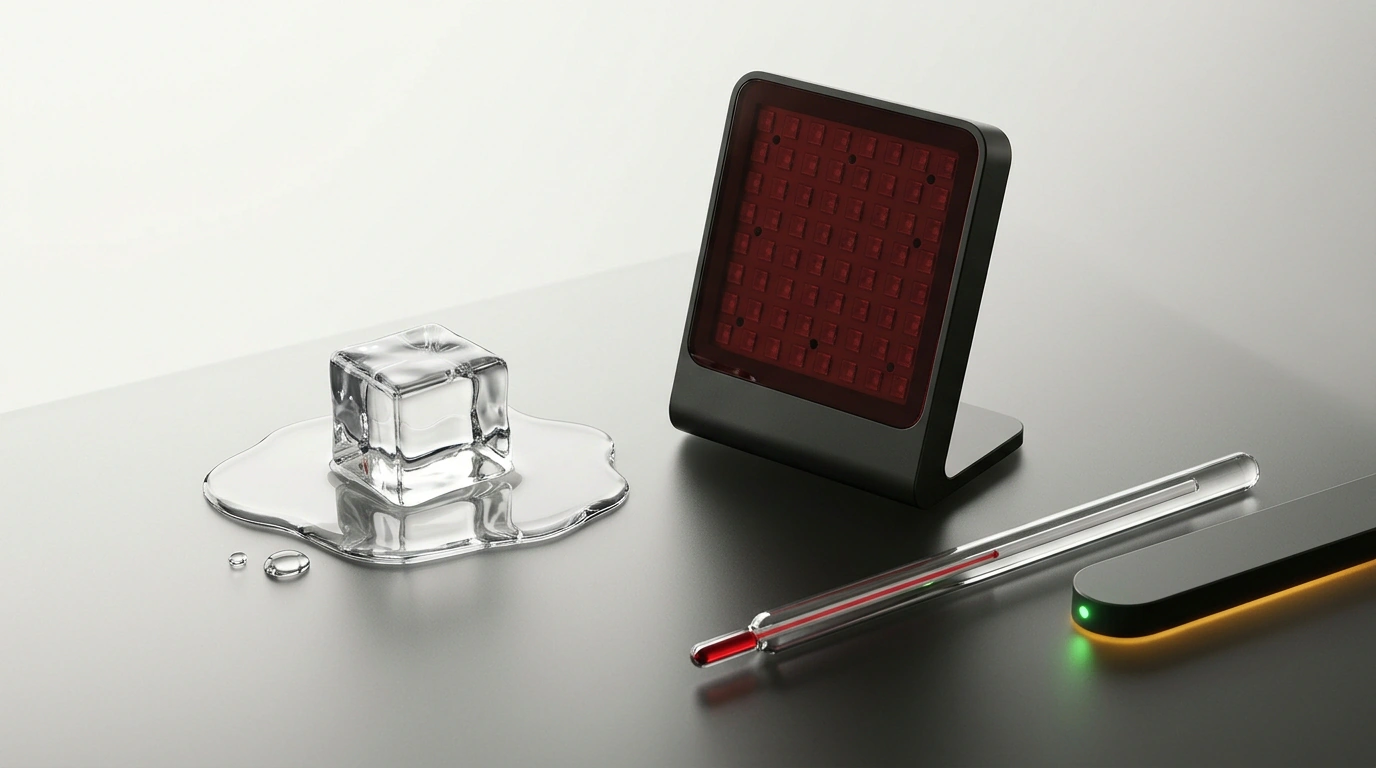
If overheating hurts the testes, an ice pack should supercharge them. If you hold off for a couple of weeks, your reserves will build up stronger. And if you add external testosterone, your male system should hit peak power. On paper, the logic sounds airtight—and that is exactly what drives "spermmaxing," a trendy social media biohacking craze. People try to treat reproductive health like a sleep tracker metric you can hack with lamps, cold packs, and hormones.
Biology, however, pushes right back against that kind of blunt thinking. Where intuition expects a boost, studies find either nothing at all or a direct hit to fertility. Let's check the four main hacks against real data—no guesswork, and no pretending to replace a doctor.
Saunas Really Hurt Numbers, Yet Ice Packs Are Unnecessary Extremes
The anatomy is straightforward: the testes sit outside the abdominal cavity because spermatogenesis—the creation and maturation of sperm—needs a temperature slightly below the body's usual 36.6 °C. Chronic overheating genuinely slows that factory down.
A 2013 University of Padua study tested this on 10 healthy men with normal semen results. The sample was small, yet the pattern was clear: volunteers sat in a Finnish sauna (80–90 °C) for 15 minutes twice a week over three months. By the end, sperm count and motility dropped noticeably, mitochondrial function and DNA packaging worsened, and heat-stress genes switched on inside the cells. Blood testosterone and other sex hormones didn't budge—local heat alone did the damage.
Then the biological clock kicked in. Even three months after stopping sauna visits, numbers stayed low, returning to normal only after six months. A full cycle of spermatogenesis takes about 74 days, so any change takes two and a half to three months to show up in lab tests. Other studies link frequent hot tubs and jacuzzis to similar drops.
The conclusion seems obvious: if heat hurts, cool things down. Social feeds already tell guys to strap ice packs to their groin. In practice, there is zero solid clinical evidence that cold packs raise sperm counts or improve pregnancy odds. Cutting out regular overheating makes sense. Turning icing into a daily ritual is pointless, and putting ice straight on skin risks cold injury.
Red Light in a Test Tube and the 'Save It for Weeks' Trap
Social media's second favorite hack is photobiomodulation. The name sounds complex, yet the idea is simple: shine red or near-infrared light on tissue to nudge mitochondria into making more cell energy (ATP). Biohackers quickly stretched that idea to home lamps meant to "recharge sperm."
There is a scientific thread here. In a 2020 lab study, researchers shone red and near-infrared light (810 nm) onto 30 fresh semen samples from healthy men. At a dose of 0.6 J/cm², near-infrared light raised cell motility and viability without increasing DNA damage.
The catch hides in the test setup: they shone light on semen in a lab dish (in vitro), not on living men. A lab dish result proves nothing about whether a home lamp shining through skin improves spermatogenesis or helps conceive. No human clinical trials exist yet, so buying lamps for fertility is premature.
Long abstinence is an even bigger irony. Everyday logic says: hold out for two weeks, build a bigger reserve, get higher quality. A 2024 meta-analysis (13 studies, 2,315 men) compared short and long abstinence periods around a two-day threshold.
Volume did go up (by 0.96 ml on average), and concentration rose too (+8.19 million/ml). Yet you paid for that "reserve" in quality: sperm DNA fragmentation—the share of cells with breaks in their genetic strand—rose by 3.46 points (plus 0.65 for every extra day), while progressive motility dropped by 1.83 points. With shorter gaps, cells swam better on average and carried less DNA damage.
This is not a call to chase daily records: studies compared samples rather than prescribing an ideal sex schedule. Before a semen test, follow whatever abstinence window your lab asks for. Hoarding sperm for weeks for "better quality," though, makes no sense—volume climbs while the cells themselves grow weaker.
The Testosterone Trap: How Shots 'for Gains' Shut Down Your Own Factory
The costliest mistake in this trend is taking testosterone or anabolic steroids on your own. Since the reproductive system needs testosterone, guys assume adding more from outside will supercharge everything.
Conceptual comparison between natural endocrine regulation and disrupted external hormone intervention.
This confuses your own hormone with exogenous testosterone—hormone supplied from outside via shots, gels, patches, or steroid cycles. When testosterone arrives externally, a feedback loop triggers. Your brain (the hypothalamus and pituitary gland) sees high testosterone in the blood and shuts down natural production. Signaling hormones LH and FSH drop, testosterone inside the testes crashes, and spermatogenesis slows down or halts completely—leading to severe oligozoospermia (a sharp drop in count) or azoospermia (zero sperm).
The AUA/ASRM clinical guidelines state it plainly: men interested in current or future fertility should not be prescribed exogenous testosterone therapy. After stopping, sperm production returns for many men, yet recovery ranges from months to years—and some men never recover their full baseline.
Not every medical hormone treatment harms fertility: for genuine diagnoses, doctors choose protocols that preserve sperm production, such as gonadotropins or SERMs. Trouble starts when a guy puts himself on testosterone shots or steroids for gym gains and puts his reproductive system on pause.
Boring Basics Over Gadgets and One Honest Test
Put all four "spermmaxing" trends side by side, and the score is clear.
| Practice | Social media promise | Research evidence | Verdict |
|---|---|---|---|
| Ice packs | Cold-powered boost | No proven benefit; direct ice risks skin injury | Cut overheating, don't freeze yourself |
| Red light | Recharge cells at home | Effect shown only in vitro in lab dishes | Too early to buy lamps |
| Long abstinence | More volume, higher quality | Volume rises, yet motility drops and DNA damage grows | Hoarding for weeks is pointless |
| External testosterone | Peak male power | Suppresses LH and FSH, can halt sperm production | Direct risk to fertility |
What actually works sounds far less flashy: quitting smoking and anabolic steroids, maintaining a healthy weight, moving regularly, sleeping well, eating balanced meals, and avoiding regular overheating from frequent saunas and hot tubs.
Even solid habits don't guarantee 100% results. Fertility is also affected by infections, hormone disorders, and conditions like varicocele—enlarged veins in the scrotum treated by a urologist rather than lifestyle tweaks.
If you want real answers, start with a semen analysis. In the UK NICE guidelines (2026 update), it stands as the basic first step. Doctors compare results against WHO reference benchmarks: volume from 1.4 ml, concentration from 16 million/ml, total count from 39 million, progressive motility from 30%, and normal morphology from 4%.
If the first test comes back off-target, doctors repeat it after three months to capture a fresh spermatogenesis cycle (an urgent repeat only happens with severe findings like azoospermia). Meanwhile, NICE advises against running DNA fragmentation or antisperm antibody tests on everyone upfront—a doctor orders those only when specifically needed.
A grounded plan without unnecessary biohacking
- Cut out regular overheating like frequent saunas, hot baths, and jacuzzis instead of experimenting with ice or lamps.
- Stay away from external testosterone and steroids without medical supervision, and tell your doctor early if you plan to have kids.
- Lock in the basics: no cigarettes, solid sleep, regular exercise, and a healthy weight.
- Want real numbers? Take a standard semen analysis following lab instructions and review it with a urologist.
