Step outside on a chilly day without a hat, and within five minutes you remember why humans invented headwear in the first place. A hundred years ago, walking down the street bareheaded felt almost as strange as showing up to a date in house slippers today. Look at any city photo from the early 1900s: it is a sea of felt. Then, in half a century, it all vanished. Let's see how a centuries-old dress code broke down and how you can use headwear in your style today.
Why Hats Stayed on Men's Heads for Centuries
A hat solved two jobs at once: weather protection and an instant status signal. A century ago, most men spent their days outdoors—on farms, at construction sites, in open carriages, and walking long stretches through sun and rain.
In the 18th century across Europe and the US, the tricorn and bicorn—wide-brimmed hats pinned up at the sides—became the everyday standard. Soldiers, laborers, and wealthy gentlemen all wore them: the shape shed rain, while fabric quality and trim signaled status in a second.
In the 19th century, industrialization pulled people off farms into cities like New York, London, Chicago, and Paris. City elites switched to the top hat—tall, stiff, awkward indoors, yet visible from a block away. For daily wear came the bowler, a hard felt hat with a rounded crown.
Cars, Heaters, and the Kennedy Myth
Hats weren't killed by fickle designers; ordinary daily logic wiped them out. First, men moved indoors—from streets into factories, shops, and offices. When you sit under a roof all day, sun and rain protection stops mattering. Older generations wore hats for twenty or thirty years out of habit, while younger guys simply saw no point.
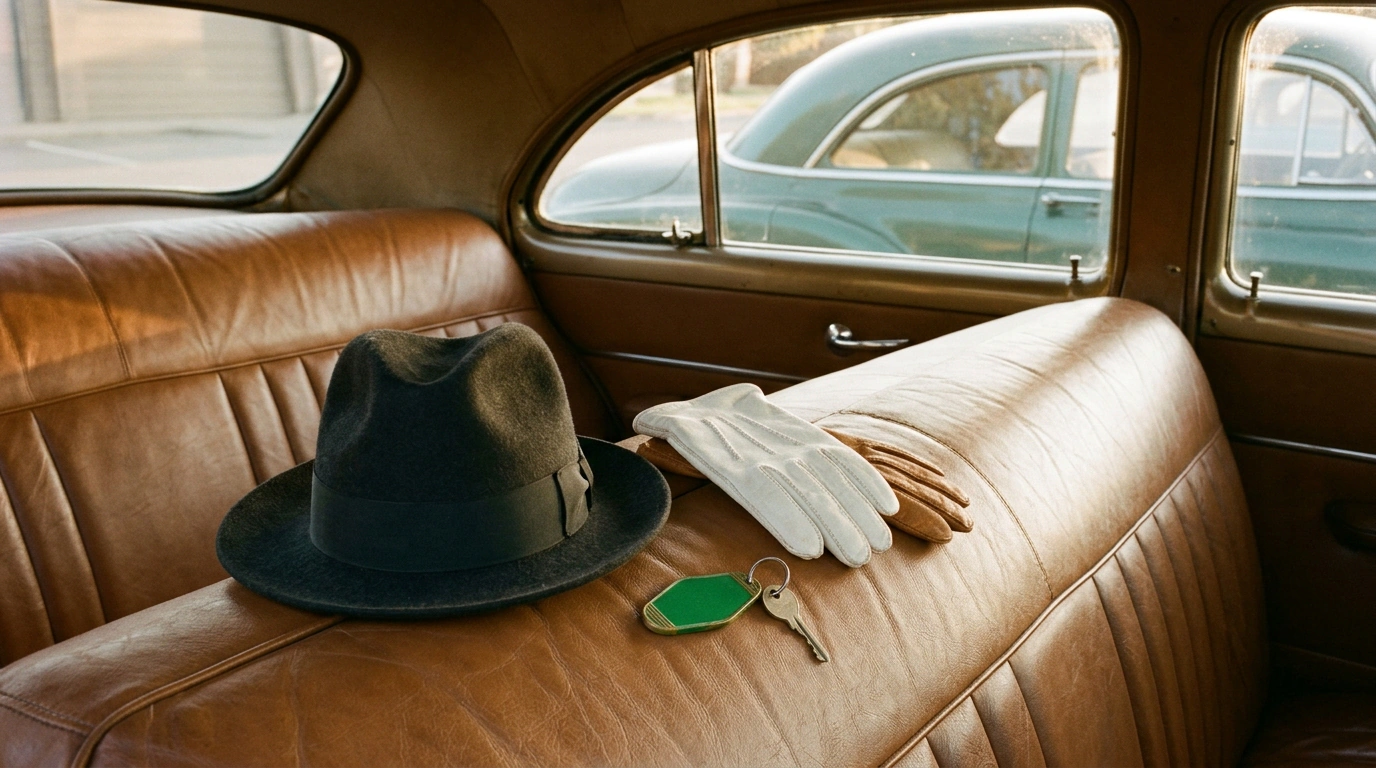
Next came the automobile. In early open-top cars, a tall hat bothered nobody. In the 1920s and 1930s, however, enclosed roofs arrived and carmakers lowered rooflines. A soft flat cap or newsboy cap still fit behind the wheel, yet classic felt hats hit the ceiling liner. You had to take off a Homburg (a semi-formal hat with a stiff curled brim and center crease), a fedora (soft brim and pinched crown), or a trilby (a compact fedora with a narrow brim turned up at the back) just to sit down. A tall man climbed into a sedan, crushed his crown against the roof, and tossed the hat onto the passenger seat. Two weeks later, he left it at home. One tiny daily annoyance proved a big rule: if an accessory gets in the way of living, etiquette cannot save it.
By the early 1950s, the car had become the main family transport, and suburbs plus Eisenhower's highway network locked in a new routine: straight from a heated garage into the cabin and onto an office parking lot. Even better, the car took over the hat's role as a status symbol—a shiny sedan spoke louder about wealth than felt ever could. Central heating in offices, trains, and car heaters finished the job: keeping your head warm indoors for hours was over.
People often blame John F. Kennedy here, claiming he showed up hatless to his inauguration on January 20, 1961, and buried the industry overnight. In truth, Kennedy arrived at the Capitol and rode the parade wearing a black silk top hat, taking it off at the podium for his speech as etiquette required. TV viewers saw only the hatless speech, and the myth was born. The real decline had already begun in the 1930s among college students, and hatmakers were lobbying Kennedy in 1960 to save a shrinking market.
The 1960s Rebellion and How to Wear Headwear Today
After World War II, pure psychology took over: millions of returning soldiers, forced for years to wear garrison caps and peaked hats, happily ditched anything on their heads in civilian life. Then in the late 1960s and 1970s, baby boomers entered the workforce. Elvis Presley, The Beatles, mods, hippies—young people flatly refused to look like their fathers. Hollywood sealed the trend: Marlon Brando and James Dean looked bold and magnetic with no hat at all.
What does that mean for you today? In freezing weather without a hat, you still shiver in five minutes, and your clothes still speak for you in the first three seconds. Now that headwear is optional, it works as an intentional accent. The main rule is simple: it has to match the formality of your outerwear and the weather. A fedora over a gym hoodie looks like a theater prop, whereas a thick beanie with a parka, a flat cap with a wool overcoat, or a classic hat with a tailored coat and scarf sharpens your silhouette and keeps you warm.