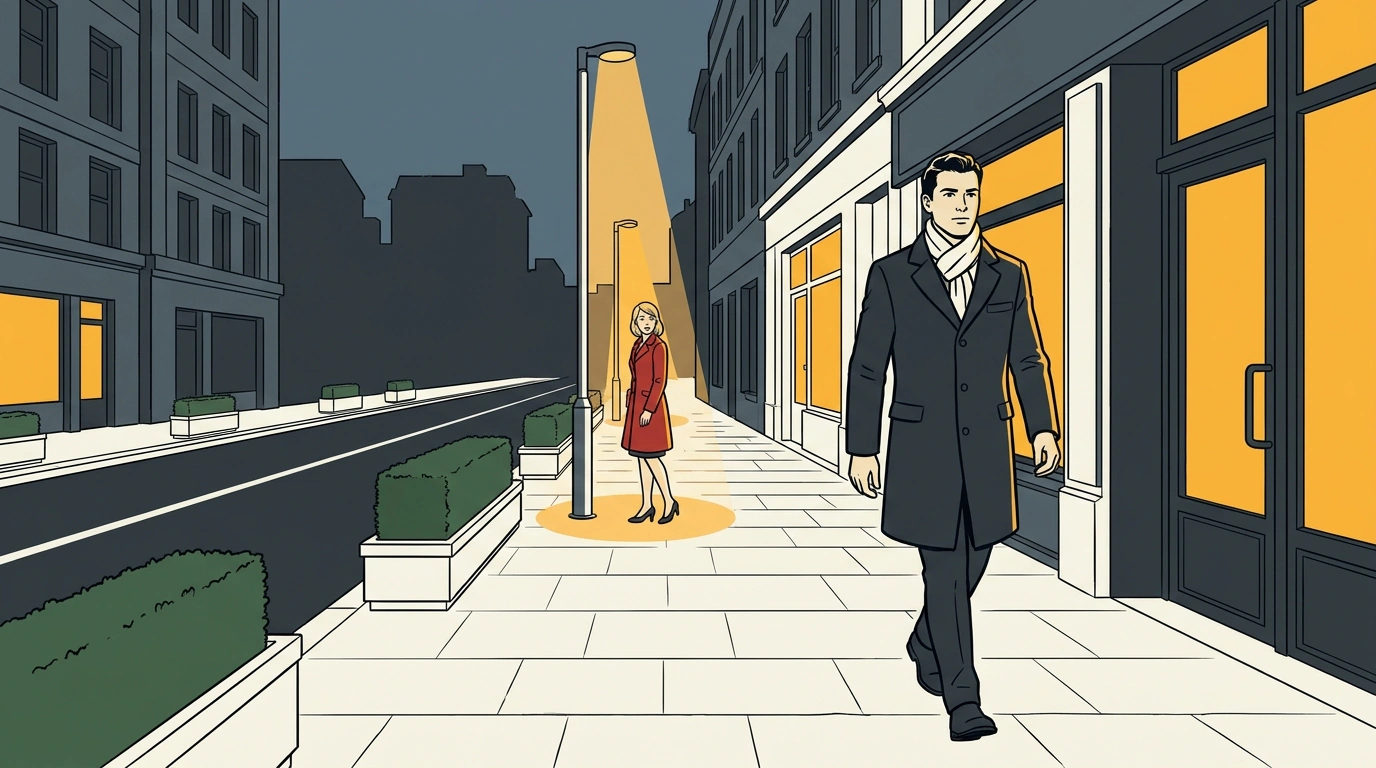
On your last date you laughed for three hours, she texted first that night, and touch came easily. Tonight she feels like a stranger: tight shoulders, dry replies, and eyes drifting past yours to her phone. When you lean in to kiss her goodbye, she turns her cheek every time. The next morning brings a polite text about a crazy week at work—with zero mention of rescheduling.
Polite excuses vs. real interest
Your first instinct is to turn into a negotiator. Since she blamed fatigue or a busy week, it feels like you just need to be patient, say something clever, and prove you're reliable. Your brain latches onto her polite wording and looks for which bolt to tighten.
Attraction doesn't turn on through logic, though. Behind a neat excuse almost always sits one plain fact: she doesn't feel an emotional spark right now. Interest might have been low from the start, or a few awkward lines and needy gestures slipped out on the date. Women rarely say straight out, "I'm not into you anymore"—blaming work is easier. Watch her actions when she's with you, and let polite excuses pass right by.
The turned cheek and dodging eyes: where the truth shows
Body language lies far worse than words. When interest drops, the signals form a clear pattern: she angles her body away, avoids eye contact, dodges a kiss, and cancels plans without offering another day.
The classic mistake is seeing clear physical rejection and still asking her out again. A guy acts on wishful thinking, ignores the facts, and tries to force a locked door with persistence. Just don't get paranoid over one rough evening: someone genuinely can be exhausted or coming down with a cold. One simple check separates the two—does she take a step toward you?
| Sign | One rough day | Steady cooling off |
|---|---|---|
| Canceling plans | Apologizes and suggests another day herself | Blames work with no new date |
| Presence on a date | Tired, yet holds eye contact and hugs warmly | Tense, looks away, offers her cheek |
| Shared initiative | Texts first and keeps conversation going | Replies dryly and only after you message |
| Reaction to space | Reaches out herself once things settle | Vanishes or replies once every 24 hours |
When the right column repeats again and again, it's a pattern. Mutual initiative—both people taking steps toward each other—is gone, and dragging a connection solo goes nowhere.
How one-sided chasing kills the connection
The sneakiest trap snaps shut when easy texting turns into labor. She cools off, anxiety hits you, and you pick up 100% of the effort: texting more often, pitching new plans, trying harder. In response she pulls back even further, warmth disappears, and on the date she won't even meet your eyes.
Psychologists call this emotional distance loop the pursue-withdraw (or demand-withdraw) cycle: one person pulls back, and the other's anxiety pushes them to press harder. Andrew Christensen described it in couples, and David Vogel, Stephen Wester, and Martin Heesacker showed it already kicks in during early dating. Picture reaching for someone in a small room while they step backward: the faster you walk forward, the stronger their reflex to back toward the door.
When you turn up the pressure in response to coldness, you reward her distance with extra attention. The only smart move is to ease off the gas, stop one-way chasing, and watch what she does. If real interest is still there, she'll notice the pause and step forward. If not, you save your nerves and your dignity.
Boundaries without lectures and the reality rule
There's also a tougher scenario when you've reached exclusivity or an early rough patch and respect drops. She starts hanging out regularly with another guy who clearly has romantic interest in her. You calmly state that this setup doesn't work for you, and she replies: "Why are you so jealous? He's just a friend."
In moments like that, guys ask: "How else can I explain to her that this isn't okay?" Short answer: you can't. If you already stated your boundary clearly and she keeps crossing it, she heard you the first time. She just doesn't care.
Personal boundaries work like a door you close from your side after repeated violations. Standing by the fence with a megaphone lecturing about respect wastes your breath. Boundaries rest on your willingness to step away or end exclusivity. Ayn Rand's essay "The Objectivist Ethics" put a sharp truth into wide circulation: you can evade reality all you want, but you can't evade the consequences of ignoring it. When your terms are openly brushed aside, the only move that works is to turn around calmly and walk away.