Men's fashion holds a funny paradox. A guy saves up, buys a giant-buckle belt, a t-shirt with a brand plastered across the chest, and a gold watch to look impressive. Across the cafe table, though, his date reads the exact opposite message: "please look at me."
Why loud status hurts first impressions
It feels like expensive gear should automatically raise your appeal. Instead, it triggers what psychologists Christopher Cannon and Derek Rucker called a "warmth tax" across four 2019 experiments. Flashy luxury boosts perceived status, yet sharply drops perceived friendliness and openness: someone draped in loud brands looks cold and self-absorbed.
It isn't even about jealousy. People spot your motive immediately: you wore that to manage impressions and buy approval. On a date, where ease and warmth do the heavy lifting, that signal works against you.
Back in 2010, researchers Jonah Berger and Morgan Ward mapped an inverted-U curve of brand logos. The loudest badges live in mid-tier luxury—made for people who need strangers to notice their level. At the very top, things go quiet: fabric, cut, and subtle details speak instead. Wearing giant monograms is called logomania—turning a shirt into a walking price tag readable from thirty feet away.
Four kinds of visual noise
Almost every "expensive" misstep in a guy's look falls into four clear traps.
First: poor context and posturing. Classic example—walking into a dimly lit restaurant and keeping sunglasses on, as if paparazzi sit at the next table. Instead of mystery, you project a fake wall. Same goes for teenage streetwear on a 55-year-old man, a studded biker jacket on a guy with no motorcycle, a neon-yellow sports car with a deafening exhaust, or an absurdly lifted pickup truck. When a prop clashes with your real life, it reads like a costume.
Second: flashing price tags and wearing fakes. Massive $1,500 Gucci, Hermès, or Ferragamo buckles pull eyes straight to your waist with an unspoken question about your paycheck. Monogrammed travel bags are even funnier when you weigh cost against comfort. Hauling a heavy Louis Vuitton duffel across an airport terminal just so strangers see the print kills your shoulder when a rolling suitcase works ten times better. Worse still are counterfeit luxury goods: fake watches or sneakers wipe out credibility in one second.
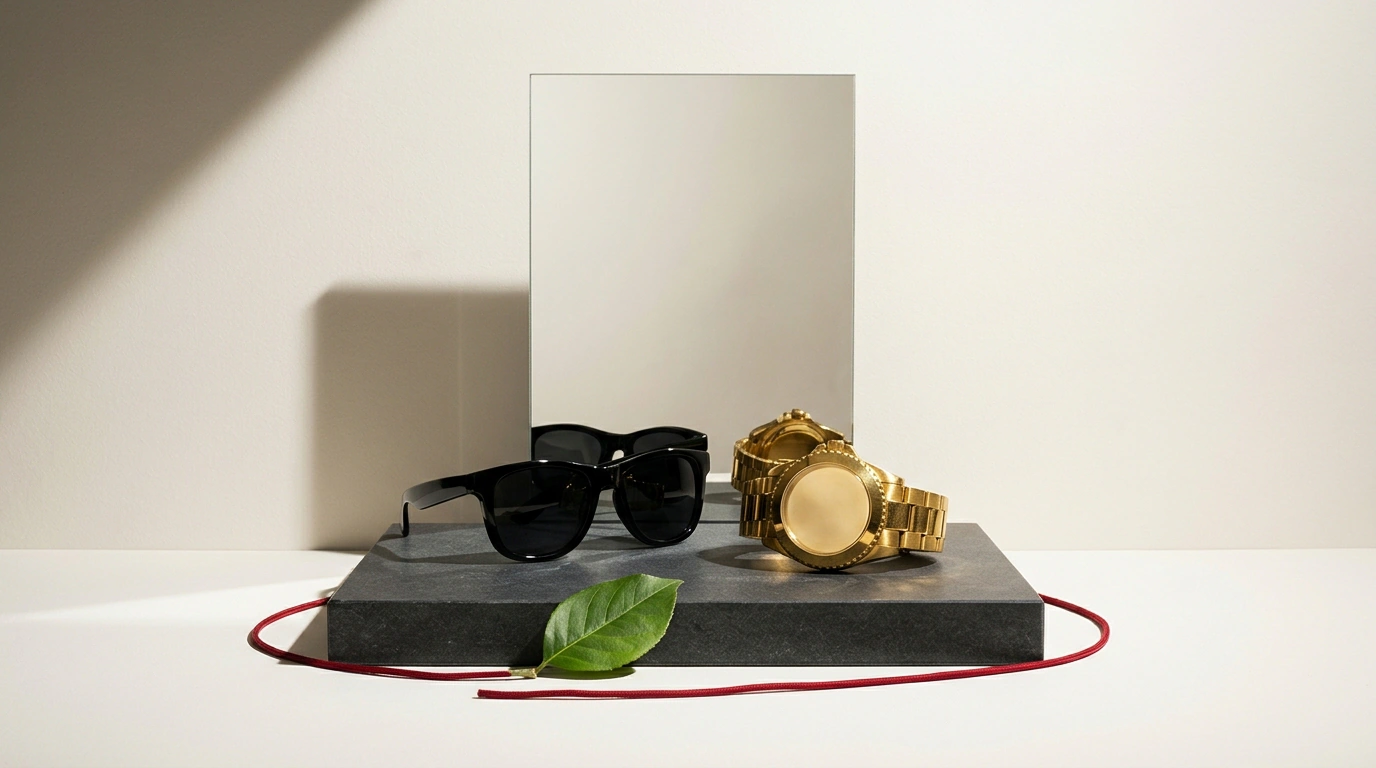
Third: accessory and scent overload. Yellow-gold diamond watches, heavy chains over tees, three rings per hand, and stacked bracelets create pure visual noise. Even rose gold reads calmer than bright yellow gold, whereas dressing like a mob boss in a casual cafe just invites smirks. Cologne follows the same rule: good fragrance gets noticed up close, not in the parking lot. Keep a hard cap of three sprays.
Fourth: over-controlling your appearance. Jet-black dye on hair and beard screams panic over gray strands, obvious hairpieces draw stares, and razor-etched beard lines hint at hours spent in the mirror. Acid-bright hair dye and heavy face, neck, or hand tattoos purely for shock value send a similar signal. Fair note: nobody forbids bright styles or tattoos if you genuinely love them—just know how excess reads from the outside.
The one-accent rule
A thin line separates a put-together guy from someone trying way too hard. One simple rule keeps you on the right side: stick to a single statement piece—one expressive detail against a calm background.
Compare two pictures. In the first: three rings, a chain, a giant-logo buckle, and a gold watch. Every piece shouts over the others, turning you into a store display. In the second: well-fitted jeans, a clean solid shirt with zero logos, and one neat watch. Less money, less effort, and twice the quiet confidence.
Before buying something or walking out the door, ask one honest question: "Am I wearing this because I genuinely like it and feel comfortable, or so strangers in the room estimate my income?" If the honest answer leans toward the second option, leave it on the shelf.