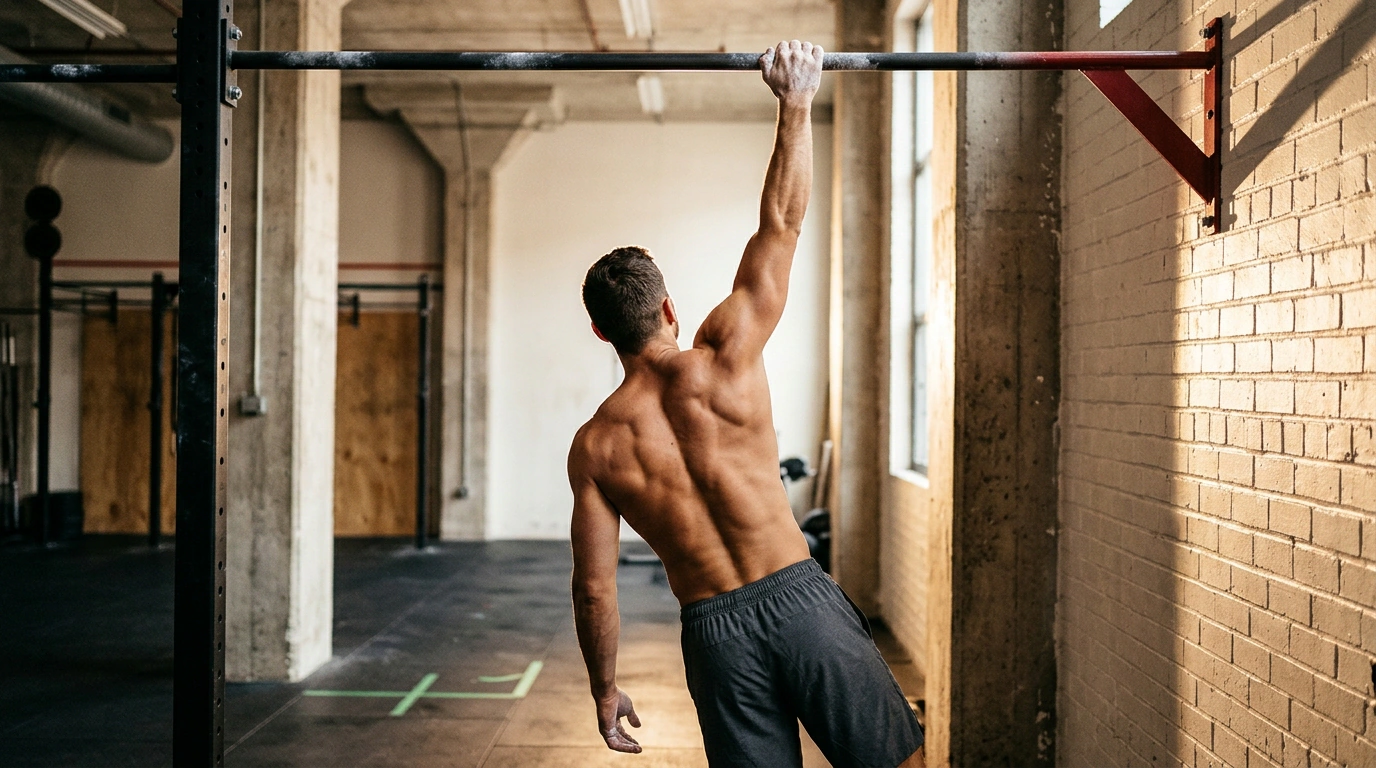
Gym bro wisdom whispers a simple rule: grind two hours until it burns, skip stretching, and ban "dangerous" exercises forever. Usually that plan breaks before your gym membership ends: a shoulder nags, weights stall, and all you want afterward is the couch. Here are three practical breakdowns for long-term progress: which fitness myths steal your results, why you should hang from one arm, and why "bad exercise" labels often miss the mark.
Top fitness myths that sabotage long-term training
"No pain, no gain" sounds tough until your first torn tendon. Muscle burn on your final reps is normal; sharp joint pain signals damage. Grinding through an injury is the worst way to prove toughness. At 20 your body forgives dumb mistakes; past 30 recovery slows down and one injury sets you back months. Building smart habits early pays off fast.
Soreness worship belongs in the same trash bin. Think a workout failed if your legs don't ache the next morning? Nonsense. Next-day soreness just reflects unfamiliar stress, and chasing it leads straight to overtraining and burnout. Track real signals instead: are weights climbing, are you sleeping well, and do you have energy for your next session?
Two-hour marathon workouts with zero rest days hide the same trap. Muscle breaks down under the bar and grows while you rest. Living in the gym nonstop spikes cortisol, wrecks recovery, and drives up injury risk. Set quality and time under tension matter most; extra junk hours just fry your nervous system. Rest days and sleep are part of your program.
Another common blind spot is lifting heavy while mocking stretching. Being strong and being durable are two different things. Skipping warmups flies at 20, yet tight hips, stiff shoulders, and short hamstrings eventually wreck your posture and lifts. You don't need full splits. Ten minutes of stretching and mobility work acts like insurance for your strength so your spine stays tall and shoulders move smoothly.
Finally, cardio and abs. Moderate cardio doesn't burn muscle—that myth came from extreme contest prep and overtraining. In smart doses it strengthens your heart, boosts work capacity, and speeds recovery as long as you aren't running daily marathons. Same with abs: spot fat reduction doesn't exist. Crunches build your core, while revealing it takes an overall calorie deficit, real food instead of living on shakes, and daily movement.
One-arm hangs: fixing grip asymmetry and unlocking back growth
Think your grip is solid because you bang out pull-ups easily? Test it on a bar: hang with two hands, then let go with one. Few guys hold past 10–15 seconds on their first try.
Right away you'll spot a side-to-side gap. On their dominant arm, a trained lifter often hangs 45–60 seconds cleanly, while their weaker side drops by half to 22–30 seconds. In standard two-arm rows and pull-ups, your strong side quietly carries extra load and hides the gap. Unilateral work—where each arm handles load solo—removes that crutch and evens out both sides.
Picture a strong engine driving wheels through a thin frayed cable. The engine roars, yet the car stalls because the cable snaps first. In back training, your hands are that cable. If your grip gives out before your lats do, you never fully load your back on pull-ups or rows. Strengthen your grip, and your back finally gets full growth stimulus.
If you have a pull-up bar at home, grease the groove works great: quick submaximal hangs scattered through the day far from failure so your nervous system masters the effort fast. No home bar? Use the minimum effective dose—the smallest amount of work that still drives progress without extra fatigue. At the end of upper-body days, add a few one-arm hang sets at roughly 50% of your max time.
Hanging from one arm puts 100% of your bodyweight on one shoulder instead of 50%, plus heavy anti-rotation work on your core. Build a solid 60-second two-arm hang first. Never slump passively into the shoulder joint—pull your shoulder blade down slightly into an active hang. If shoulders or elbows ache, drape a towel or strap over the bar and assist lightly with your free hand.
What actually makes an exercise 'bad' for your joints
Consider a telling real-world case: a guy around age 13 does behind-the-neck pull-ups and wakes up with sore shoulders. Easy verdict—the exercise is dangerous. Years later, after strengthening his shoulders and building joint mobility (the ability to move a joint actively under control through its full range under load), those same behind-the-neck pull-ups feel smooth and pain-free, like regular pull-ups with a light belt.
Even a great lift turns risky when weight or complexity outruns your body's readiness. Take single-leg pistol squats: they build bulletproof legs for one person and wreck another's knee. You earn them through regular squats and assisted steps, not overnight.
Biomechanics adds one smart caveat. Scapular kinematics research (PMC4916995) shows behind-the-neck pull-ups demand extreme abduction, external shoulder rotation, and thoracic extension. If you sit hunched at a desk with tight pecs, joint space narrows and rotator cuff tendons risk pinching (subacromial impingement). In that case there's zero reason to force behind-the-neck reps—standard pull-ups to the chest hit your back just as well and far safer.
Whenever a movement sends sharp discomfort into a joint, you have two smart moves: swap to a friendly variation or drop the weight and step back a progression. Often your body just needs time and the right stepping stone to get stronger.