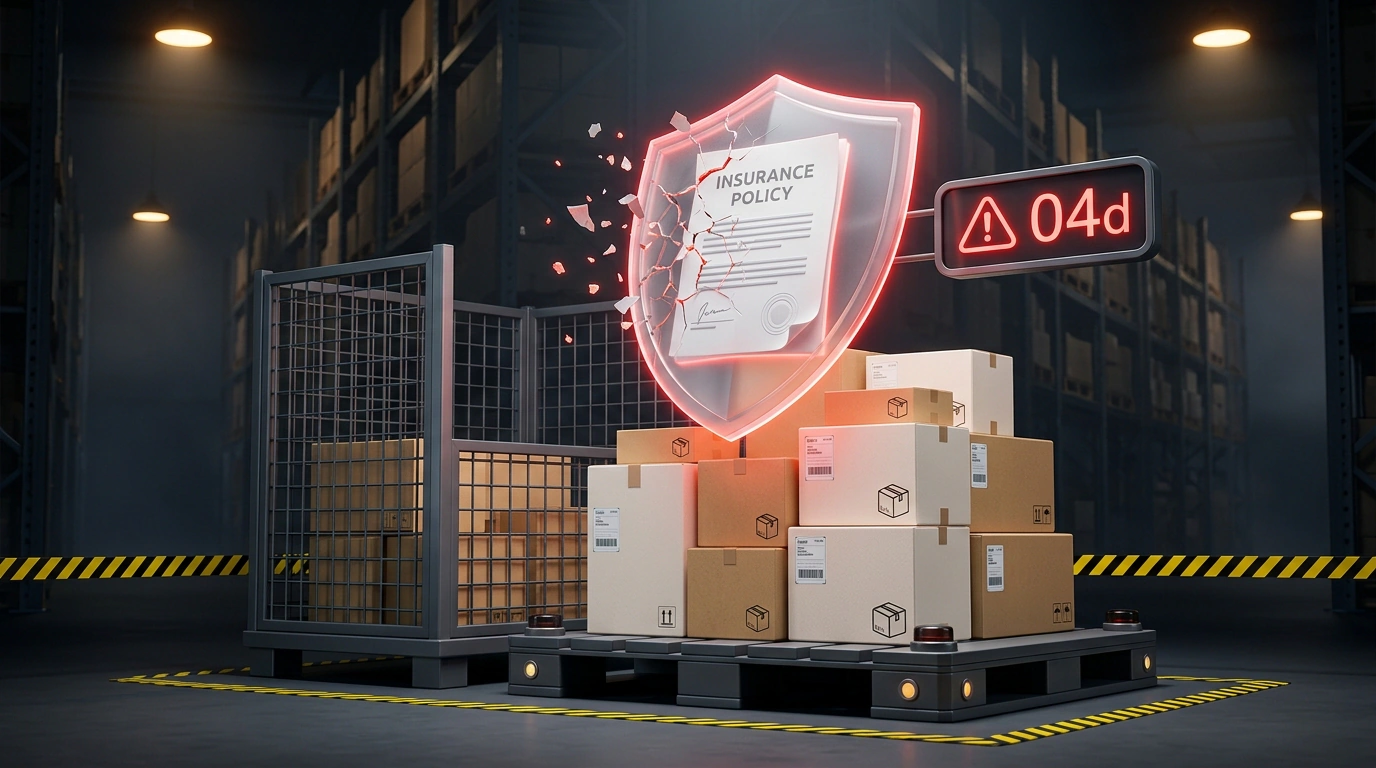
On Friday, October 9, at 10 p.m., a system notice popped up in Ozon seller dashboards that made every merchant with major warehouse stock feel cold inside. Voluntary insurance for goods stored on FBO (Fulfillment by Ozon) was being canceled at midnight on October 13. The marketplace gave sellers exactly four calendar days to process the news and react—three of which were non-working weekend days.
For anyone who has sold on marketplaces for more than a year, this isn't just another dashboard update. It's a sharp breach of expectations right before the biggest sales season of the year. Let's look at why the insurance ended so abruptly, where the legally required 30 days went, and how you can protect your inventory.
Friday surprise: four days instead of a real notice
The shutdown timing looked textbook for minimizing pushback. The message went out on Friday night when insurance offices were closed, lawyers were off work, and banks weren't processing payments. Policies were set to expire at 00:00 MSK on October 13 (right after 23:59 MSK on October 12).
In the 'Finance' section of the Ozon dashboard, the insurance tab instantly switched to wind-down mode. Premium deductions stopped, and sellers were curtly told to download their archived certificates and policies. Yet all through September, the platform had actively urged partners to send maximum stock for 11.11 and Black Friday, pitching FBO pallet insurance as a major advantage over FBS.
Legal paradox: where did the 30-day rule go?
What angered sellers most wasn't even the program's exit, but the blatant disregard for written rules.
Ingosstrakh's cargo insurance rules—which every Ozon program participant signed onto—contain an explicit clause. The insurer may terminate the agreement unilaterally out of court only by notifying the policyholder at least 30 calendar days in advance through the personal dashboard (in line with Article 958 of the Russian Civil Code).
How did a full month shrink to four days? When asked directly in the official seller chat, an Ozon representative replied bluntly: 'That's a question for the insurer, not us.'
When collecting premiums on every SKU, the marketplace acts as a single window. When the program closes, it steps back as a bystander. According to insurance market participants, the real trigger was a reinsurance crisis. Covering e-commerce mega-hubs worth hundreds of billions of rubles became unsustainable under current conditions. Ingosstrakh confirmed it will honor all claims for incidents through October 12, but refused to continue the program.
All insured events occurring at Ozon warehouses up to and including 23:59 MSK on October 12, 2026, will be settled under active policies. Starting at 00:00 MSK on October 13, insurance coverage ends completely.
Uninsured pallets worth millions: how basic compensation works
Most active sellers currently have tens or even hundreds of millions of rubles worth of stock sitting in Ozon distribution centers. Without an insurance policy, they fall back on the marketplace's standard compensation rules:
- Cost-price reimbursement only: No lost profit or margin is covered. If goods are lost, Ozon pays only the supplier invoice amount minus its commission.
- Lost ad spend: Money invested in internal promotion, ad spend ratio (DRR), influencers, and content is never reimbursed.
- Heavy paperwork: You must prove cost price with a complete set of universal transfer documents (UPD), contracts, payment orders, and customs declarations.
- Long delays: Warehouse loss investigations take 30 to 90 days, tying up your working capital.
Defense plan: three essential steps
To avoid being left exposed, sellers should take three concrete actions right away:
- Download your policy archive: Go to 'Finance' → 'Insurance' and save all active contracts, policies, and deduction statements. Without them, proving an insured event before October 12 will be impossible.
- Audit your primary documents: Make sure closing paperwork for every FBO shipment is spotless. Without proper UPDs and payment records, you won't even get basic reimbursement.
- Explore direct insurance: Total up your stock value and ask insurers for a standalone cargo policy covering goods in third-party storage.
In e-commerce, hoping for the best is an expensive habit. Ozon's insurance cancellation is a clear reminder: only airtight paperwork and tight supply chain control truly protect your money in someone else's warehouse.