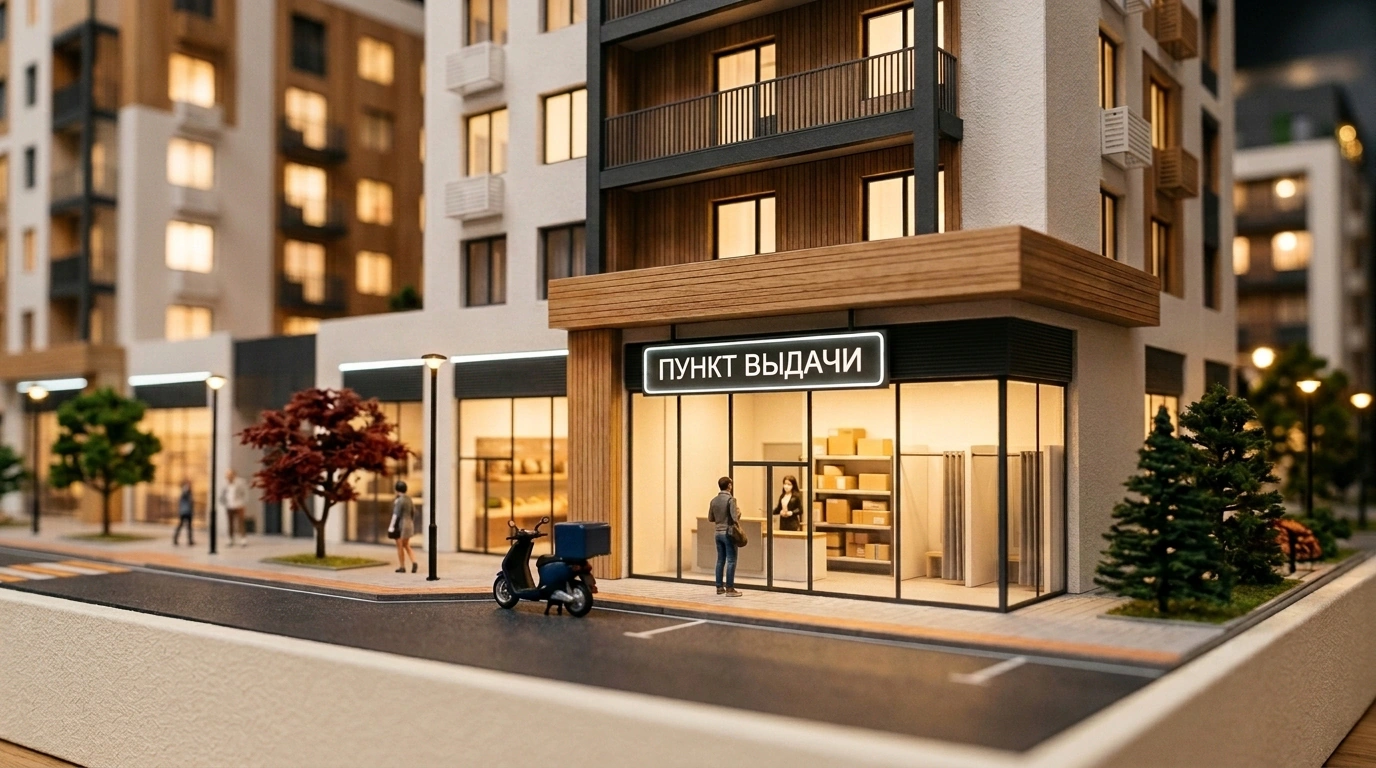
To many aspiring entrepreneurs, opening a Wildberries pickup point looks like the ideal entry into real-world business: hang a recognizable purple sign, put an employee behind the counter, and collect a steady percentage of millions of rubles in other people's orders. Anyone who has actually launched a PVZ, however, knows that behind the shiny franchise facade lies tough daily operations, battles for high-footfall locations, and the constant risk of platform fines.
Wildberries has significantly updated its launch terms for partner PVZs in cities with over 300,000 residents. The marketplace is intentionally easing regulations to fill coverage gaps in densely populated residential districts before the peak sales season.
Let's take a fresh look at the new terms and run the real launch numbers.
What Changed in Platform Rules
The main relaxations target two requirements that previously disqualified many partners:
- Flexible floor space and layout: in dense residential neighborhoods, finding an ideal 50–70 sq. meter ground-floor unit with a separate street entrance is often physically impossible. Wildberries now allows compact points with a smaller customer lobby, provided the storage area is large enough.
- Faster brand-book approval: checking signage and interior finishes through the WB Point app now takes less time thanks to automated photo validation.
- Incentive tariff zones: on the interactive city map, priority locations with a capacity shortage are marked in purple. They offer an elevated payout — up to 4.08% of handed-out order turnover, with guaranteed support during the first months.
We previously covered launching a pickup point in small towns and analyzed choosing a location by heatmap and payback timelines. In big cities, the stakes are higher because commercial rents are steeper.
Investment Calculator: What It Costs to Open a Point
Let's pull out a calculator and tally a realistic budget for launching a standard PVZ in a million-plus city:
- Rent: first month plus security deposit — 120,000–200,000 rubles.
- Brand-book renovation: painting walls in corporate colors, durable flooring, lighting — 150,000–250,000 rubles.
- Furniture and fixtures: reception desk, order-check counter, fitting rooms with mirrors and ottomans, metal storage racks — 100,000–150,000 rubles.
- Equipment and security: laptop, barcode scanner, printer, and a blind-spot-free CCTV system storing archives for at least 30–90 days — 80,000–120,000 rubles.
Total entry ticket: 500,000 to 800,000 rubles.
The video surveillance system must continuously record the pickup counter, the operator's desk, and the storage racks with zero blind spots. Any claim for a lost or damaged item without clear video footage of the unboxing is automatically charged as a fine against the PVZ owner's balance.
A Wildberries pickup point remains a viable business, but it demands discipline: a location breaks into solid profit at a steady turnover of 4–5 million rubles per month. The golden rule is never to open 'by guesswork', and always follow the WB Point heatmap.