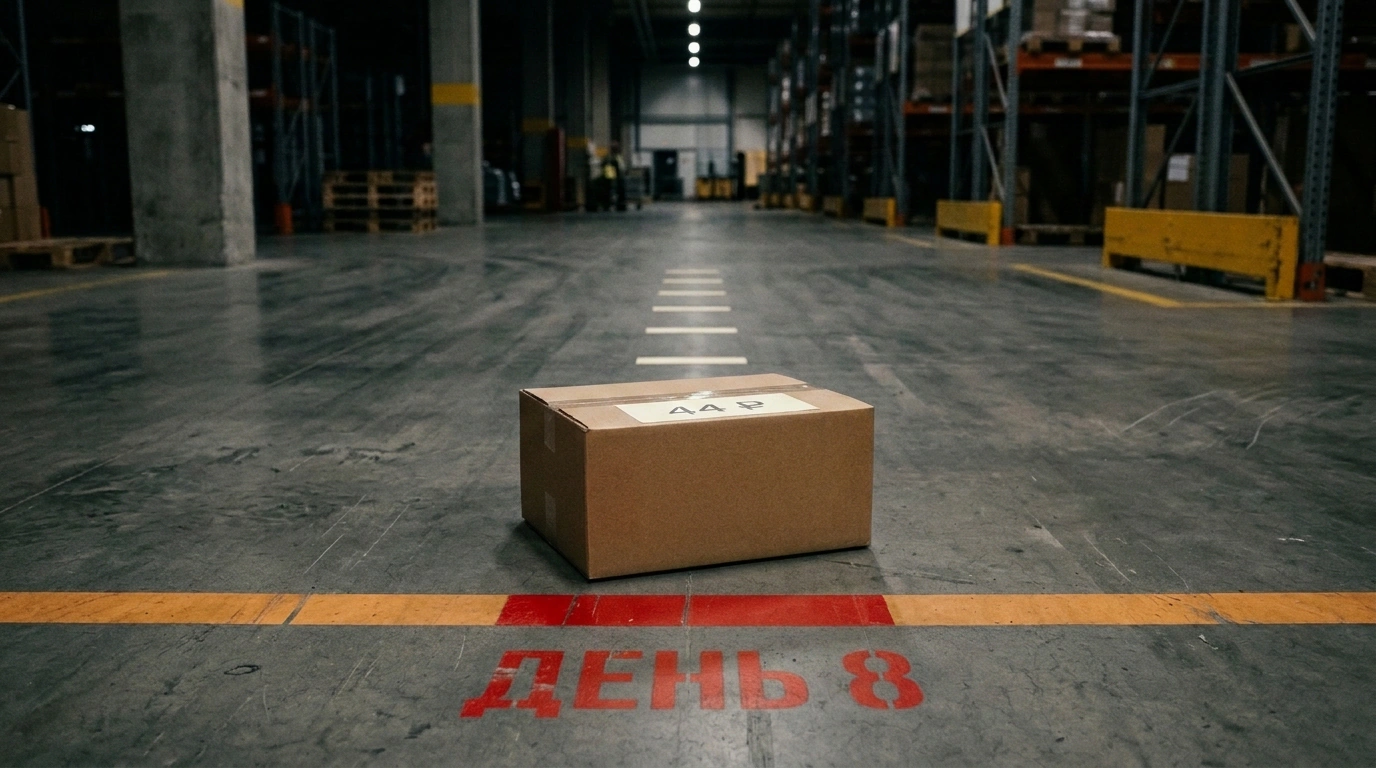
Picture late November. A shopper rejects a 3,000 RUB winter jacket or gadget, and the item lands back at your pickup point (PVZ) in Kazan or Yekaterinburg. Your warehouse is slammed prepping December shipments, and the alert slips past you. A week passes. On day eight, the jacket ships to a sorting center (SC), and you can never get it back. You lose the product, pay for transit to the sorting hub, and pay 44 RUB on top to destroy your own sellable inventory.
That is the exact workflow Wildberries just restored for unclaimed returns—customer rejections or warehouse returns that sellers fail to collect from pickup points on time. The marketplace announced the return to old rules in WB Partners on November 20, 2026.
What Changed Compared to the Summer Rules
Since July 25, 2026, a temporary relief rule was in place: overdue returns were disposed of straight from the pickup point without paid transit to a sorting center (Wildberries' logistics hub for order and return flows). That experiment is now over.
The biggest danger of the restored rule is that it's irreversible. Once an overdue batch leaves for the nearest SC, you cannot halt disposal or recall the goods. Every item gets written off, even completely liquid stock in intact factory packaging.
| Stage | Temporary Rules (from July 25) | Restored Rules (from Nov 20) | | --- | --- | --- | --- | | Pickup window at PVZ | 7 days | 7 days | | Action on day 8 | Disposed directly at PVZ | Shipped to nearest SC and disposed | | Delivery PVZ to SC | None | Paid at route tariff | | Disposal fee | Via PVZ | 44 RUB per unit |
Triple Loss on Day Eight and the First 14 Regions
Skipping a pickup run during peak season to prioritize an urgent warehouse shipment feels like smart time management. Run the numbers on that delay, and the savings turn negative fast.
On day eight, your margin takes a triple hit. First, you lose the product itself: you write off your entire purchase cost plus the outbound logistics already burned on the failed order. Second, you're billed for return shipping from the PVZ to the SC. There is no flat national rate; check your exact tariff in WB Partners under "Tariffs" -> "Cost of returning goods to seller" -> "Return delivery of unclaimed return." Third, you pay 44 RUB per unit for disposal organization—a fee active since September 1, 2026, now applied broadly again to forgotten returns.
In the first phase, the rule returned to 14 regions: the Republic of Tatarstan, Sverdlovsk and Kaliningrad regions, and 11 Far Eastern territories (Buryatia, Yakutia, Zabaykalsky, Kamchatka, Primorsky, and Khabarovsk krais, Amur, Magadan, and Sakhalin regions, Jewish Autonomous Oblast, and Chukotka). Wildberries will roll this out across all of Russia later. No exact dates were given for other regions, though waiting is risky—starting December 1, updated offer terms further tighten payout, return, and deduction rules.
How to Build a Reliable Return Pickup Routine
If your pickup points fall within those 14 regions or you rely on regional fulfillment, a "once a week on Fridays" routine no longer works. One courier mix-up sends your stock straight to disposal. Check "Returns and Goods Movements" in WB Partners every 3 to 4 days, and set a hard pickup deadline at day 5 or 6 of storage.
A recent update to FBS auto-return settings—the dashboard tool controlling which PVZ receives returns from seller-fulfilled orders (FBW handles Wildberries warehouse stock)—makes this easier. In mid-November, Wildberries added filters, bulk actions, and an Excel template so you can quickly compile pickup lists for your courier or fulfillment partner.
Wildberries return control checklist
- Check your pickup points against the 14-region list and look up return tariffs under 'Tariffs' -> 'Cost of returning goods to seller'.
- Audit 'Returns and Goods Movements' every 3 to 4 days instead of waiting for the end of the week.
- Update FBS auto-return settings using the new filters and Excel template to route returns to convenient pickup points.
- Set a hard pickup deadline for your courier or fulfillment partner no later than day 5 or 6 of storage.