What do you do on Ozon when common sense runs into rigid rules: a trademark claim hits your own family brand, tax inspectors reject home utilities under simplified accounting, and support chat answers return swaps with copy-pasted scripts? Arguing on emotion only wastes time and margin. Let's walk through three real operational traps—where formal logic breaks down and which documents actually fix the problem.
Own-Trademark Claims: Why 30 Listings Got Pulled Despite Uploaded UPDs and Certificates
It's a classic family setup: the trademark is registered to an LLC (OOO), while you sell on Ozon as a sole proprietor (IP). You run smoothly for three years with 150 SKUs under one brand, and your dashboard already holds the trademark certificate, transfer invoices (UPD) from the LLC to the IP, a dealer certificate, and quality certs. Suddenly a rights-holder claim arrives, and 30 of your 150 listings vanish.
How can a complaint hit your own brand when all your paperwork is uploaded? Marketplace moderation doesn't recognize "family business." The trademark-owning LLC and the selling IP are two separate legal entities. Without explicit permission to sell specifically on the marketplace, the system sees a broken rights chain.
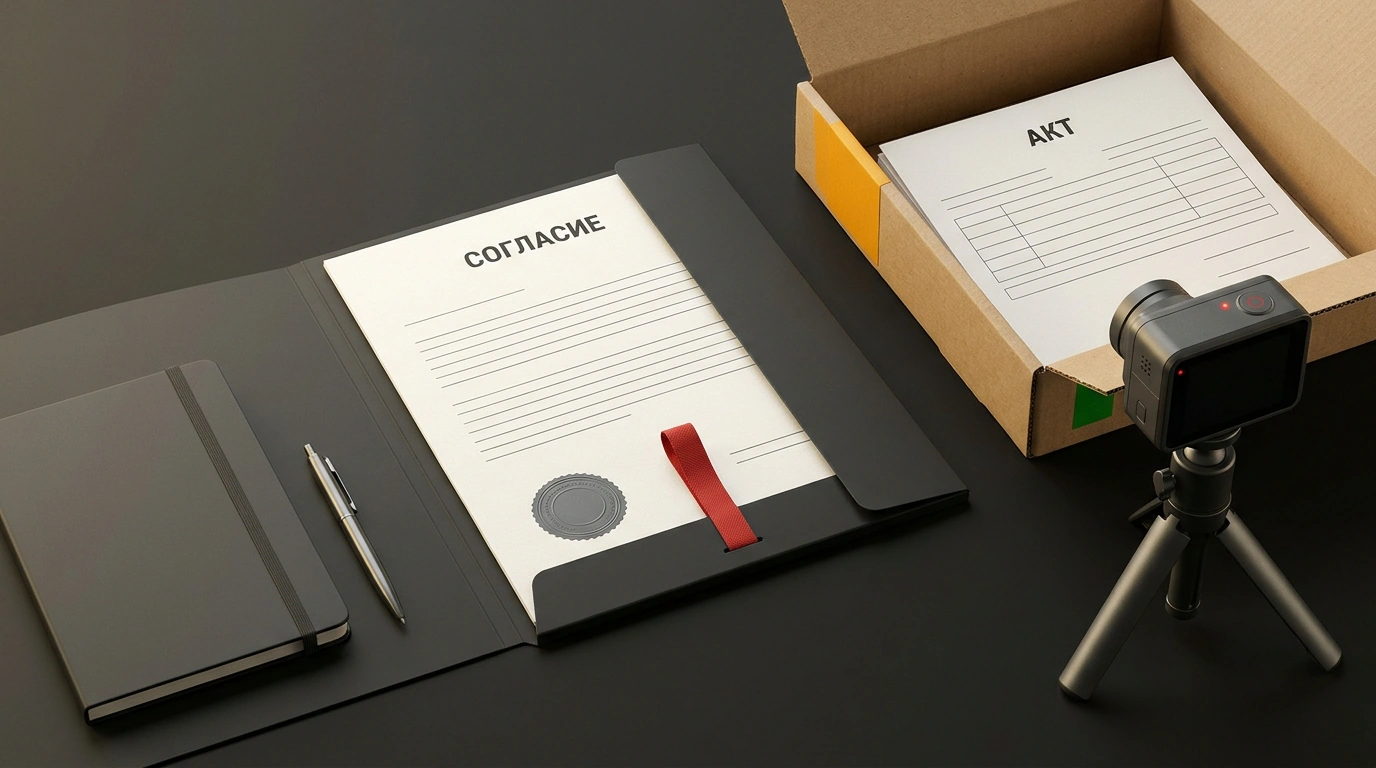
UPDs and dealer certificates often aren't enough during checks. Under Ozon Seller's knowledge base, bridging an LLC and an IP requires a license agreement or a rights-holder consent letter. It must list both parties' details, the Rospatent registration number, the word mark, territory (Russia), validity period, signature with stamp, and explicit permission to sell on Ozon.
Why pull 30 listings out of 150 instead of all of them? If the brand name is spelled slightly differently on some listings or the link dropped in "Brand Documents," automated checks only hide those items. Another trap is a purely graphic logo without text: Ozon accepts word and combined marks, yet may reject an image-only mark. Or a third-party rights holder filed a claim over a confusingly similar name in the same product class.
First, check the FIPS/Rospatent registry to confirm who filed the claim and whether a competitor owns a similar mark. If it's an internal mismatch on your own brand, issue a fresh consent letter from the LLC to the IP explicitly authorizing Ozon sales, and upload scans (PDF, JPG, or PNG) alongside the trademark certificate under "Brand Documents."
Storing Inventory at Home Under USN 'Income Minus Expenses': Can You Deduct Utilities and Internet?
A sole proprietor on the simplified tax system (USN "Income Minus Expenses") stores stock at home instead of renting a warehouse—naturally, it feels fair to deduct part of the apartment's utility bills and home internet. Boxes take up a room, and electricity and Wi-Fi power your seller dashboard.
Under USN Income Minus Expenses, allowable deductions follow a closed list (Article 346.16 of the Tax Code). Utilities fall under material expenses (Subclause 5, Clause 1, Art. 346.16), while telecom and internet fall under Subclause 18. Yet every expense must also satisfy Article 252: it must be economically justified, documented, and directly tied to earning income.
On home utilities, the Ministry of Finance and Federal Tax Service (FTS) take a hard "no" stance—set out in Ministry of Finance Letter No. 03-11-11/17851 dated March 28, 2017. An apartment is residential property meant for living (Art. 288 Civil Code, Art. 17 Housing Code), and owners must pay utilities regardless of business activity (Art. 210 Civil Code, Art. 153 Housing Code). You can't document how much heat or electricity went to boxes versus family life. In an audit, the FTS will almost certainly disallow the deduction and assess back taxes, interest, and penalties. Utilities are only safe to deduct for non-residential commercial premises.
Internet is slightly softer, though inspectors still often reject standard residential contracts. You can lower the risk by signing a business-tariff contract under your IP, paying from your business bank account, and documenting continuous dashboard work. Just compare tariff prices first—higher business internet rates can easily wipe out the tax savings.
Theft and Return Swaps on Ozon: How to Document Losses and Beat Scripted Chat Replies
You ship a brand-new item, a worn-out piece or cheap knockoff comes back, and support chat brushes you off with canned replies. Arguing in chat goes nowhere: return tickets moved to a dedicated disputes section, and first-line agents follow scripts. To recover your money, build court-ready proof from day one.
Step one is continuous, uncut video at two stages. During packing, film the item, serial number, IMEI, or marking code, and the sealing of the box. When collecting a return, film the intact box, a close-up of the shipping label with barcode and order ID, the unboxing, and the swapped item. If you pick up at a PVZ, draw up a discrepancy report with the staff member.
Step two is filing within 5 days of receiving the return. Open FBS -> FBS and FBO Returns, select the order, click "Open Dispute" citing swap or damage, and attach timestamped video (Ozon dispute rules). If a buyer returned an item and Ozon failed to hand it back within 60 calendar days, that is separate grounds to claim loss compensation.
Step three is a formal pre-trial claim if your dispute gets a template rejection. Send a written claim to LLC "Internet Solutions" (Ozon's legal entity) by registered mail with an inventory list, copying it via EDI or a ticket. If Ozon refuses or stays silent on a major loss, you can sue in the Moscow Arbitration Court—with clean uncut video, courts frequently rule for the seller.
What to include in a pre-trial claim to Ozon
- Both parties' legal details, a reference to the Ozon offer, order number, and loss calculation.
- Legal grounds citing Articles 15 and 393 of the Russian Civil Code.
- Cloud links or QR codes to uncut packing and return-unboxing videos (plus any PVZ discrepancy report).
- Compensation demand and a response deadline of 10 to 30 calendar days.