When you run a physical retail store and want to sell on marketplaces, you usually face two familiar paths. First is FBO (marketplace storage and delivery): you tie up stock in someone else's warehouse and pay for intake, storage, and return trips. Second is FBS (shipping from your own warehouse): you keep your stock, yet every day you must pack boxes piece by piece to strict rules and haul them to a sorting center.
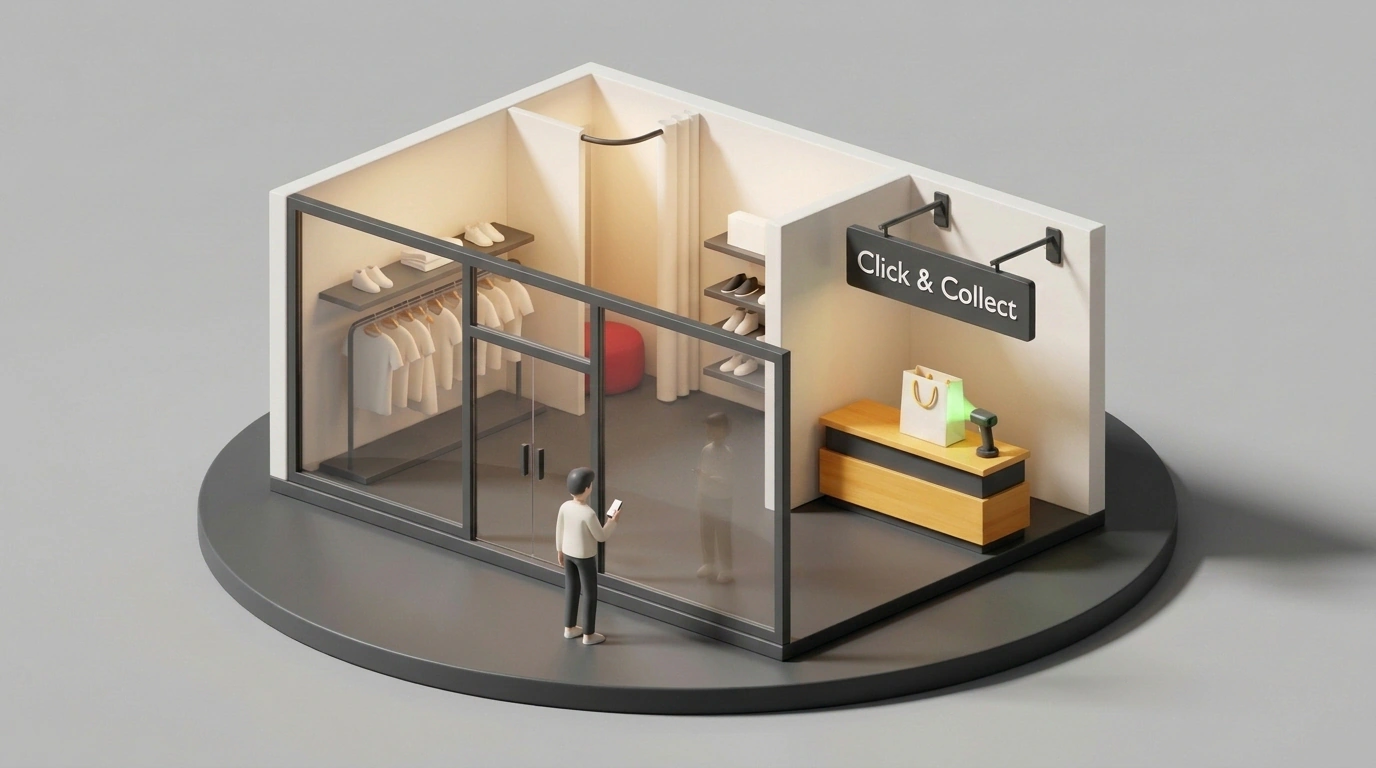
A third path gaining fast traction is Click & Collect (C&C), or in-store pickup from the seller's shop. The shopper orders in the marketplace app and picks the item up straight off your store shelf.
Why major chains are adopting in-store pickup
Fashion chains MAAG, ECRU, VILET, and DUB (RMixed portfolio) joined Wildberries pickup: first launching across all MAAG locations, with the other three brands rolling out in stages. Several thousand partners were already live on WB C&C, including Podruzhka, Leonardo, Chitai-Gorod, and VinLab. Over the past year, turnover from pickup-enabled items on WB nearly tripled.
Yandex Market is moving in the same direction, with in-store pickup open across more than 400 shops from Zarina, Befree, Street Beat, SOKOLOV, and other retailers. In apparel, this omnichannel setup—linking an online storefront to real store shelves—solves the last-size problem. A jacket might be long gone from the central warehouse, yet still hang in a nearby mall and go to a buyer the same day.
How pickup works and where it saves margin
On Wildberries, stock stays in your stores or backrooms, with inventory mapped to shop addresses in the portal or via API. A shopper picks a store on the map, staff pull the item from the shelf and confirm readiness (prep and hold times are set in the portal; MAAG holds orders for 7 days). The buyer arrives, gives the order number and a five-digit code if needed, tries the item on, and decides on the spot. Any refusal is logged immediately and the item goes straight back on the hanger with zero return shipping fees. Unclaimed orders cancel after the hold period and return to the sales floor.
On Yandex Market, pickup runs inside the DBS model (Delivery by Seller—the platform provides the storefront while the seller handles storage and handover). Store addresses, hours, and stock upload via API, YML feed, or Excel, and cashiers hand over orders by order number or QR code with try-on or inspection, as in SOKOLOV jewelry stores.
Here is how C&C stacks up against standard fulfillment models:
| Parameter | FBO (MP warehouse) | FBS (own warehouse) | Click & Collect / DBS |
|---|---|---|---|
| Storage | At marketplace warehouse | At your warehouse | On store floor or backroom |
| MP packaging | Strict boxes and labels | Per-order packing | Not needed, regular retail |
| Delivery | Marketplace delivers | You haul to sorting center | Customer comes to you |
| Buyer refusal | Paid return logistics | Travels back via pickup point | Back onto the store hanger |
| Alcohol & Rx meds | Prohibited | Prohibited | Allowed (with license) |
The financial math is straightforward: there is no line-haul or return logistics. On Yandex Market DBS, you pay the category placement fee (2–35%) plus acquiring and payout fees of roughly 1.3–3.5% and about 12 kopecks per SKU. On WB, exact category rates sit in the portal's 'Tariffs' section, and total costs come out below FBO and FBS. As a bonus, you get free foot traffic into your store plus access to restricted categories: alcohol (with a license), prescription drugs, and fragile or bulky goods.
Where the model works and where it breaks
The model fits retail chains, showrooms, and shops selling clothing, shoes, cosmetics, and jewelry—categories where try-ons and FBO refusals destroy margin. Pure online sellers without a physical storefront obviously can't use it.
Even with an active shop, C&C hits three hard limits. First is stock desync: if a walk-in shopper buys the last size five minutes before an online order lands, you get a cancellation, a rating drop, and a fine. Without fast API sync between 1C or your ERP and the marketplace, the setup falls apart. Second is staff workload during peak hours and price gaps between the app and shelf tags: cashiers need clear handover and return rules. Third applies to Yandex Market: in Moscow and Moscow Region, St. Petersburg and Leningrad Region, Yekaterinburg, Novosibirsk, Rostov-on-Don, and Samara, you cannot enable DBS pickup alone—you must also offer courier delivery (aside from exceptions like jewelry and medical goods).