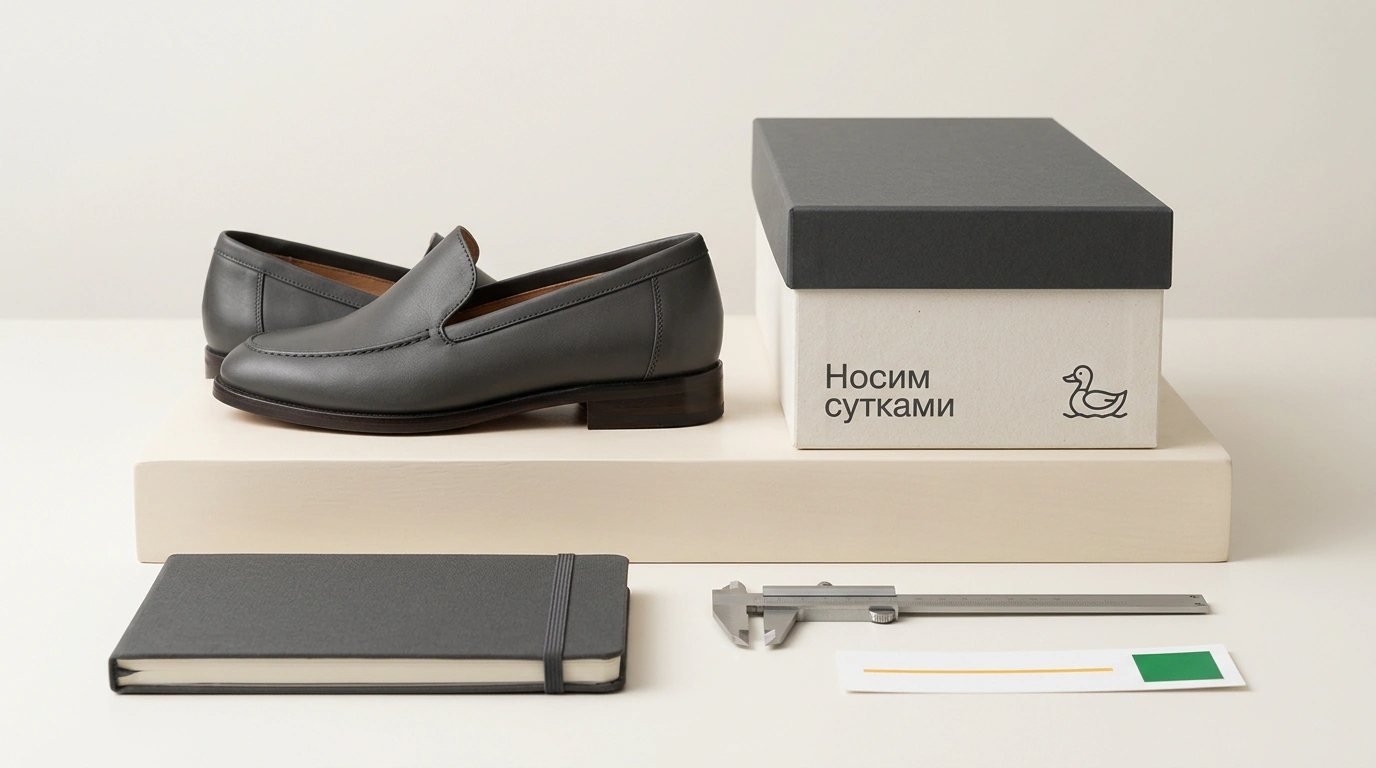
'When the bus is shaking, that's the best time to push forward.' This line from Dmitry Mukozobov, founder of the footwear brands Nosim Sutkami ('We Wear Around the Clock') and Lofer's, explains his business logic better than any pitch deck. Women's shoes on Wildberries are considered one of the toughest categories. The buyout rate hovers around 30–35%, boxes are bulky, the selling season flies by in six weeks, and any mistake with pricing or stock turns your warehouse into frozen working capital.
Yet Dmitry's company is already approaching 2 billion ₽ in annual revenue. Last September alone brought in 340 million ₽ with a 25–30%+ profit margin. People usually assume numbers like these come from a secret ad hack or one lucky hit SKU. In reality, it's much simpler and stricter: cold unit-by-unit math, hybrid shipping, daily checks on forecasted buyouts, and a willingness to slash prices into the red just to get real cash into the bank account. Let's take this operation apart piece by piece, from the first two boxes to managing seasonal inventory worth hundreds of millions.
From Two SKUs to 340 Million ₽ in September: Math, Supplier Credit, and the Post-Strike Window
Before marketplaces, Dmitry ran a B2B web agency starting in 2016, building sites on 1C-Bitrix and running SEO and search ads in Yandex and Google. By 2021, small online stores were losing fast to marketplaces, and client orders dried up. He entered Wildberries at the turn of 2021–2022, working almost entirely as a two-person team with his wife. Instead of guessing, he ran about a hundred categories through a scoring spreadsheet with four or five criteria.
His main filter was a simple fraction: monthly category revenue divided by the number of sellers. Jeans had roughly 1.5 billion ₽ in monthly turnover, but 1,500 to 2,000 sellers were fighting over it. Women's footwear reached nearly 2 billion ₽ with only about 400 sellers. Others were simply afraid to enter. Footwear was hit first in fashion by mandatory 'Chestny Znak' (Russia's digital track-and-trace labeling), boxes ate up huge storage space, buyout rates dropped below a third, and local factories in Russia or Kyrgyzstan couldn't compete with Chinese manufacturing. The higher the barrier to entry, the fewer random competitors behind it.
At launch, Dmitry didn't start with a single test SKU for 200,000–300,000 ₽ as beginners are usually told. He launched two at once. Competitor research showed straightforward math: a similar pair sold on the storefront for 4,500 ₽ while costing around 1,000 ₽ to source. He priced his at 4,000 ₽, captured demand, and grew from month one. One of those two original SKUs still sells in high volume today with a healthy margin.
Fast growth on marketplaces almost always hits a cash crunch: stock flies off the shelves, while payouts for the next batch are still in transit. The turning point happened at the Moscow Trade and Fair Complex (TYAK Moscow). Dmitry hired a local buyer. That buyer barely helped with picking specific models, but he introduced Dmitry to a supplier who imported shoes from China and agreed to ship batches on installment and consignment. That credit line powered the first years of explosive growth. Trust grew so strong that even after warehouse losses, the supplier didn't cut them off. She kept shipping so they could close the gap together.
Then came a summer when drone strikes hit major warehouses between mid-July and roughly August 10. It sounds cynical, but the business caught a rare window of opportunity. Nosim Sutkami mostly had old remnants from past seasons sitting in the burned facilities and hadn't delivered its fresh autumn collection yet. Several major competitors, on the other hand, lost their brand-new seasonal stock.
During the August–September back-to-school peak, the brand walked onto half-empty digital shelves. They closed September with a record 340 million ₽ in revenue and margins above 25–30%, spending almost nothing on ads. Dmitry compares that month to stepping back into 2021, though he quickly kills any illusions: by October and November, competitors restocked and search density snapped back to normal. The biggest trap after a month like that is treating it as the new baseline and planning next year's procurement around September volumes. Today, over 90% of the brand's goods are ordered in advance from China, so a forecasting mistake would cause massive overstocking six months later. Still, smaller sellers are gradually leaving the category, slowly clearing the market for larger players.
Racks with boxes in a logistics center warehouse (Source: Pexels)
The 'Semi-FBS' Hybrid as Fire Insurance and Why Ozon Is Still on Hold
After a string of warehouse incidents at Wildberries and Ozon, keeping an entire seasonal batch at one or two giant marketplace hubs felt like stuffing all your savings under one mattress. Moving 100% to FBS (Fulfillment by Seller, shipping each order from your own warehouse) is tough in footwear because of slower delivery speeds. Going 100% back to FBO (Fulfillment by Operator, storing stock in marketplace warehouses) feels too risky. So Nosim Sutkami settled on a hybrid setup they call 'semi-FBS.'
It's clever and built directly around how shoe buyouts work. The main stock stays in their own warehouse and ships via FBS only when an order comes in. Then fitting-room stats kick in: roughly 65–70% of pairs aren't bought because the size or fit isn't right. Here's where Wildberries logistics works in their favor: a rejected pair doesn't travel back to the seller's warehouse. Instead, it automatically settles at the nearest WB warehouse and sells from there under the FBO model.
Weighing the costs and benefits, the trade-off makes sense. On the first loop, you pay for slower initial delivery and the overhead of running your own warehouse and packers. In return, you get double insurance. If another emergency hits a marketplace warehouse, you only lose a fraction of already-circulating returns rather than your whole fresh seasonal shipment. Meanwhile, repeat orders for popular sizes still reach customers fast from WB hubs.
Given that, why not spread risks even further by putting the same catalog on Ozon or marketplaces in Kazakhstan and Uzbekistan? The team ran the numbers and deliberately hit pause. Reason number one is the real balance of power in women's shoes. Even when WB delivery times stretched to four or five days after warehouse disruptions, shoppers didn't noticeably migrate to competitors. The habit of trying on three pairs of sneakers at a familiar pickup point (PVZ) near home proved stronger than a two-day delay.
Demand split in women's footwear between platforms (brand estimate)
Even if the second platform grows by a few percentage points, it looks like a surge in its own reports, but the overall footwear balance barely budges. Reason number two hurts even more: price index conflicts. Both platforms closely track final retail prices on rival sites. If Ozon's platform-funded discount happens to be more generous one day and drops the price lower, Wildberries penalizes the listing and cuts its own SPP (Regular Customer Discount, subsidized by WB). Conversion on the main sales channel drops right away. Markets in Kazakhstan and Uzbekistan have similar drawbacks: either the average order value is too low, or volumes don't justify separate logistics.
Speaking of SPP: in September, WB's platform discount jumped to 45–60% before pulling back to 20%. When the discount drops, overall demand can dip by 5–10%, sure, but people still won't walk barefoot in the snow. Ultimately, what matters isn't the absolute discount percentage, but how your final price looks next to neighboring listings in search.
Fashion, a Short Season, and the Harsh Math of a 30% Buyout Rate
From the outside, the shoe business looks creative: flipping through runway shows, picking pretty lasts, and bringing in trendy colors. Inside, everything bows to the strict calculator of factory minimums and the calendar.
The brand's assortment splits into two worlds. The first is a solid core: understated loafers, office pairs, and everyday shoes that go with regular trousers and jeans. A strong core model can feed the business for years through word of mouth and repeat buyers. The second world is trends like Uggs, where shaft height and sole shape change in a single season. You have to watch clothing trends more than shoe trends: as soon as wide-leg jeans go mainstream, shoppers start buying chunky combat boots and ignore neat classic Chelsea boots.
The team regularly tracks Zara, Loro Piana, and UGG collections, but copying luxury head-on for Wildberries' 4,000–6,000 ₽ segment is a sure way to bury a batch. Heavy metal hardware, loud colors, and tricky cutouts collect likes, yet scare off mass buyers at checkout. Designers have to deliberately tone models down and strip extra details for a calmer look.
This conservatism comes from simple manufacturing math. The minimum order at a Chinese factory is 1,000 pairs per SKU. The active sales window for seasonal footwear lasts about six weeks. With an average 30% buyout rate, selling through 1,000 pairs requires at least 3,000 orders in those six weeks. No niche item 'for enthusiasts' can sustain that velocity. Play with the sliders below using your own numbers to see how quickly required order pace and next-season prepayments shift.
Seasonal batch calculator: order pace, buyout rate, and cash for the next run
Move the buyout slider from 30% to 40%, and the pressure on your ad funnel drops by a quarter right away. Drop to 25%, and your listings have to grind through 4,000 orders just to sell the same 1,000 pairs. On top of that, the seasonal calendar is ruthless. Mid-season styles sell twice a year (spring and autumn), while summer sandals and winter boots get one shot. Fail to clear a batch in six weeks, and you'll be staring at those boxes in your warehouse until next year.
Forecasted Buyouts vs. WB's Lagging Funnel and Cart Signals
When your seasonal window shrinks to six weeks, setting sales targets in rubles is a sure way to lose your bearings. Marketplace prices bounce every day due to promos, SPP, and ad bids, turning ruble inventory estimates into mush. So Nosim Sutkami sets seasonal plans strictly in units: if they bring in 1,000 pairs, the goal is to hit zero stock by the end of the season.
To figure out how many pairs must move each week, the team builds a weekly 'curve' using last year's category-wide stats. They take monthly and weekly niche revenue from the prior season (say, 1 billion in week one, 1.5 billion at peak, then tapering off), calculate each week's share of total volume, and map their own stock onto that curve. Instead of a vague goal to 'sell everything this autumn,' managers get concrete daily order targets.
But how do you know right now whether yesterday's ads paid off and if you're hitting your unit economics? The standard funnel in WB Partners shows current buyouts—pairs shoppers have already paid for at the pickup point. In footwear, the journey from click to fitting and payment takes several days, or up to two weeks in remote regions. Looking at raw funnel numbers today gives a terribly distorted picture.
Gap between current and forecasted buyouts on a fresh wave of orders
The chart shows why beginners panic and shut off profitable campaigns: at any given moment, the dashboard shows only a fraction of real sales because the rest are still in trucks waiting to be tried on. To avoid flying blind, the team calculates daily unit economics using forecasted buyouts—multiplying today's orders by each model's historical buyout rate. A hundred orders at a 30% baseline rate yield 30 forecasted buyouts right now, letting them check margins and TACoS (ad spend share of revenue, or DRR) without waiting two weeks.
Their second daily tool is comparing sales funnels against competitors inside the WB 'Jam' subscription. You can pull in up to five similar listings to see their impressions, clicks, cart adds, buyouts, average price, and SPP. They use this in two cases: at a new launch to quickly cut models converting below the median, and on mature SKUs when a rival with a similar last suddenly beats them in the funnel. Then they dissect the rival's photos, infographics, and pricing instead of guessing.
The next level of precision they're testing now is parallel unit economics based on cart additions. Cart adds give the fastest, cleanest daily signal on whether price and ads are clicking together. If someone clicks your listing and closes it, coming back means searching again—and often clicking your paid ad a second time. If they drop the pair into their cart, intent is locked in: they may well place the order two days later on payday. The team is already measuring average cart-to-order activation time and building a calculation chain from clicks and carts to orders and forecasted buyouts. What Wildberries still sorely lacks compared to tools like Google AdWords is proper cohort analysis to track the long-term fate of each ad day.
Cluster Bidding, Fragmented Search, and Checking 600 MB Tables with AI
Compared to classic Yandex SEO, where rankings depend on hundreds of factors, filling out a Wildberries listing feels like an old VKontakte profile form to Dmitry: just weave in target keywords neatly and skip the spam. In women's footwear, nearly all search volume sits in just five to seven keywords—two or three high-frequency terms and four or five mid-frequency ones.
In advertising, however, things have gotten much trickier. One of WB's best updates was cluster-level bidding inside manual campaigns: you push higher budgets on top-converting queries and cut bids on secondary ones. Yet sellers who hand everything over to simple auto-bidders quickly hit a wall with how WB search actually works. There is no single unified search page anymore. There's ad placement, logged-out search (with random variance), strict regional pinning like Moscow, and floating SPP layered on top for specific shoppers and specific pickup points. Plus, ad spend directly ties into platform discounts: joining a promo and keeping DRR above 10% can unlock an extra 10% in SPP.
In a short six-week season, a seller has only two fast daily levers: price and ads. Content gets reshot in parallel, but it doesn't move the needle overnight. Drawing on his web development and JavaScript background, Dmitry is now building an 80/20 management system. The idea is simple: an algorithm combines competitor median prices, cluster stats, DRR, and price elasticity of demand—measuring how sharply orders drop when prices rise. It should recommend whether it's smarter today to cut price by 1% or add ad budget, and sound the alarm if a price breaches what shoppers are willing to pay. For now, the AI agent is deliberately kept out of direct bid changes; it acts as an advisor and early-warning system because autopilot mistakes cost too much.
For routine work with massive WB report exports, e-commerce teams have already perfected a workflow that eliminates AI's biggest flaw: hallucinated numbers. When you need to parse a heavy 600 MB Excel file, you upload it to a paid AI model (about $100 a month), but you don't ask it to 'eyeball' the totals. You ask it to write and run a Python script to process the sheet. Afterward, you cross-check key totals using standard Excel math formulas. With this two-step check, discrepancies and hallucinations vanish: code calculates accurately, while the AI handles the dirty work of writing the script and spotting anomalies.
Never ask a language model to sum columns from WB financial reports directly—it tends to round numbers or drop rows. Have it generate and run a Python script for the math, then verify a couple of control totals with a standard SUM formula in the original Excel file.
The Black Friday Myth and Ruthlessly Dumping Dead Stock at a Loss
November sales like 11.11 and Black Friday still generate plenty of hype, yet a footwear brand's real numbers show no explosive spike on those dates. Wildberries doesn't add special SPP bonuses for them, and shoppers learned long ago that true 50% one-day discounts don't exist here—instead, regular promos stretch into a sluggish two- or three-week 'Black Month.'
Weather and inventory discipline affect November cash far more. When snow doesn't fall in November, winter boots stall and mid-season pairs risk getting stuck in the warehouse. That's where the golden rule of seasonal retail kicks in: sell through the stock first, count profits second. The fatal mistake of sellers who don't survive downturns is procurement greed and the habit of 'saving stock for next year.'
Warehouse staff handling orders and boxes in the shipping area (Source: Pexels)
Why does Nosim Sutkami drop prices on stuck mid-season pairs to around 2,000 ₽ without flinching and willingly lock in a loss on certain SKUs? Two hard financial realities drive this.
First is the shift to 'white' (official) imports from China. Back when they bought at TYAK Moscow, you could take boxes on credit and pay out of sales revenue. Under white importing, the cash flow flips: roughly 30% of a batch's cost must be paid upfront before the shoes even reach your warehouse—covering factory deposits, customs duties, and border VAT. If your cash sits frozen in last year's boots, you simply can't fund the fresh spring collection, and the business hits a cash-flow gap.
Second is fighting for priority with your supplier. Picture two sellers buying on credit from the same factory or importer. The first protects paper margins, holds slow-moving stock at full price, and delays payments. The second dumps dead weight slightly in the red and wires cash back to the supplier fast. Guess who gets higher credit limits, better discounts, and first dibs on hot models next season.
Still, the company doesn't follow rigid rules like 'cut prices 40% on November 15.' Discount depth is calculated at the portfolio level based on cash-flow targets, with AI helping balance the mix: some slow stock sells at break-even or a loss for quick cash, some clears at a slight profit, and the freshest core pairs can safely wait until spring. Together, the portfolio hits the exact cash target needed in the bank.
How a Duck on the Heel and Three Mentors Turn a Supplier into a Brand
The company's first brand, Lofer's, modeled after Converse, tripped over Rospatent (Russia's IP office): the name sounded too close to the English word Loafers, so registration was rejected. For the second brand, they ditched English-sounding names and looked for a catchy Russian one in the spirit of 'Zolotoye Yabloko' (Golden Apple). Inspiration struck by chance during New Year holidays at a St. Petersburg mall, where Dmitry spotted a T-shirt reading 'I work with ducks.' They checked 'Nosim Sutkami' with Rospatent—it was free.
The name matched their target customer perfectly: a woman aged 30–35 juggling kids, workouts, and work, with no patience for uncomfortable heels. She wants stylish, practical everyday shoes from a brand that speaks to her with light self-irony. Dmitry drew the signature duck himself and patented it separately—there's even a pond with ducks right outside his apartment balcony, making the mascot personal too. For now, the duck acts as an Easter egg: on the sole, on boxes, and inside the heels so two ducks face each other when parked side by side in a hallway. The branding has already caught on organically: friends' kids opened a toy 'cookie shop' in their yard over the summer and named it 'Pokupayem Sutkami' ('We Buy Around the Clock') with a hand-drawn duck copied from their mom's shoebox. The next step is moving the logo onto the outside of the shoes.
External traffic, meanwhile, is far messier than glossy infobusiness case studies suggest. The brand is testing an in-house creator team and influencer buys, but they haven't found a repeatable formula yet—where even one in thirty Reels reliably hits 500,000–600,000 views and pays back via WB sales. Solo creators and blunt giveaways rarely work. Now they're betting on larger influencers and raw behind-the-scenes clips of production and the team, because audiences are tired of generic AI-generated videos.
Finally, scaling toward two billion depends heavily on peer environment. Dmitry serves as vice president of the MP Sellers club, leading its sports track (30–35 entrepreneurs compete on Whoop fitness tracker metrics, and several club leaders along with founder Ivan Gradil have embraced sobriety and strictly 'white' legal businesses). When you're making 10 million ₽ a month and talk weekly with people doing 100 million ₽, your mental ceiling disappears on its own. Dmitry kept a 'Heading to a Billion' wallpaper on his phone for ages, only to realize four or five months after passing it that he'd already crossed the mark—and two billion was next on the horizon.
To keep growth from stalling, he follows the Skolkovo three-mentor method. Your first mentor should be 10 to 50 times bigger than you: their ideas sound detached from your reality at first, so just listen and take notes for later. Your second mentor is an equal peer you brainstorm hypotheses and tactics with side by side. Your third is noticeably smaller than you: as you explain basic business mechanics to them, your own scattered hunches finally click into a coherent system.