In a crowded Wildberries or Ozon search feed, you usually face two familiar options. Leave your product on a plain white or beige background and disappear among forty lookalikes—or hire a designer, rent studio lighting, and run a pricey shoot tied to a trending topic, risking your budget on an unproven idea.
Ready-made AI presets in GTA 6 aesthetics inside SellerDen AI offer a short third path. Yet a hype background on your main photo comes with a catch: it pulls clicks fast, but it can wreck your buyout rate and moderation status overnight.
How Neon Presets Work and Where They Fit
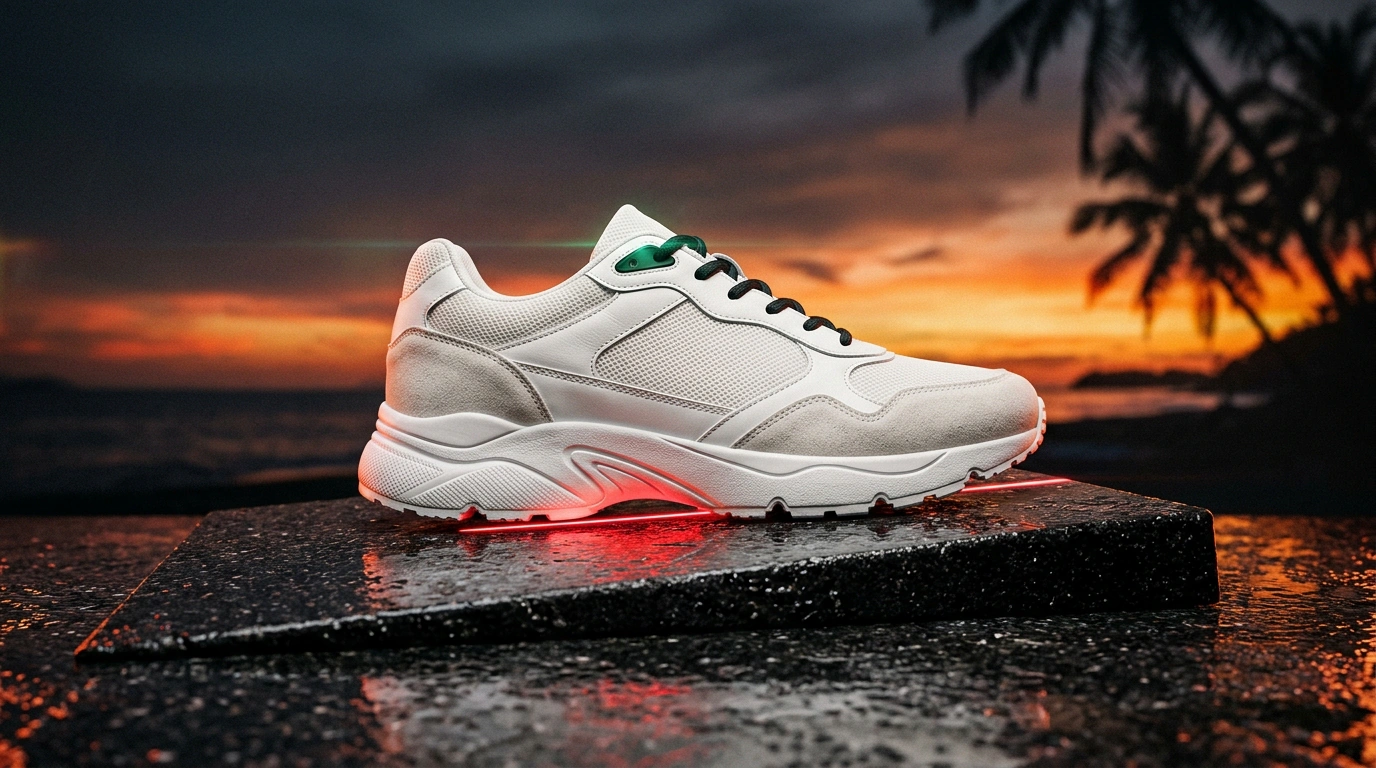
An AI preset is a pre-built lighting, background, and composition template where you drop in a product photo without wrestling long prompts. SellerDen AI added these templates to its AI Photoshoot and Infographic tools. Inside 'By Prompt' mode sit Vice City-inspired scenes—'Night Neon,' 'Nightclub,' and a 'Sunset' movie poster with palms, sports cars, and game photo-mode framing—alongside separate tracks for clean product shots and model scenes.
Setup takes three steps: upload a source photo, pick a preset, and hit 'Create.' The entry cost is tiny—a 0 ₽ trial gives 7 days and 76 credits (enough for one or two listings), and a starter pack costs 599 ₽. Sellers aren't testing this on gaming merch alone; they're using it on everyday goods like sneakers, apparel, headphones, sports gear, and water bottles.
Slapping neon onto every niche is a fast way to burn ad spend. It works where banner blindness rules search (shoppers scroll past dozens of identical bright listings without looking) and where a younger audience responds to the visual cue. In categories decided by exact fabric shades, calm home interiors, or strict kit contents, acid lighting scares target buyers away right in search.
The Signboard Trap: Why Clicks Aren't Cash
Sellers run these tests to lift main-image CTR—the share of shoppers who see a listing in search and click it. To avoid guessing, you run an A/B test: rotating or splitting traffic between old and new covers and comparing numbers.
The trouble is that a flashy AI background works like a blinking neon sign above a shop on a busy street. Passersby turn their heads and step inside, boosting traffic. Yet if the sign promised a sleek nightclub gadget while the shelf holds an ordinary matte bottle in a different shade, shoppers shrug and walk out.
In 'Night Neon' and 'Nightclub,' blue and pink lighting easily tints white sneakers lilac or shifts the plastic tone on headphones. Shoppers bite on the cover, open the box at the pickup point, see 'the wrong color,' and file a return. You pay for ads and return shipping while your buyout rate drops. So in A/B tests, track the whole chain: CTR, cart adds, and real buyouts.
AI infographics pose a separate trap. Image models still stumble on Cyrillic text: even promo examples for headphones show broken letters and random digits. It's safer to generate a clean AI photoshoot with the preset and add text callouts manually.
Pre-Upload Check: Ozon, WB Rules, and Third-Party Brands
Both platforms share nearly identical technical specs: Ozon and Wildberries expect a vertical 3:4 ratio (recommended from 900x1200 px, up to 10 MB; WB minimum is 700x900 px in sRGB; Ozon Fresh uses 1:1). The product must fit fully in frame, and for WB bundles the entire set must appear on photo one. Ozon strictly bans filters that distort true color or appearance, plus extra props easily mistaken for included items. Badges like '50% Off' and 'Bestseller' violate rules on both platforms.
Verify your AI shot against the real product before publishing
- Product shape and proportions match the physical item.
- Neon lighting hasn't shifted the main color of the body or fabric.
- Logos, seams, buttons, and small details remain intact without warping.
- Infographics contain zero garbled Cyrillic or random numbers.
- No stray background objects look like part of the bundle.
The final hurdle is copyright. A sunset vibe, palms, neon, and a distant sports car aren't trademarks—stylized backgrounds pass moderation as long as your product stays the clear focus. Using the GTA logo, Rockstar branding, protected game titles, or recognizable characters, however, directly infringes IP rights. Ozon and Wildberries block listings and issue fines for that, and in a dispute Ozon can demand RAW source files, layered PSDs, or a photoshoot contract.