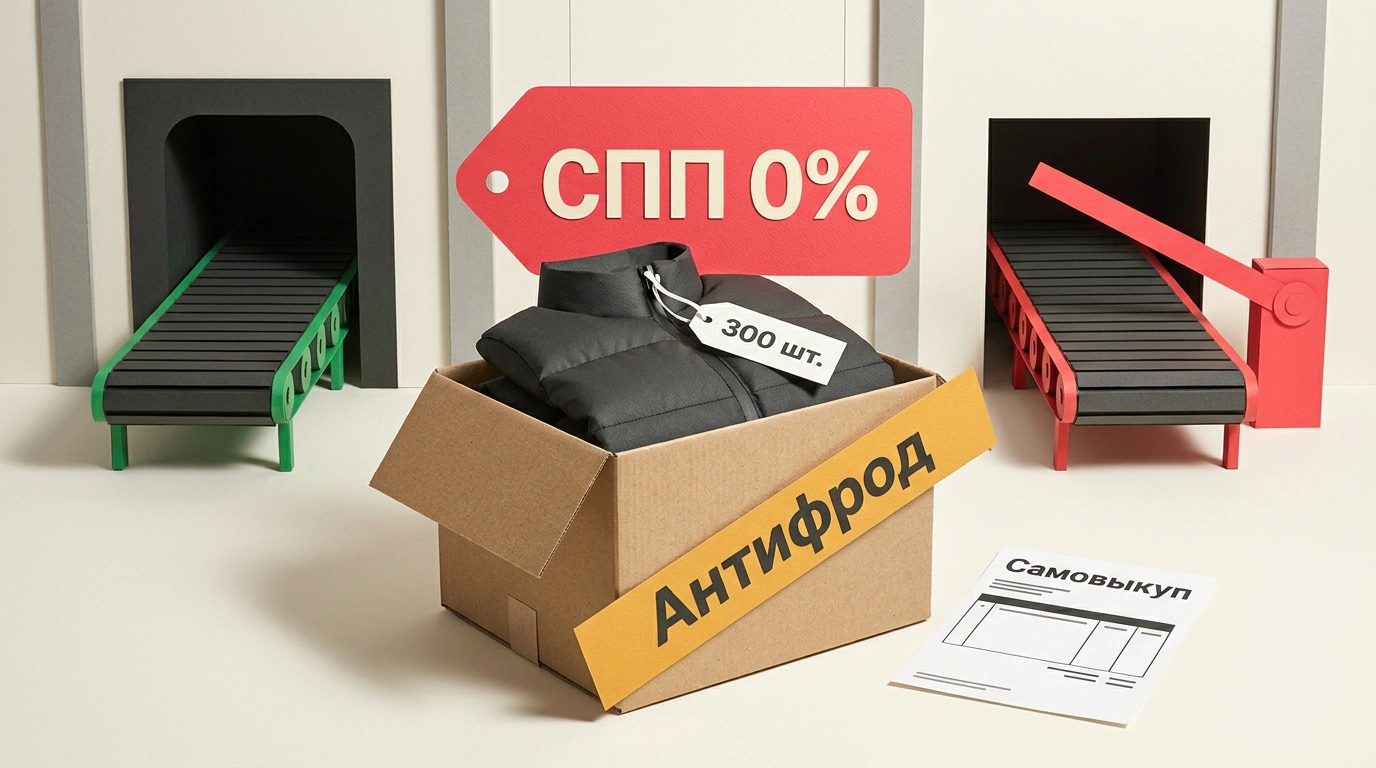
Three hundred down jackets in slow-moving sizes are sitting unsold in Wildberries warehouses. On Ozon, the exact same jacket in the exact same size sells at a profit and stock has already hit zero. Moving inventory from one platform to the other sounds simple—yet in practice, trying to pull slow stock out of WB fast often costs more than the jackets themselves.
Why Slow Apparel Sizes Trap Sellers
In apparel sold via FBW (Fulfillment by Wildberries), everything hinges on the buyout rate—the share of orders shoppers actually keep at pickup points. When a size doesn't fit most buyers, jackets ride back and forth for fittings, and two-way logistics on every round trip wipe out your margin. Sales turn negative.
Trying to fix the math with price becomes a trap. Raise the price to cover shipping, and the buyout rate drops further while per-unit losses grow. Push the price even higher, and orders stop completely while daily paid storage fees keep ticking. That leaves one option: physically pull those 300 jackets out of WB, relabel them, and ship them to Ozon where real demand exists.
Price Dumping vs. Bots and a Promo Code That Cost SPP
When pricey seasonal stock sits idle, sellers often eye two 'fast' workarounds: crash the price to zero and buy everything back instantly, or issue a promo code and clear the batch via self-buyout. Both paths were tested on this real batch of 300 jackets, and both revealed hidden traps.
First, the seller dropped the price to 200 RUB and built a custom bot meant to outrun rival scripts. They tested it on a small remainder of 14 units. The result was sobering: their own bot only caught 8 jackets (about 60%), while outside bots and price-error hunters snapped up the other 6 in seconds. Scaling that race to 300 winter coats would simply hand free inventory to strangers below cost.
So they tried plan B. They lowered the price to roughly 3,000 RUB, added a 50% promo code, and bought back the batch at around 1,000 RUB each after SPP (Wildberries' permanent customer discount funded by the platform on top of the seller's price). Outsiders still grabbed a couple of units, but most of the stock came home.
The relief lasted until morning. The next day, Wildberries zeroed out SPP across the entire seller account. For any store, that hits total revenue at once: without the platform's discount, storefront prices jump overnight and listings lose to competitors. Support tickets explaining the buyout was only meant to relocate stock went nowhere. Wildberries' anti-fraud system treats unauthorized self-buyouts as a violation, strips SPP from the whole legal entity, and blocks review moderation.
How SPP Was Restored and What to Calculate Before Pulling Stock
There was only one way to restore SPP: through Wildberries' tariff builder. It includes an official paid add-on called 'Trial Purchases of Own Goods' (often called 'self-buyout'). It requires a minimum 30-day commitment—no shorter term exists—and adds roughly 1–2% to your base sales commission. In return, it protects your account from penalties when buying your own items. The day after activating the add-on, SPP came back.
Trying to save on removal fees led straight back to the exact monthly option they could have enabled from the start—except after losing a full day without platform discounts.
Before touching prices on stuck inventory, lay out three real options in a spreadsheet and calculate each in rubles:
What to Compare Before Pulling Stock from WB Warehouses
- Official FBW return via 'Supplies and Orders' → 'Inventory Management'. There is no flat per-unit fee: rates depend on item dimensions and specific warehouse tariffs. Factor in strict pickup deadlines at the pickup point or hub—late pickups trigger penalties or disposal.
- Legal self-buyout with 'Trial Purchases of Own Goods' enabled upfront. Add the 1–2% commission surcharge across your entire account's 30-day turnover, standard commission and logistics on the bought-back batch, plus relabeling and shipping to the other marketplace.
- Disposal—only for dirt-cheap items where removal costs more than the product itself; for winter down jackets, this option is out immediately.
Compare those three totals against how much margin your entire account loses during one to three days without SPP. For a high-volume store, a 30-day commission surcharge across all sales will cost more than official warehouse returns; for a smaller store with pricey apparel, legal self-buyout can be cheaper and faster.