When expanding into small towns, sellers and logistics operators have faced an ugly choice for years. Option one: open a dedicated pickup point (PVZ) with rent, renovation, and staff wages—which burns through margin in two months when order volume is modest. Option two: skip small towns altogether or use couriers and bake steep 'last-mile' fees into the product price.
The 'last mile'—the final, costliest leg from a sorting hub to the buyer's hands—is where regional e-commerce economics break most often. Now both regulators and the market are testing a third path: sharing existing floor space across marketplaces, delivery services, and everyday grocery stores.
What's Inside the Ministry's Draft Strategy Through 2036
The Ministry of Economic Development submitted a draft National Strategy for Developing and Implementing Digital Platforms through 2036 to the government. The document isn't finalized yet, but it was drafted alongside industry players: representatives from X5 and Wildberries co-chaired the trade working group at the Center for Strategic Research. Its core idea is channel convergence—gradually bringing online platforms and brick-and-mortar retail together on shared infrastructure. The draft also calls for leveling regulatory rules across similar retail formats and gradually expanding the list of goods cleared for online sale.
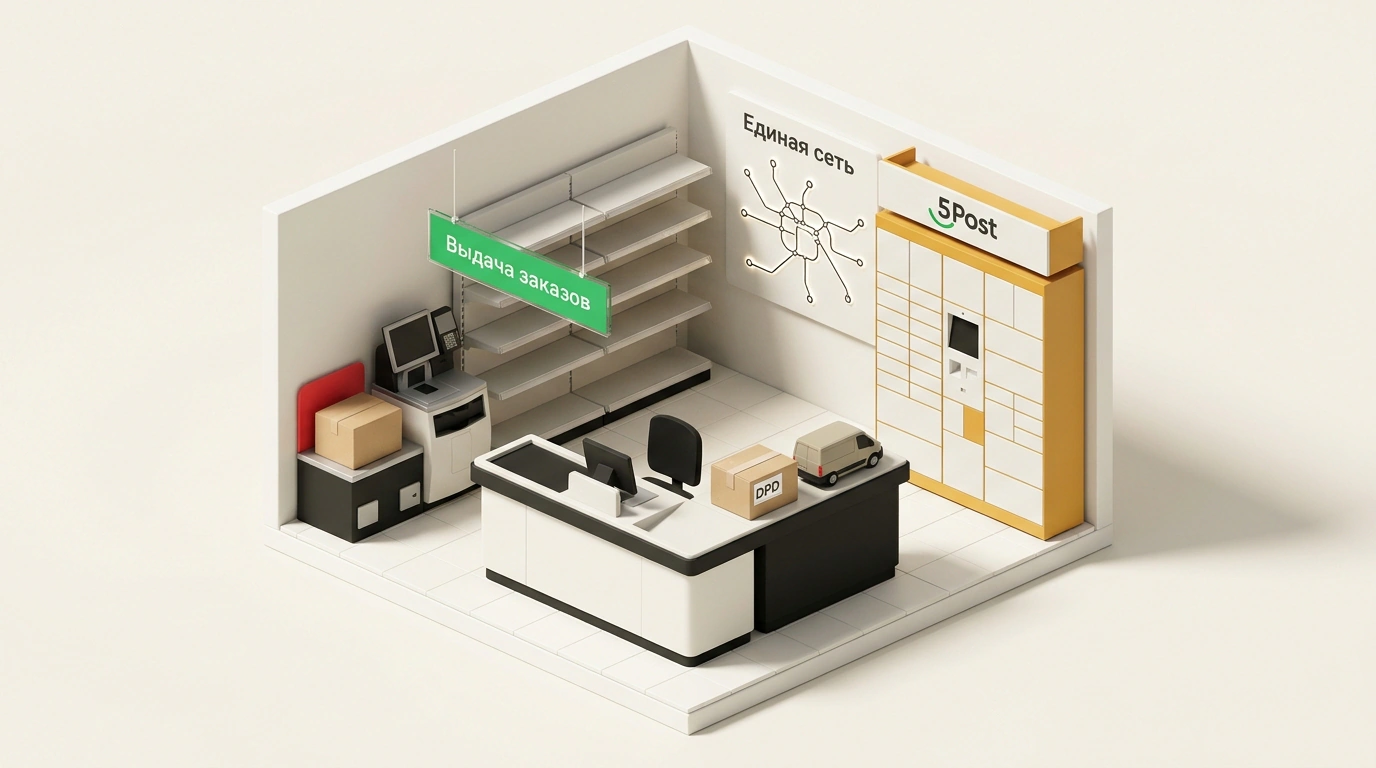
The role of a pickup point shifts noticeably under this plan. A single multi-brand hub would serve several marketplaces, retail chains, and independent sellers while handling intake, temporary storage, and light warehouse tasks. To keep rent from crushing operators, owners would be allowed to run complementary businesses in the same space—such as a coffee shop.
Traditional stores are moving halfway to meet them. A neighborhood supermarket could hand out orders for third-party online platforms and act as a storage and packing point for outside sellers. In return, grocers gain access to external pickup networks and delivery fleets. Sound like a ten-year sci-fi plan? Not at all—the market is already testing it live.
How DPD, X5, and Wildberries Already Share Floor Space
A fresh example is parcel operator DPD's pivot. Over five years, its own pickup-point network shrank by roughly 60% (the company didn't disclose why). Instead of racing to sign new leases and build out storefronts, the carrier moved into grocery chains.
On November 27, 2026, DPD announced parcel pickup in Pyaterochka stores via 5Post—X5 Group's service already operating 25,700 pickup counters and lockers inside Pyaterochka and Perekrestok locations. Meanwhile, a partnership with Magnit Post launched on November 2: by late autumn it had connected around 450 stores across Moscow, Leningrad, and Ural regions, aiming to pass 1,000 locations by year-end. Through Magnit, DPD has already entered 66 new towns and expects to expand further before New Year's.
Notably, about 65% of DPD parcels at Magnit Post weigh under 1 kg—mostly clothes, cosmetics, and supplements. A small, light parcel fits easily at a checkout counter or locker: shoppers grab it on a grocery run, and the store needs no extra warehouse staff.
Major players are moving the same way. More than a third of X5 stores are connected to online delivery, handling regular grocery receipts and internet orders side by side. Wildberries is expanding partner formats too, opening pickup points inside existing shops, supermarkets, banks, and gas stations.
Costs and Benefits for Sellers and Pickup-Point Owners
At first glance, everyone wins. Sellers reach buyers in district towns and villages where a branded pickup point would never break even. Pickup-point owners gain multi-brand volume, mini-warehouse fees, and coffee-shop subleases to diversify revenue and reduce dependence on one platform's tariffs.
Still, there are no free miracles in logistics. Cheap last-mile delivery inside someone else's store comes with trade-offs. A parcel under one kilo works fine at a grocery checkout, whereas bulky goods or apparel needing full fitting rooms won't fit there. A second hurdle is inventory syncing and liability. Industry associations AKORT and AKIT note that mass rollout will require unified standards for quality, safety, and product traceability. If a barcode fails to scan or a box gets crushed on a grocer's shelf, who pays? Without clear rules, those disputes quickly erase rent savings.
One red line across the industry is voluntary participation. Retail chains and platforms will only accept third-party orders on a contractual basis. While partnerships remain voluntary, sellers with light, fast-moving goods should already look closely at grocery-chain pickup—especially if you run your own online store or ship regionally outside marketplace warehouses.