Back in April, a large seller doing 1.7 billion ₽ in annual revenue brushed off AI tools. Sure, work would get faster, he said, but whether it would get more profitable was a big question. Six months later, by November, that same founder was regularly reviewing his dashboard moves in Claude to see which decisions actually made money. What changed? The model didn't suddenly learn how to trade. The business built a clear management system first, and only then plugged AI into it.
The whole truth about AI on marketplaces fits into one simple formula: it accelerates what you already have. If your unit economics are solid and your product is well chosen, automation gets you to profit faster. If things are messy and you don't know who you sell to or at what margin, AI just cranks out a hundred weak listings and helps push your DRR (ad spend as a share of revenue) to 43.8% in days. Speed goes up, and cash runs out ahead of schedule.
How Wildbox MCP works with Claude and ChatGPT
Usually, AI competitor research feels tedious. You open an analytics tool, download Excel sheets, take a pile of screenshots, and paste everything into a chat. It's like handing an accountant yesterday's paper receipt: by the time you copy the columns, the numbers are stale and half the context is gone.
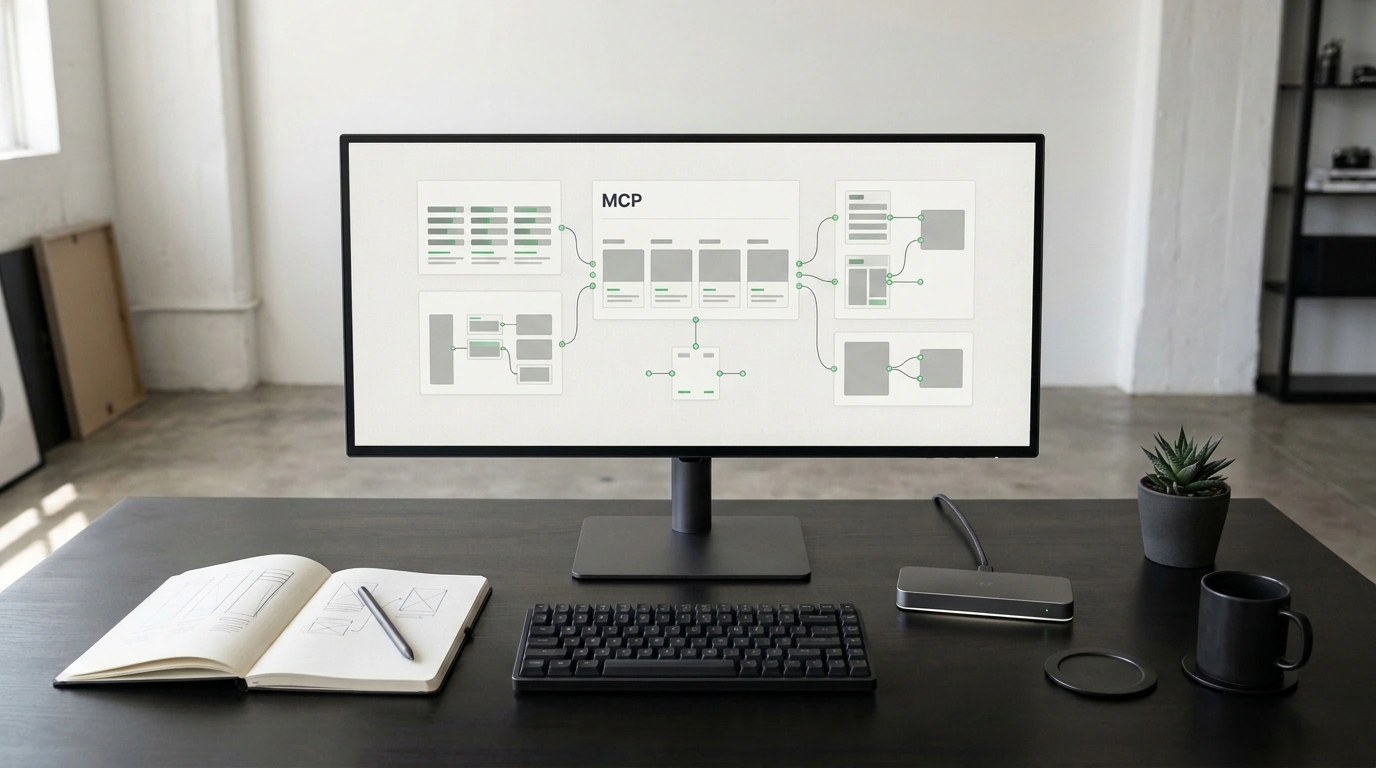
The MCP (Model Context Protocol, an open standard from Anthropic) removes that manual middleman. Think of it as a direct cable from the AI model to a live analytics database. When you connect the MCP connector from the updated Wildbox app to Claude or ChatGPT, the assistant pulls fresh metrics on demand, keywords, SEO, and competitors—including data from the 'Oracle 2.0' and 'Socrates' modules. You just open Wildberries search with an analytics extension to see listing revenue on screen and give the model a clear task.
How to build a working AI prompt via MCP
- Pass your product's numeric SKU ID instead of a direct WB link—assistants trip over URLs more often and start asking for extra permissions.
- Ask the MCP connector to find at least the top 10 sellers by revenue for your main search keyword.
- Request a breakdown of their top keywords, USPs (unique selling propositions), and prices before and after SPP (the loyal-buyer discount funded by the platform).
- Require the output as a concrete edit plan for your marketplace manager tailored to your specific SKU.
You can send the prompt to either Claude or ChatGPT: both connect under the same setup and pull usable data. The difference shows up in presentation. ChatGPT often returns a rough report that needs manual cleanup, while Claude organizes edits more neatly right away.
Why an Omega-3 search shows the limits of autopilot
Even the freshest analytics via MCP won't save you if you pick the wrong benchmark. Take a real Wildberries search for Omega-3. On the same page, listings generate anywhere from 600,000 ₽ to 6 million ₽, 7.2 million ₽, and 9.8 million ₽, while category leaders reach 17 million ₽.
Suppose your product sells at 812 ₽ because its SPP was recently cut, even though your base price before the platform's discount was around 1,000–1,100 ₽. In search results, one neighbor sells at 933 ₽, another at 1,400 ₽, and a third dumps the price to 500 ₽ with barely any Omega-3 inside—just a cheap tube. Meanwhile, category leaders like the Zubareva brand hold 1,700–1,800 ₽ before SPP and calmly do 17 million ₽.
Here, one concrete example reveals a general rule of retail. In the budget corridor below 1,000 ₽, there is often neither healthy margin nor a quality product worth spending ad money on. You should borrow USPs, visuals, and keywords from strong players at 1,700–1,800 ₽ before SPP, not from sellers slashing prices to zero. Left on default, AI simply averages the whole sample unless you narrow its scope.
Three decisions AI won't make for you
First is choosing your price segment and product positioning. Until you decide who you are actually competing against on the shelf, any audit will pull your listing in conflicting directions.
Second is controlling margin and pre-SPP pricing. AI doesn't know your real landed cost, taxes, returns, or logistics unless you feed them into the math. Wildberries can trim the SPP discount any day, so your edit plan must anchor on the base price before SPP.
Third is reviewing the report itself. An edit plan from Claude or ChatGPT saves hours of manual scraping, but it's still a draft, not an autopilot button. Run the suggestions through common sense, pick two or three specific hypotheses for photos, keywords, or your offer, and only then hand them over for execution.