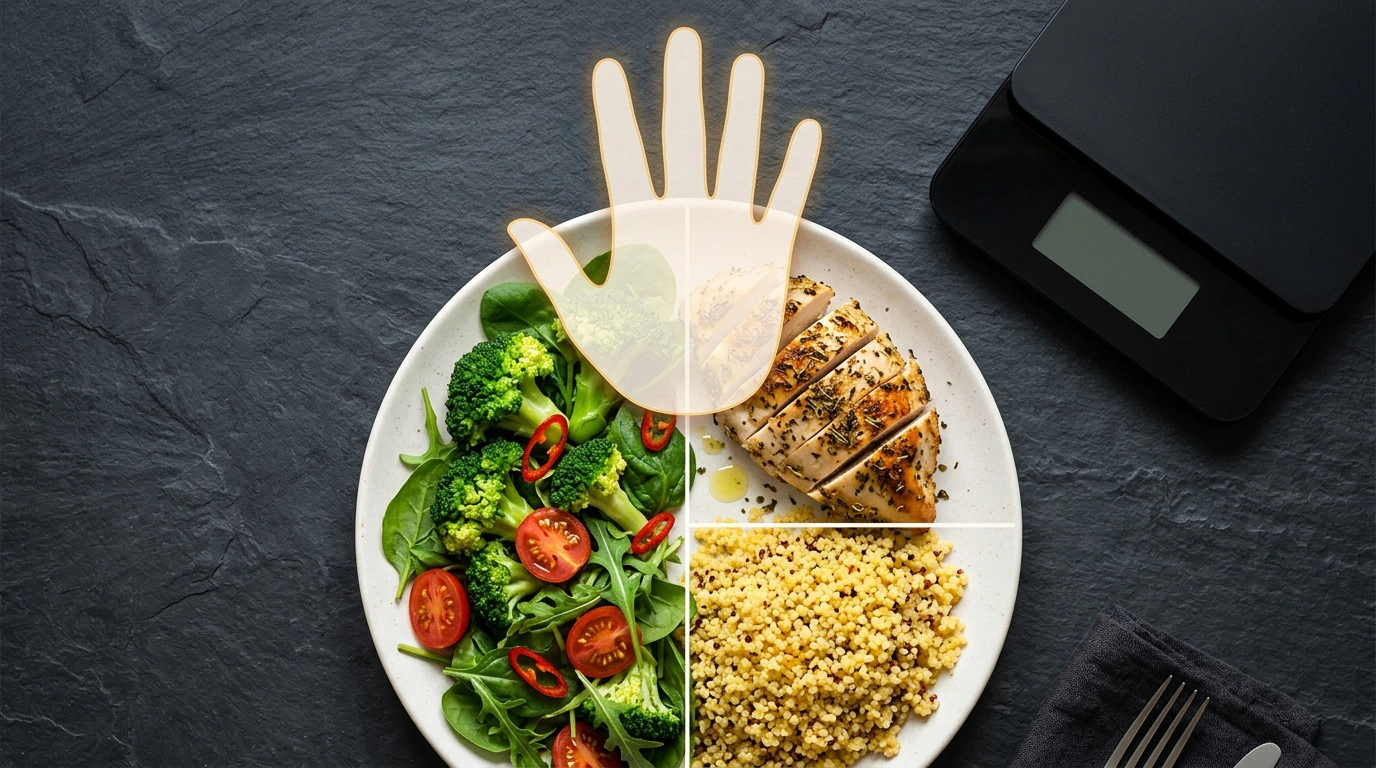
A kitchen scale on the counter, weighing a teaspoon of olive oil, and feeling guilty over a restaurant dish without macro labels—for many people, weight loss has turned into tedious bookkeeping. Fitness culture has popularized a stubborn myth: if you don't log every bite in an app, you can't lose weight. Physiology is actually simpler. Your body obeys the laws of thermodynamics, not smartphone databases.
Thermodynamics vs. smartphone apps
Your body burns fat stores only when daily energy expenditure exceeds energy intake from food. Total daily energy burn combines your basal metabolic rate, the energy used to digest food, everyday movement, and formal workouts.
Here is the key physiological fact: your body doesn't care whether you logged your calories in a diary or not. It tracks incoming energy automatically. A calorie deficit works on its own, and a tracking app is just one external tool for measuring it—neither the only one nor a flawless one.
Where a twenty-percent margin of error hides
Many people assume app numbers guarantee 100% precision. In reality, that precision is a mathematical illusion.
International food labeling standards (including FDA and GOST regulations) officially allow manufacturers up to a 20% margin of error between the actual batch and the numbers on the label. Milk fat content, apple sweetness, and meat density naturally shift with the seasons and animal feed.
Cooking changes nutrient bioavailability even more. Starch in cooled boiled potatoes is absorbed less efficiently than in hot mashed potatoes. Whole nuts only give your body about 70–80% of their listed table calories. In cafes and restaurants, it's nearly impossible to know the exact amount of cooking oil or the ingredients in complex dressings. Trying to calculate energy balance down to a single calorie turns into self-deception.
Worse, long-term obsessive tracking often harms mental health. You can lose touch with your own hunger and fullness cues, pull back from social meals, and risk developing orthorexia—an unhealthy fixation on eating "perfectly."
Plate and palm: how to eyeball a filling meal
You can manage your energy intake much more calmly using visual and behavioral cues:
- The plate method: divide a standard 22–24 cm plate into sections. Fill half with vegetables, greens, and salads—fiber adds volume and physically fills your stomach for very few calories. Dedicate a quarter to quality protein (poultry, lean fish, eggs, cottage cheese), and use the last quarter for complex carbs (buckwheat, brown rice, whole-grain pasta).
- The palm method: your own palm without fingers equals one serving of protein (25–30 grams). A clenched fist matches a serving of vegetables, a cupped handful equals complex carbs, and the tip of your thumb represents healthy fats.
- A cleaner food environment: drop the habit of snacking while watching TV and cut out liquid calories like juices, sugary sodas, and flavored coffees. This removes hundreds of hidden calories without leaving you hungry.
There's also a welcome exception to the rules: body recomposition. Beginners in strength training can burn fat and build muscle at the same time, even without a strict calorie deficit. Your body pulls the extra energy it needs straight from fat stores as long as your muscles get regular resistance training and enough protein.
When a kitchen scale actually helps
Weighing food has a place, but only as a short-term learning tool for one to two weeks. It helps calibrate your eye, see what real portion sizes look like, and notice how much hidden oil goes into everyday cooking. Turning weighing into a lifelong ritual isn't necessary, and for anyone with a history of eating disorders, it's strictly discouraged.
Checklist for a Filling Diet Without Weighing Food
- Fresh or cooked vegetables and greens fill half your plate at lunch and dinner.
- Every main meal includes a serving of protein the size of your palm without fingers.
- On-the-go snacks and sugary drinks are replaced with plain water or unsweetened tea.
Weight loss isn't a higher-math exam; it's about building a sustainable lifestyle. By trusting visual plate principles, you free your mind from anxious calculations and keep your results without stress.