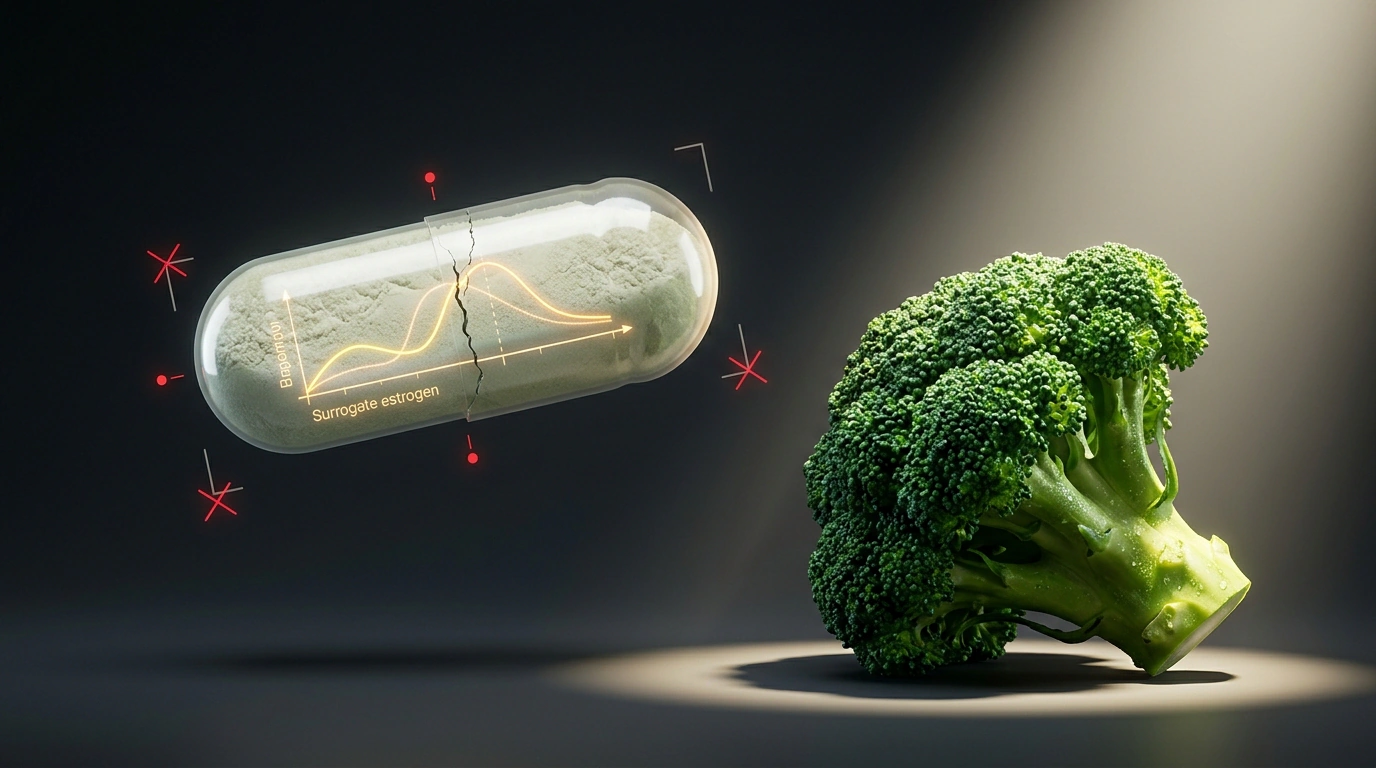
Bright bottles of indole-3-carbinol and sulforaphane have long been bestsellers in supplement shops. Marketers promise women a quick fix: "clearing out bad estrogens," reliable protection against breast cancer, and relief from endometriosis. It sounds appealing—a natural compound from cabbage offering health without heavy medications. Yet evidence-based oncology and clinical pharmacology view this optimism very differently.
Cabbage extract with bold promises
Indole-3-carbinol (I3C) and diindolylmethane (DIM) are phytochemicals formed naturally when glucosinolates break down in cruciferous vegetables like broccoli, cauliflower, Brussels sprouts, and cabbage. Once in the acidic environment of your stomach, the extract turns into diindolylmethane and other compounds that show biological activity in lab test tubes.
Marketers built their entire theory of a powerful cancer-fighting supplement on how these molecules behave in Petri dishes. However, the gap between a cell culture in a lab and a living human body is huge, and clinical practice proves it.
The surrogate marker trap: why pretty lab numbers don't cure disease
The main selling point for indole supporters is its effect on female sex hormone metabolism. Ads claim the supplement redirects estrogen breakdown, lowering "dangerous" 16-alpha-hydroxyestrone and raising "protective" 2-hydroxyestrone.
You can indeed measure this shift in a standard urine test. But this is a classic trap known as relying on surrogate markers. In clinical medicine, what matters isn't a neat chart on a lab printout, but real-world outcomes: did cancer rates drop, did tumors shrink, and did patients live longer?
Large clinical observations show that changing estrogen metabolite ratios in urine doesn't reduce the risk of breast or uterine cancer. No major oncology organization in the world—not the U.S. NCCN, Europe's ESMO, or Russia's RUSSCO—includes indole in official guidelines for cancer treatment or proven prevention. Claims that indole helps with PCOS or endometriosis also lack solid human evidence and remain limited to rodent experiments.
A hidden conflict in the liver and risks for medications
Taking concentrated supplements isn't just useless; it can be unsafe. High doses of indole actively stimulate liver microsomal enzymes, especially the cytochrome enzyme CYP1A2.
An overactivated liver starts breaking down and clearing many vital prescription drugs too quickly. Taking indole is especially risky for cancer patients on anti-estrogen therapy such as tamoxifen. The supplement lowers the drug's therapeutic concentration in the blood, putting the entire treatment plan at risk.
How whole broccoli on your plate differs from capsules
Does this mean broccoli is useless? Of course not. Whole cruciferous vegetables are rich in fiber, folate, potassium, and antioxidants.
In whole food, natural compounds arrive in tiny, physiological doses inside a complex food matrix. They support your gut microbiome and blood vessels without overloading your liver's enzyme systems. Trying to isolate a single compound and sell it in mega-doses as a pill never replicates the combined benefits of a balanced diet.
Any lumps in the breast, unusual pain, or cycle changes require an immediate in-person visit to a gynecologist or breast specialist. Trying to treat gynecological conditions with supplements wastes valuable time and lets diseases progress to dangerous stages.
Indole-3-carbinol remains a textbook example of a lab experiment turned into a profitable marketing myth. Don't rely on expensive capsules with unproven effects. Add fresh vegetables to your regular meals, and trust routine medical screenings to protect your health.