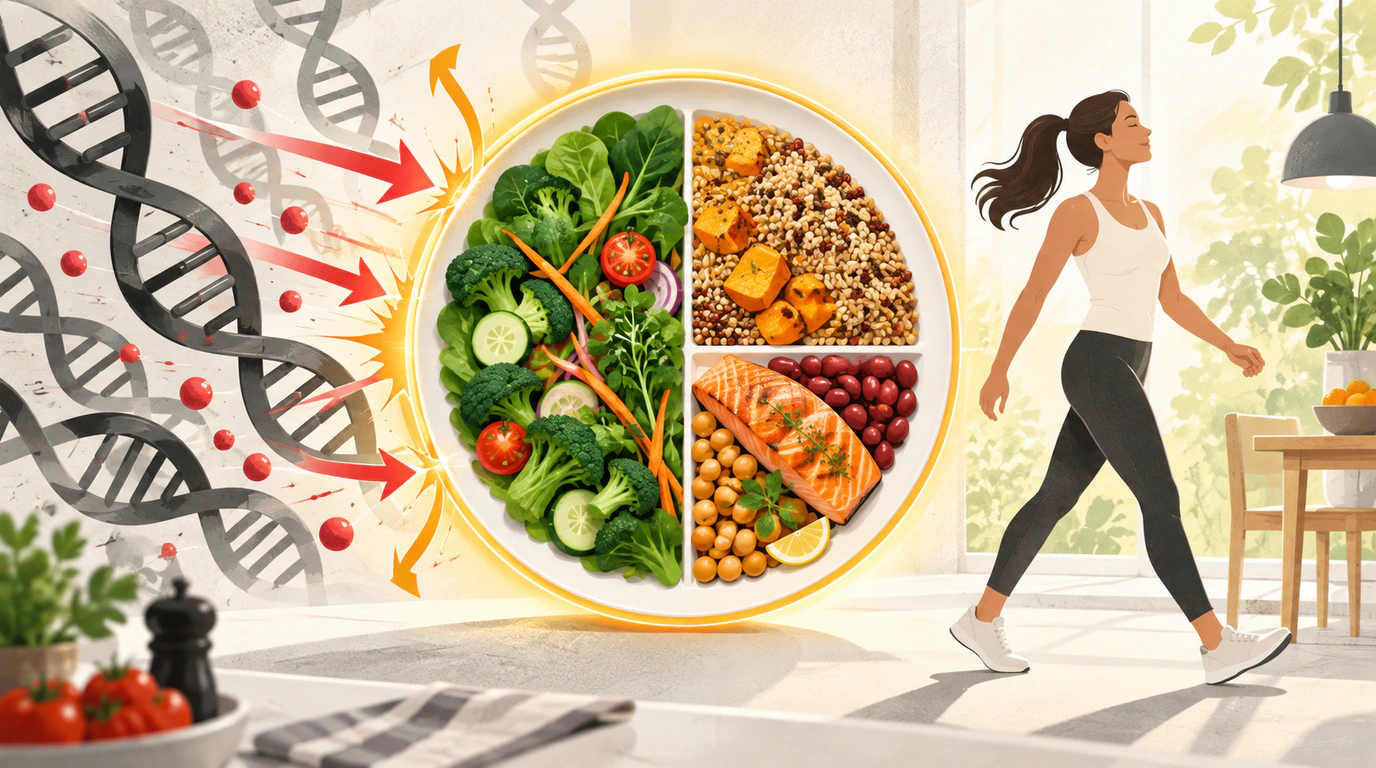
"Everyone in my family is heavy. I'm big-boned with bad genetics, so diets don't work for me." I hear this line all the time. Genetic fatalism is a tempting mental trap: if the scale creeps up, it's easier to blame DNA and give up. Earlier, we looked at how genes influence weight and why physical activity shifts your risk, showing that heredity isn't destiny.
A large UK Biobank study published in the International Journal of Obesity (Griffiths et al., 2026) settles the debate. Using a huge sample, scientists proved that even with the highest genetic risk for obesity, a balanced daily plate reliably protects against excess body fat.
Study Scale: 156,000 People and Hundreds of Thousands of Variants
Researchers analyzed data from 156,764 participants aged 37 to 73:
- Genetic risk: Each person received a Polygenic Risk Score (PRS) based on hundreds of thousands of genetic variants linked to higher body mass index.
- Diet quality: Eating habits were scored against the UK's Eatwell Guide (0 to 60 points) using Oxford WebQ 24-hour dietary recalls.
- Body composition: Beyond weight and waist size, researchers used bioelectrical impedance to measure total body fat percentage and visceral fat around internal organs.
Results: Genes Step Back Before a Balanced Plate
The numbers leave little room for doubt:
- 25% lower obesity risk: Participants who closely followed healthy plate principles had a quarter lower odds of obesity (OR = 0.75, 95% CI 0.73–0.77) than those eating mostly ultra-processed foods.
- Equal benefit across all risk groups: This is the headline finding. People with high polygenic risk saw the exact same relative drop in body fat and visceral fat from eating well as people with favorable genes. Genetics sets your starting tendency, not your ceiling.
- Steady dose-response: Every step up in diet quality trimmed waist circumference. Even moving from the bottom third of diet scores into the middle third delivered clear protection.
Genes load the gun, but lifestyle pulls the trigger. Heredity may nudge your appetite higher, yet your body cannot create fat out of thin air without a chronic calorie surplus.
What the Eatwell Guide Looks Like in Practice
The Eatwell model doesn't require weighing every gram or banning entire food groups. It offers a clear visual guide:
- Vegetables and fruits: Fill one-third to one-half of your plate (at least 400–500 g per day). Fiber and water fill you up before calories pile on.
- Complex carbohydrates: Choose buckwheat, oats, whole-grain bread, and skin-on potatoes instead of refined white flour.
- Quality protein: Eat legumes (lentils, beans), fish, eggs, and poultry while cutting back on processed red meats like sausages and deli cuts.
- Minimal ultra-processed food: Limit sugary sodas, pastries, and packaged ready meals. Fullness follows clear physics, as we covered in how diets actually work and why thermodynamics beats myths.
Practical Takeaways
- Drop the fatalism: Inherited weight gain doesn't mean you're stuck. You control what goes on your plate.
- Add before you restrict: Skip crash diets. Add vegetables and protein to your meals so they naturally crowd out extra calories.
- Consistency beats perfection: The best eating pattern is one you can live with comfortably for years.
When to See a Doctor
If you gain weight rapidly despite a balanced diet, see an endocrinologist to rule out hypothyroidism. For severe obesity (BMI > 35–40 kg/m²) paired with sleep apnea, medical supervision and a comprehensive treatment plan are essential.