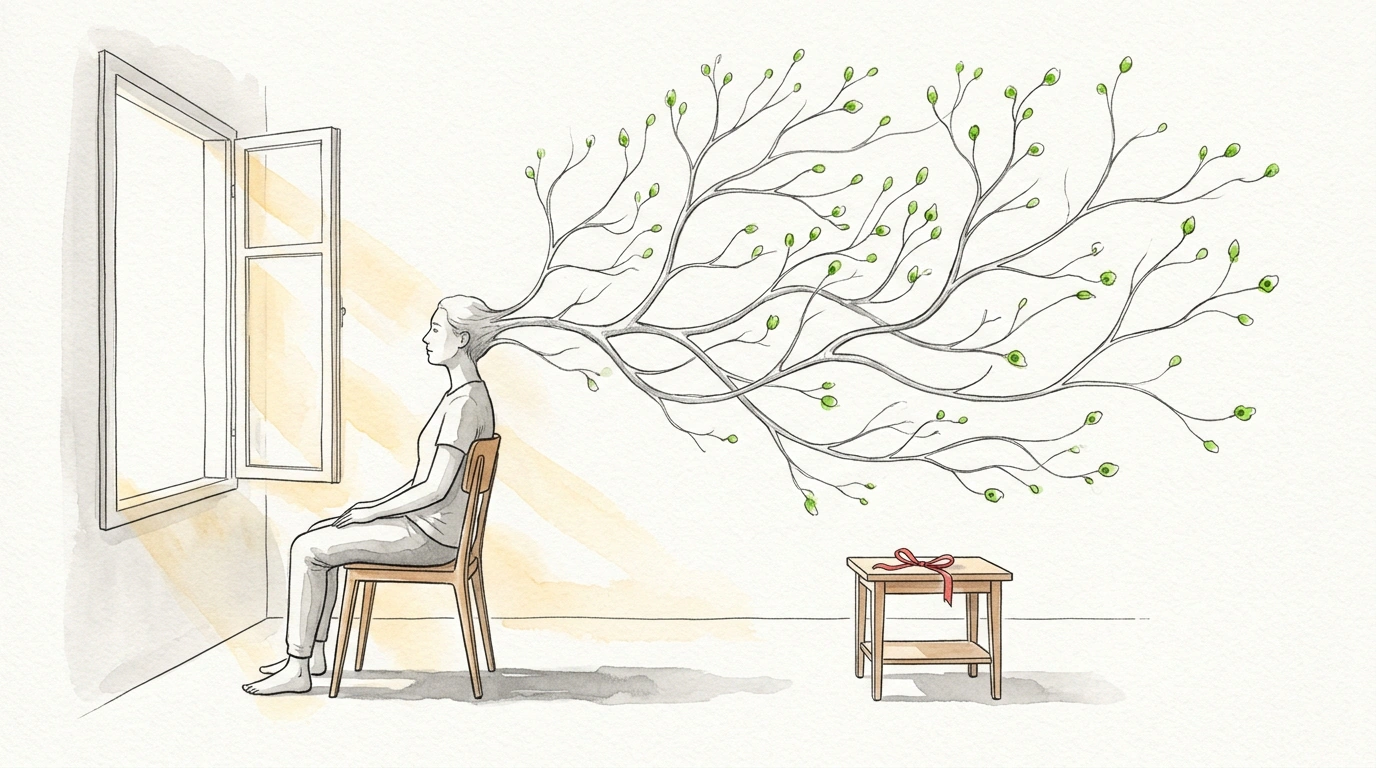
Try to remember the last time you sat in complete silence: no music in your earbuds, no background video in the kitchen, no podcasts in traffic, and no phone notifications.
Modern life comes with nonstop audio overload. Silence can even feel boring or uncomfortable. For years, conventional wisdom held that boosting memory and focus meant listening to complex music like Mozart symphonies.
A landmark study flipped that idea on its head. To grow and keep new memory cells, your brain needs regular stretches of silence more than continuous sound. We explored how calming the mind reshapes the cortex in our article on how regular meditation changes brain neuroplasticity.
Let's look at how silence works at the cellular level.
The Dresden Experiment: Mozart vs. Noise vs. Silence
Biologists at Dresden University led by Gerd Kempermann and Imke Kirste studied how different sounds affect neurogenesis (Brain Structure and Function, 2015, DOI: 10.1007/s00429-013-0679-3).
They divided mice into four groups: white noise, pup calls, Mozart's Sonata KV 448, and two hours a day of silence inside a soundproof chamber.
After 24 hours, both the Mozart group and the silence group showed a sharp rise in dividing precursor cells, the raw material for future neurons. At first, music and silence seemed to offer the same spark.
Seven days later, the difference stunned the researchers.
The Kirste and Kempermann Experiment
After one week, most of the new cells in the mice exposed to noise and music had died off. They faded away without ever joining a neural network.
Only in the silence group did young cells survive and mature into functional neurons (BrdU/NeuN markers, p = 0.008). The share of mature neurons reached 62%, compared with 57% in the control group.
Pouring Concrete: Why New Cells Need Quiet to Set
Biologists explain this surprise with a construction analogy.
Imagine pouring a concrete foundation:
- Music, learning, and sound stimulation are like pouring wet cement. They spark new cell division.
- If you keep spraying water and shaking the mold, the concrete never sets and washes away.
- Silence is the curing time, giving new cells space to grow branches and wire into active circuits.
In the wild, sudden silence signals a shift in your surroundings. The brain becomes alert and activates neurogenesis to record the new context. Constant noise, by contrast, keeps the auditory cortex under stress, a link we examined in our piece on how timely hearing support protects the brain from age-related dementia.
The Dentate Gyrus: Where Memory Takes Shape
Adult neurogenesis takes place in the dentate gyrus of the hippocampus.
Young neurons are highly adaptable. They handle 'pattern separation', the ability to tell similar memories apart, such as where you parked your car today versus yesterday.
When constant noise disrupts cell maturation, memory blurs. You start mixing up small details and feel mentally drained much sooner.
How to Build Quiet Windows Into Your Day
You don't need a lab soundproof chamber. Even short daily pauses of quiet help restore cortical energy:
- Ditch earbuds on walks: A couple of times a week, walk outside without podcasts or music.
- Take a midday pause: Spend 15 to 20 minutes in the middle of the day sitting quietly with your eyes closed and your phone away.
- Unplug audio at night: Turn off background screens an hour before bed. Quiet lowers cortisol and prepares your brain for deep sleep.
Silence is not wasted time. It is the biological space your brain uses to restore clarity and lock in memories.