Picture this: you're brushing your teeth in the morning, glance into the back of your throat, and spot a tiny white lump on your tonsil. You gently press it, pop out a firm little crumb, catch a sharp, unpleasant smell... and head straight to the internet. The very first post from an 'integrative nutritionist' tells you with full confidence: 'Your gut is rotting! Toxins are coming out—take binders, cleanse your liver, and swish coconut oil!'
Sound familiar? I see advice like this on social media all the time. People naturally look for one grand cause behind every symptom. In evidence-based medicine, though, anatomy is far more logical—and stricter—than those theories. Let's break down what those white stones actually are and why your gut has nothing to do with them.
Where throat 'stones' come from
Your palatine tonsils aren't smooth little spheres. They are porous immune-system guardians riddled with deep, narrow pockets called crypts. An adult typically has 10 to 20 crypts on each tonsil, and some reach up to 1.5 cm deep.
The lining of these crypts constantly renews itself. Dead epithelial cells shed, microscopic food particles get trapped there, and these oxygen-free pockets become an ideal hideout for anaerobic bacteria. Those bacteria form dense colonies—biofilms very similar to ordinary dental plaque.
The microbes feed on shed proteins and break down amino acids, releasing volatile sulfur compounds (VSCs), mainly hydrogen sulfide and methyl mercaptan. Those are what smell like rotten eggs and cause bad breath (halitosis). Over time, this soft organic debris absorbs calcium salts from saliva and hardens into tonsilloliths—literally 'tonsil stones.'
An anatomical dead end: why your gut isn't to blame
The claim that throat stones or bad breath come from 'fermentation in the GI tract' falls apart on basic anatomy. Between your stomach and your mouth sit two strong muscular valves: the lower and upper esophageal sphincters. Normally, they stay tightly shut and open only for a split second when you swallow.
Gases from your small or large intestine physically cannot leak upward through a closed esophagus to settle on your tonsils. ENT data confirms that more than 90% of bad breath originates right in the mouth—on the back of the tongue, in gum pockets, and inside tonsil crypts. We've looked at similar myths before when discussing how gut microbiota relates to eating behavior—blaming the gut for every health issue has become a popular, unscientific trend.
Fact-checking trendy remedies: coconut oil and probiotics
Alternative medicine loves two fixes for tonsil stones:
- Oil pulling. A systematic review of 25 clinical trials showed that the evidence supporting oil swishing is extremely weak. Oil can't reach deep inside twisted crypts, and it certainly can't dissolve mineralized calcium salts.
- Gut probiotics. Beneficial Lactobacillus and Bifidobacterium strains work in the colon. A swallowed capsule dissolves far past your throat and cannot change the microbiome on your tonsils.
Never dig out tonsil stones with toothpicks, matchsticks, or hard spoons. Tonsil tissue is delicate and packed with blood vessels. Rough poking easily causes tissue injury, bleeding, and pushes bacteria into the surrounding space, risking a severe peritonsillar abscess.
What evidence-based medicine recommends
Clinical guidelines from the American Academy of Family Physicians (AAFP) are straightforward: if white lumps come without pain, fever, or swelling, they aren't a disease—just a quirk of your anatomy.
- Gargle after meals: use plain warm saline (a 0.9% salt solution). The gentle flow flushes out food debris before bacteria can break it down.
- Clean your tongue: use a tongue scraper or a soft toothbrush—up to 70% of odor-producing bacteria live on the back of the tongue.
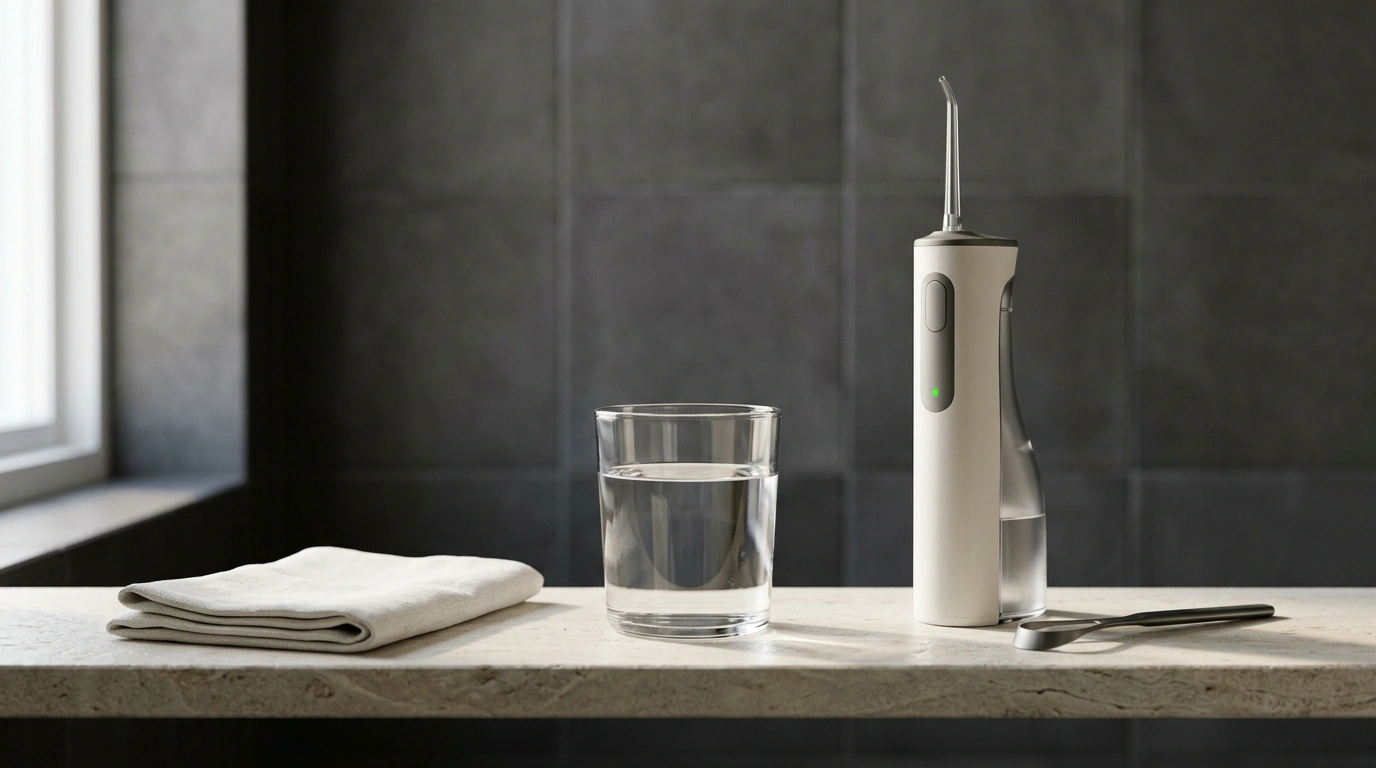
- Use a water flosser on its lowest setting: if a stone is clearly visible, you can gently rinse it out with a low-pressure water stream.
- See an ENT doctor: if stones cause constant irritation or inflammation, a specialist can safely flush the crypts in the clinic using a special cannula or suction device.
Most importantly, don't confuse tonsil stones with acute strep throat (bacterial tonsillitis). If your throat hurts badly, your fever rises above 38°C, and your lymph nodes swell, see a doctor right away for a strep test instead of inspecting white spots in the mirror.