When your knee starts aching on the stairs or after a long walk, your natural instinct says one thing: lie on the couch, slip on a warming brace, and cut movement to zero. It feels logical—if a part is creaking and wearing down, leave it alone.
Modern evidence-based orthopedics says the exact opposite. The BMJ published a massive network meta-analysis pooling 217 randomized clinical trials and nearly 16,000 patients with knee osteoarthritis. Researchers compared all major activity types: walking, cycling, strength training, stretching, yoga, and balance work.
Their core takeaway reads like a manifesto: movement is the primary medicine for your joints, not the cause of their wear and tear.
Why joint cartilage needs movement
To see why rehab works, look at joint anatomy. Articular hyaline cartilage has no capillaries or nerve endings, so it can't pull oxygen and nutrients directly from blood.
The only way cartilage cells (chondrocytes) get fed is by diffusion from synovial fluid. That works strictly like a pump: when load compresses the joint, waste products squeeze out; when load releases, the cartilage acts like a dry sponge and drinks in fresh fluid rich in proteins and glucose.
If you park yourself on the couch and stay still, joint fluid stagnates. Chondrocytes starve, and the surrounding thigh muscles shrink fast. Then, the very next time you do everyday chores, your full body weight slams onto an unprotected joint.
Cochrane numbers and why aerobic work shines
A recent Cochrane systematic review (139 studies, 12,500 participants) measured how well therapeutic exercise works:
- Pain drops by an average of 13 points out of 100 on a visual analog scale compared with passive controls.
- Joint function and mobility improve by 12.5 points.
- Benefits hold steady for 2 to 6 months after finishing a rehab program.
In the BMJ network meta-analysis, moderate-intensity aerobic exercise—brisk flat walking, stationary cycling, and swimming—offered the best odds of quick pain relief. Still, adding strength training is crucial for long-term stability.
The secret to happy knees is in your glutes
A 2025 meta-analysis on patellofemoral pain uncovered a key biomechanical link: training the knee in isolation works far worse than strengthening the hip muscles.
When your gluteus medius is weak, your thigh rotates inward on every step and squat (dynamic valgus). That pulls the kneecap sideways, grinding it hard against the outer ridge of the femur. Once you build up your glutes and quads, the kneecap tracks smoothly in its groove and cartilage stress drops dramatically.
Statistics also bust the myth that running wrecks knees: recreational runners have osteoarthritis in only 3.5% of cases, compared with 10.2% among sedentary adults. We've already explained why heel-strike running is safer than you think and how smart pacing spreads impact safely.
Safe-start checklist for knee pain
- Acute inflammation (a hot, visibly swollen joint) has been treated with a doctor before starting exercise
- You've picked a low-impact aerobic warm-up: stationary bike with a high seat or flat walking
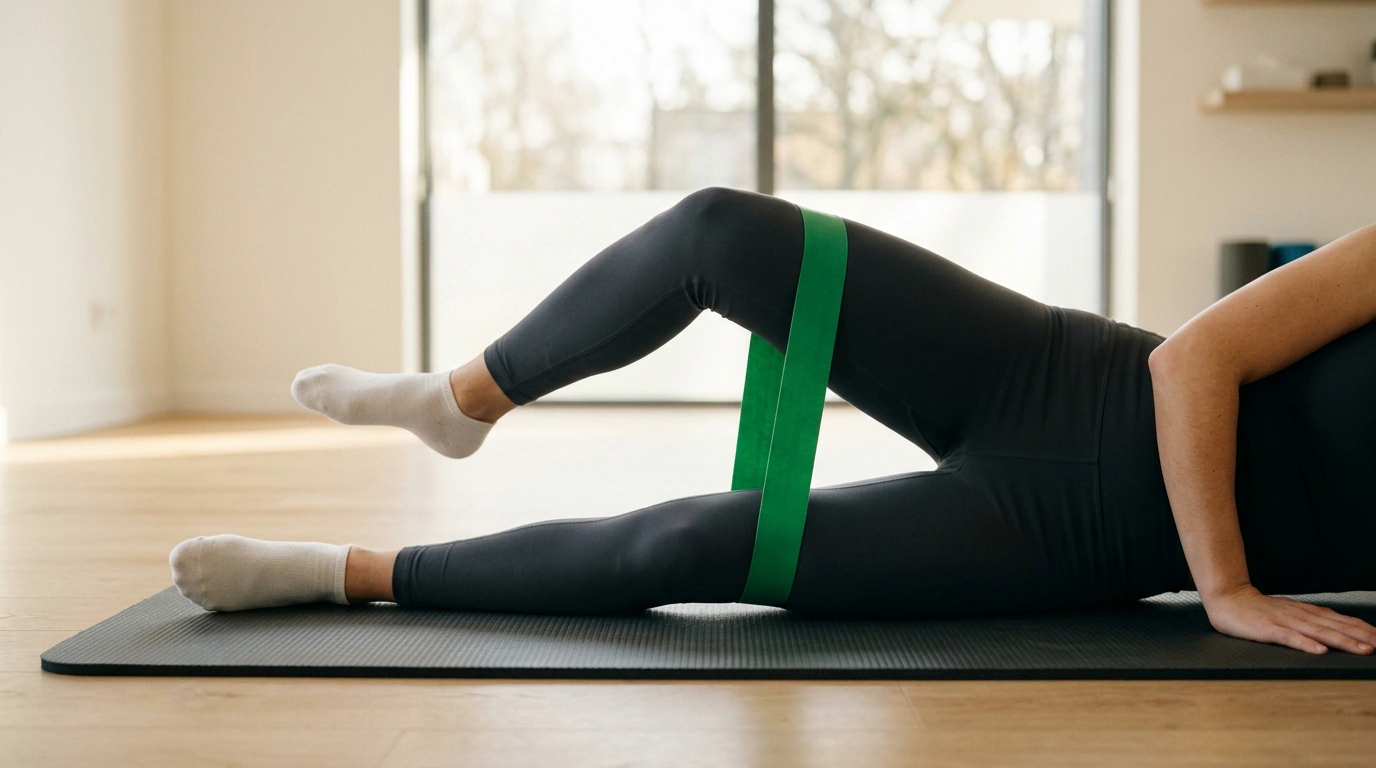
- Your routine targets the glutes: glute bridges and banded hip abductions
- Deep loaded squats with sharp knee-bend angles are skipped for now
- You follow the 24-hour rule: discomfort stays at 3–4 out of 10 or lower during exercise and disappears by the next day
Don't rush the process: tendons and cartilage take 8 to 12 weeks to adapt. Doing moderate 20-to-30-minute sessions three times a week helps your joints far more than occasional heroic workouts.
Joints are built to move. The right exercises don't wear cartilage away—they restore its nutrition and support, keeping your legs strong for years without fear of every step.