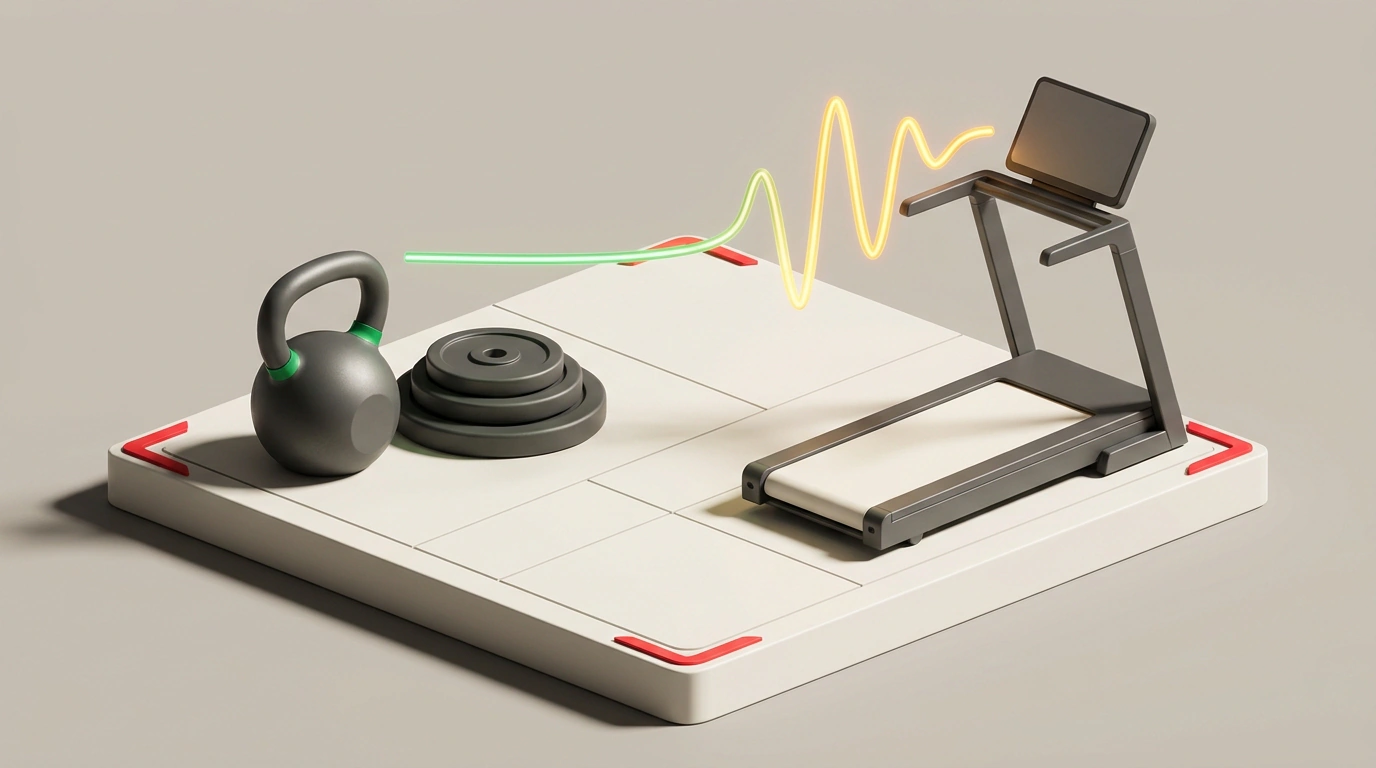
Nine months, 186 adults with type 2 diabetes, and three training groups—and the treadmill lost to basic strength training. In the STRONG-D clinical trial (Diabetologia), average blood sugar dropped most clearly in people who simply lifted weights three times a week. Even more surprising, the locker-room scale showed almost no difference between the groups.
That goes against old gym habits. Most gyms still split exercise into two boxes: treadmills and ellipticals are for health and fat loss, while dumbbells are for people chasing bigger arms. When insulin resistance comes up (a state where cells respond poorly to insulin and resist letting glucose in from the blood), most people reach straight for running shoes. Physiology, it turns out, is smarter than that.
What STRONG-D compared—and why the scale didn't tell the whole story
Researchers split 186 participants into three groups for nine months. The first group (63 people) did moderate-intensity strength training three times a week—steady, basic gym work without chasing personal records. The second group (58 people) did cardio on a treadmill, elliptical, or stationary bike. The third group (65 people) combined both.
The main yardstick was glycated hemoglobin (HbA1c), a blood test reflecting average blood sugar over two to three months. Only the strength-only group achieved a statistically significant drop of 0.44 percentage points, clearly outperforming pure cardio. The combined group did well, too, but didn't beat strength training alone.
Body shape told an even clearer story. Total weight barely diverged across the groups, yet body recomposition—losing fat while gaining muscle at roughly the same scale weight—happened significantly only in the lifters. Their ratio of arm and leg muscle to fat rose, and that gain in lean muscle mass was what pulled blood sugar down.
There is an important boundary here that summaries often skip: STRONG-D enrolled people with type 2 diabetes who had a normal body weight (BMI below 25 kg/m²). Low muscle mass is especially common in this group, which helps explain why their response to weights was so strong. Dismissing cardio altogether for people with significant obesity based on this single trial would be a mistake.
Why muscles act like a 'glucose sponge'
Picture blood glucose as water leaking into a boat. Cardio is like bailing that water out with a mug: while you walk on the treadmill or pedal, your muscles burn fuel and blood sugar drops. Stop moving, and energy burn falls fast—and running alone builds very little extra muscle tissue.
Strength training upgrades the boat itself. Skeletal muscles are your body's largest glucose consumer, a living sponge that soaks sugar out of the bloodstream. When you train against resistance regularly, you build more of that tissue, and it pulls in glucose more eagerly even while you're resting. Your pancreas doesn't have to pump out as much insulin. For people dealing with metabolic syndrome (where high blood sugar, belly fat, high blood pressure, and blood lipid shifts cluster together), that difference hits hardest.
How to build a balanced week without burning out
Many people avoid the weight room out of fear of hurting themselves. STRONG-D takes that pressure off: moderate sessions three times a week did the trick, no massive barbells required. Weight machines, dumbbells, resistance bands, or bodyweight exercises all work, as long as your muscles feel controlled effort.
There's no need to ditch cardio either—your heart, blood vessels, and stamina thrive on rhythmic aerobic movement. The American Diabetes Association (ADA) combines both into a straightforward weekly plan:
- 2–3 strength sessions per week on non-consecutive days so muscles have time to recover.
- At least 150 minutes of aerobic activity per week—brisk walking, cycling, elliptical, or swimming, spread over at least three days with no more than two consecutive days off.
If you have diagnosed diabetes—especially if you use insulin or sulfonylurea medications—talk to your doctor before starting or ramping up workouts. Exercise actively lowers blood sugar and can trigger hypoglycemia without proper adjustments; your doctor can also check for any heart, joint, or eye-related precautions.